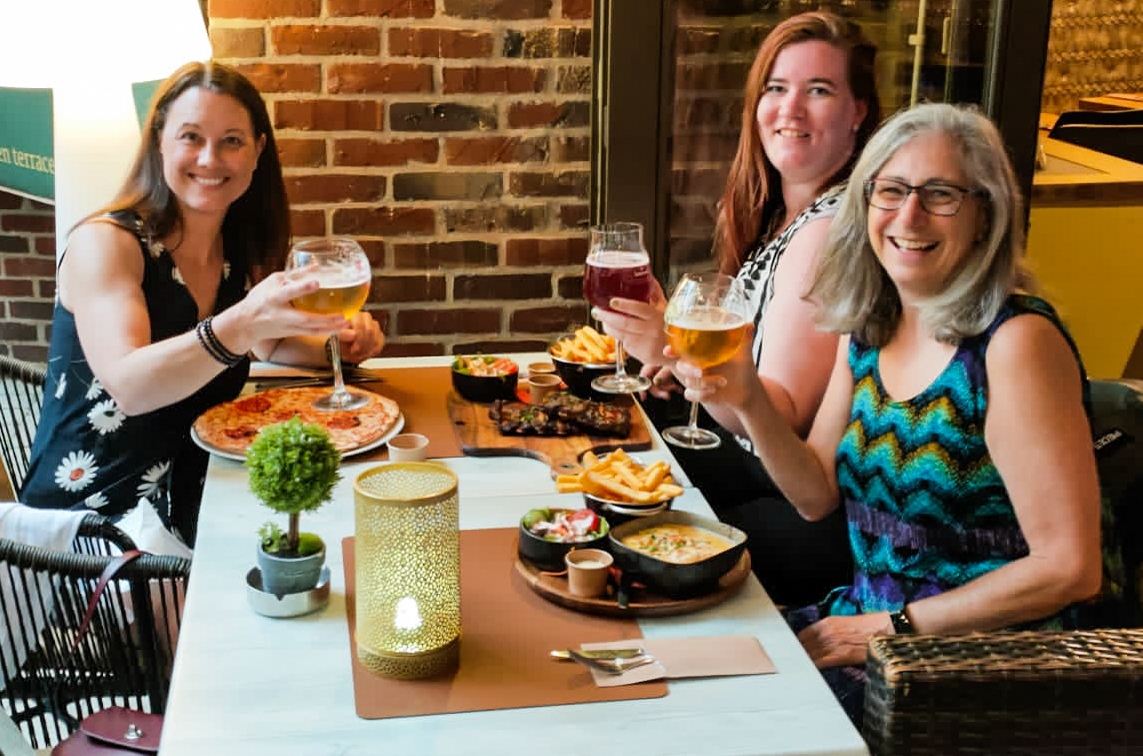
After my busy (and eventful…) day in Ghent, I arrived last night in Brussels.  I enjoyed dinner in the Grand Place, eating outside until the rain began to fall.  I finished my dinner inside the restaurant.  Yep, I’m still a bit nervous about eating inside (corona…), but I chose eating while remaining dry.

Today was a bit of a mishmash.  Tristan, my free walking tour guide for my 10:30 am tour, did a fine job.  He’s only been doing this for a couple of weeks, so as he became more comfortable, he did a better job.  We saw the major sites near the center of town, all near my AirBnB.

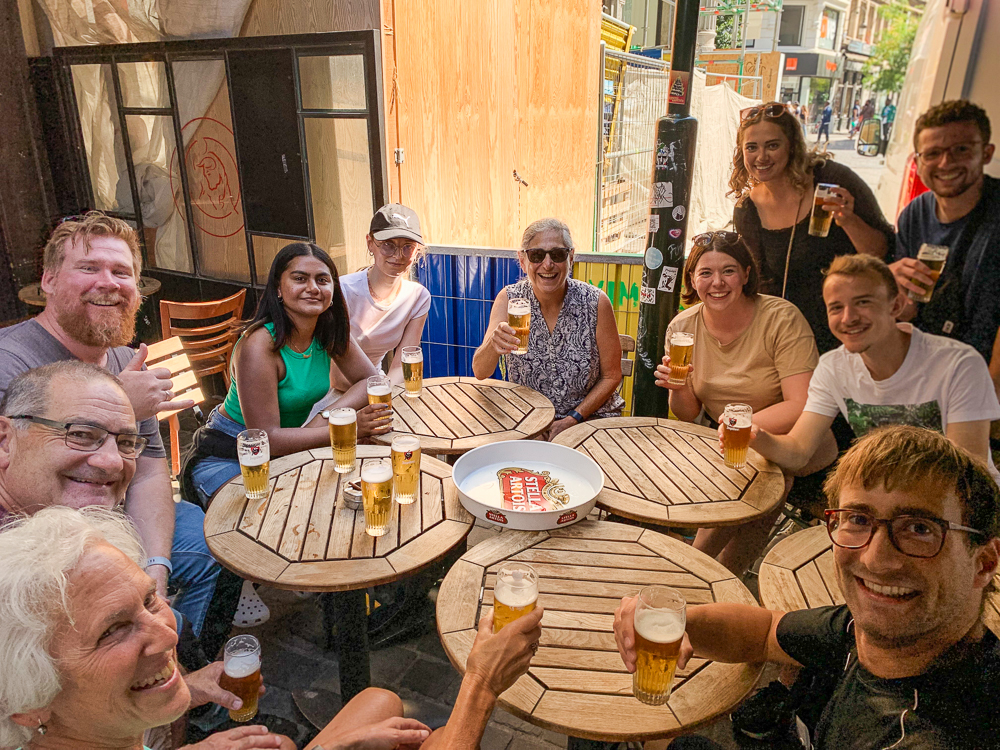
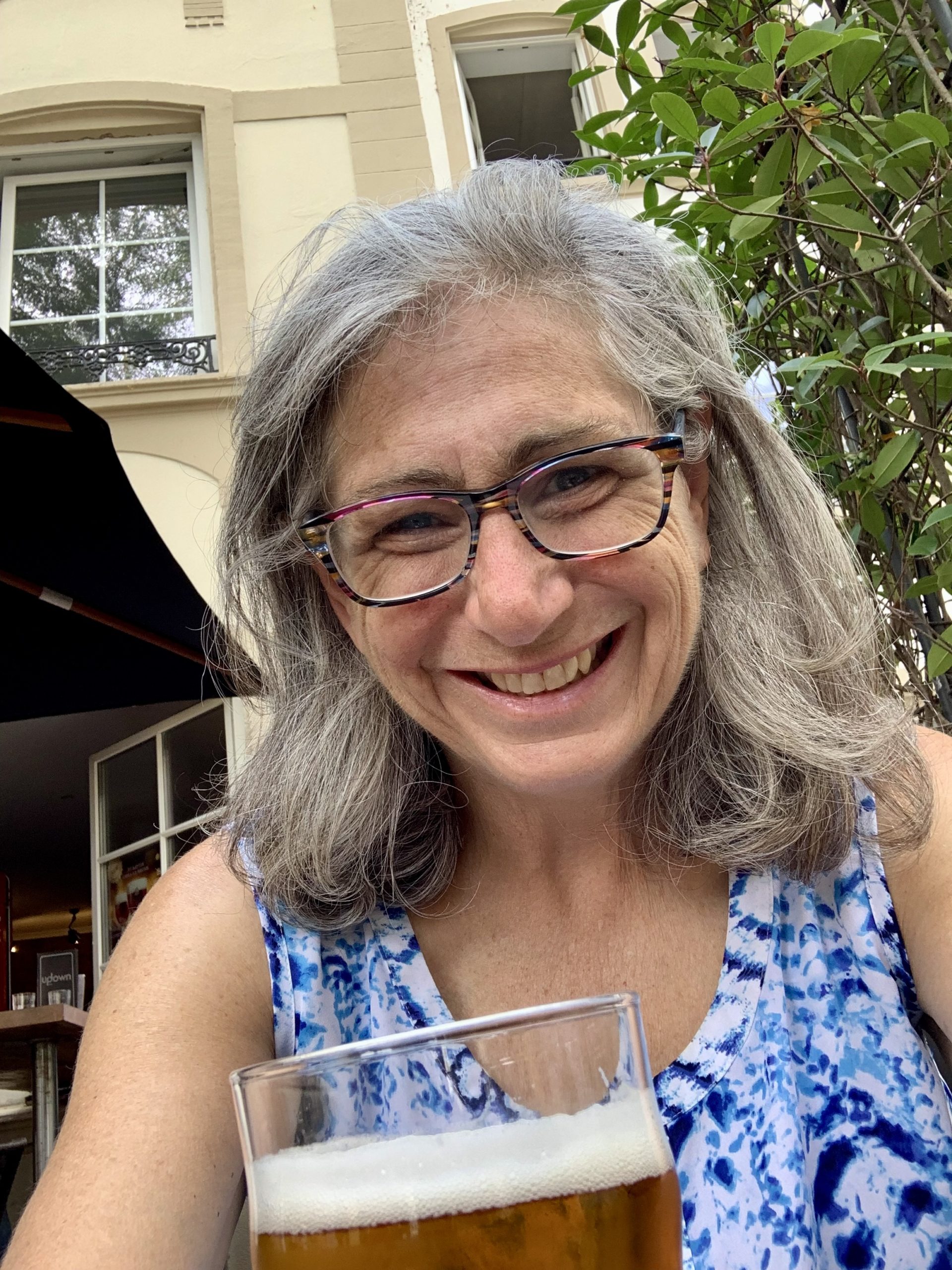
When the tour ended, an Aussie announced the “next tour,” beer and fries!  About a dozen of us joined him.  We found a pub and drank (lots of) beer and then a place to buy fries (frites).  One couple from Cincinnati will be on a barge & bike tour with the same company Joel and I used, boatbiketours.com.  They’ll be heading from Bruges to Amsterdam.  Most of the others are students or recent grads.

I’m typing this at about 7:00 pm… At 8:00 pm, many of the us will be meeting in the Grand Place for dinner and, of course – ya know, it’s Brussels! – beer.  🙂

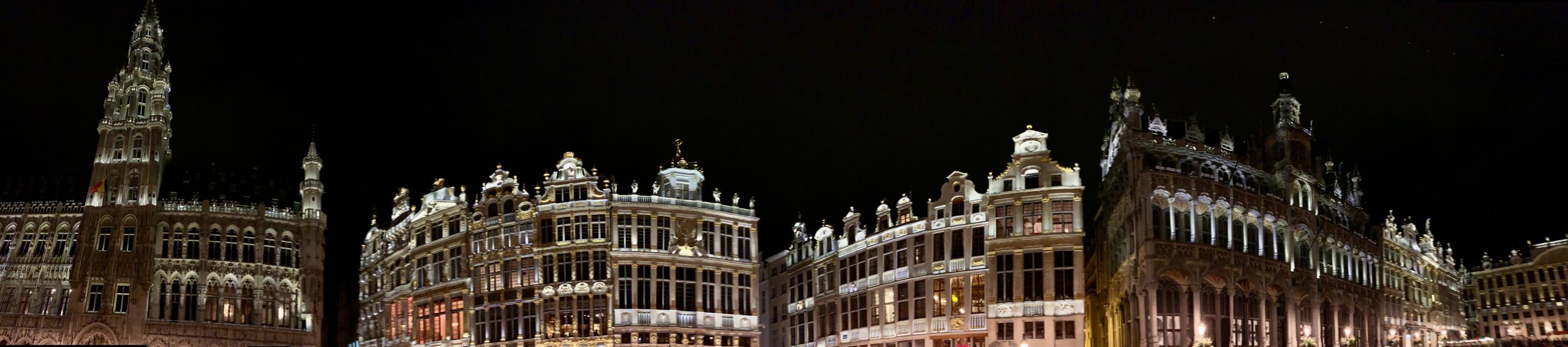
Grand Place at nighttime.


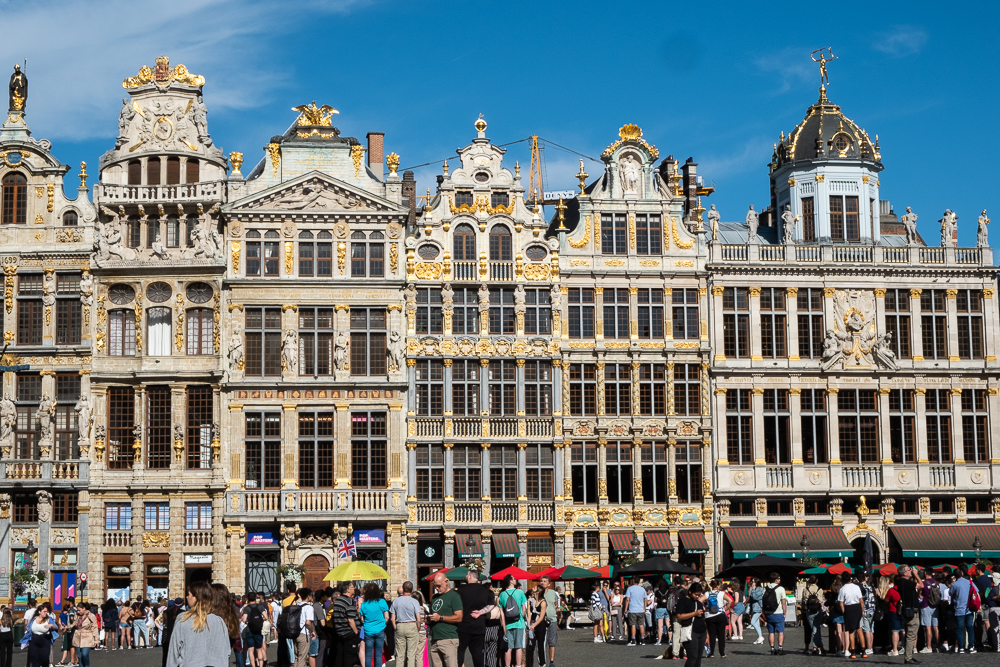
Grand Place during the daytime.


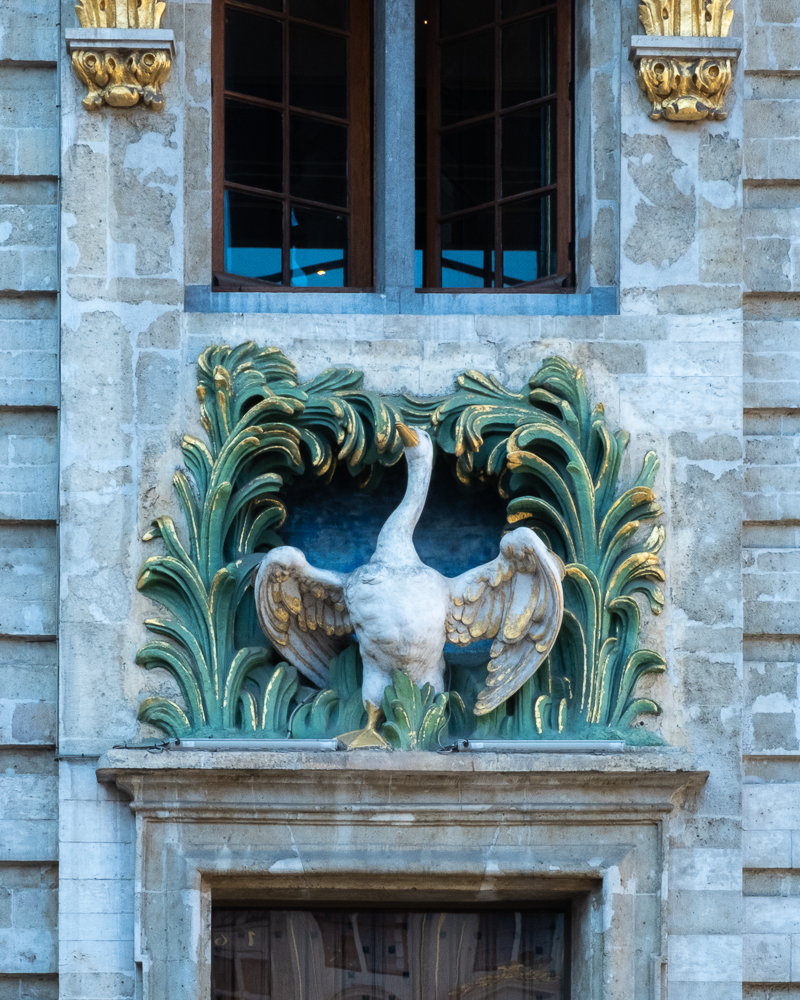
The “butcher’s guild” building.


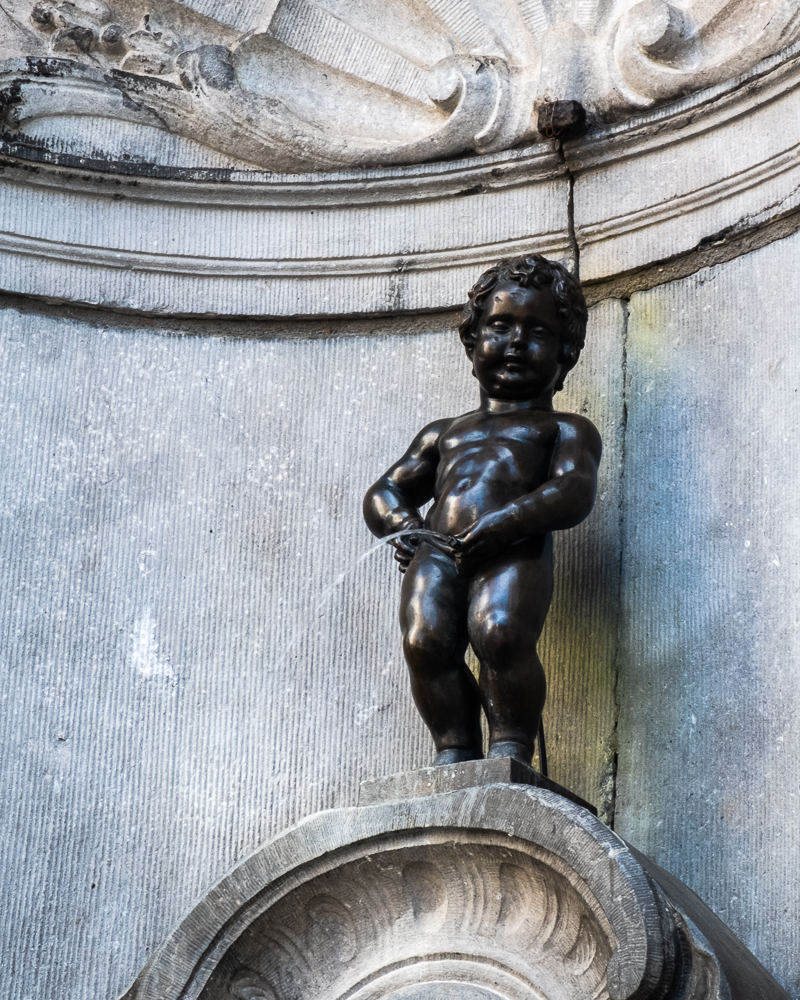
Manneken Pis (little pee man in Flemish).


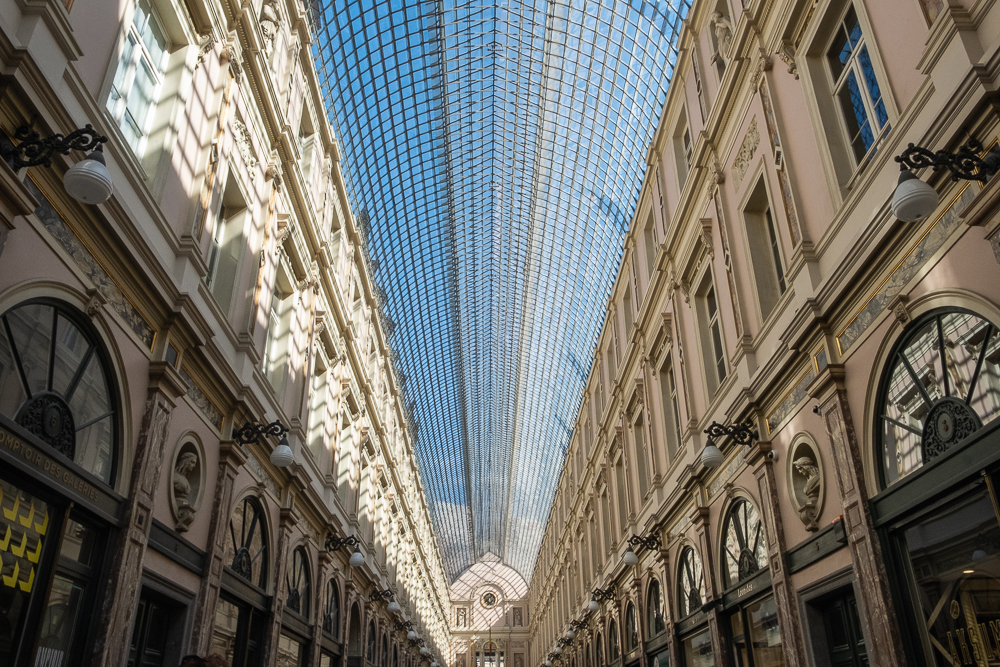
The Gallery, which is modeled after Milan’s Arcade.


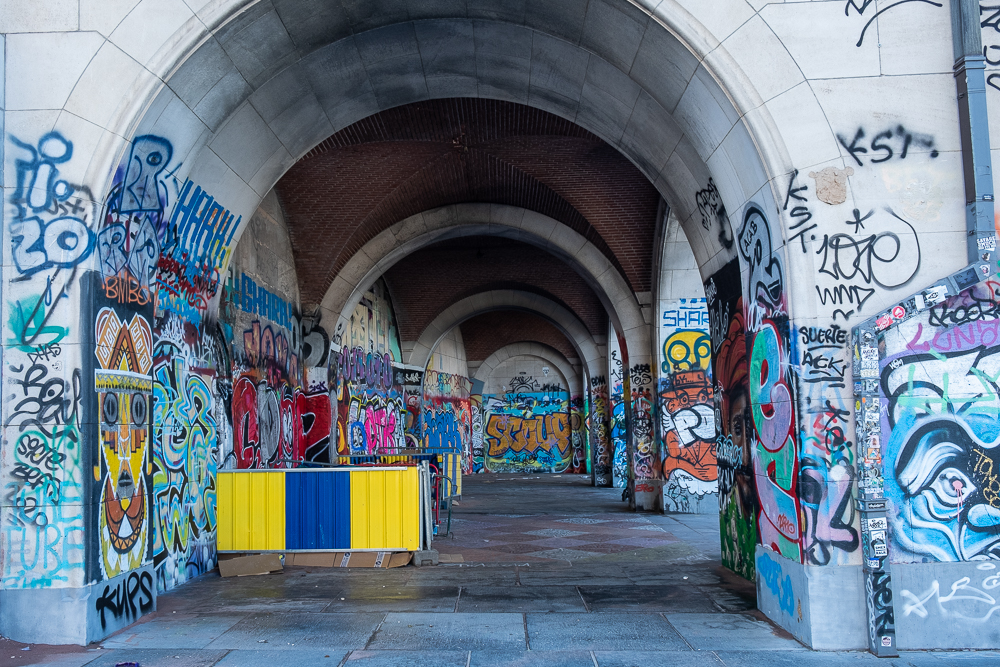
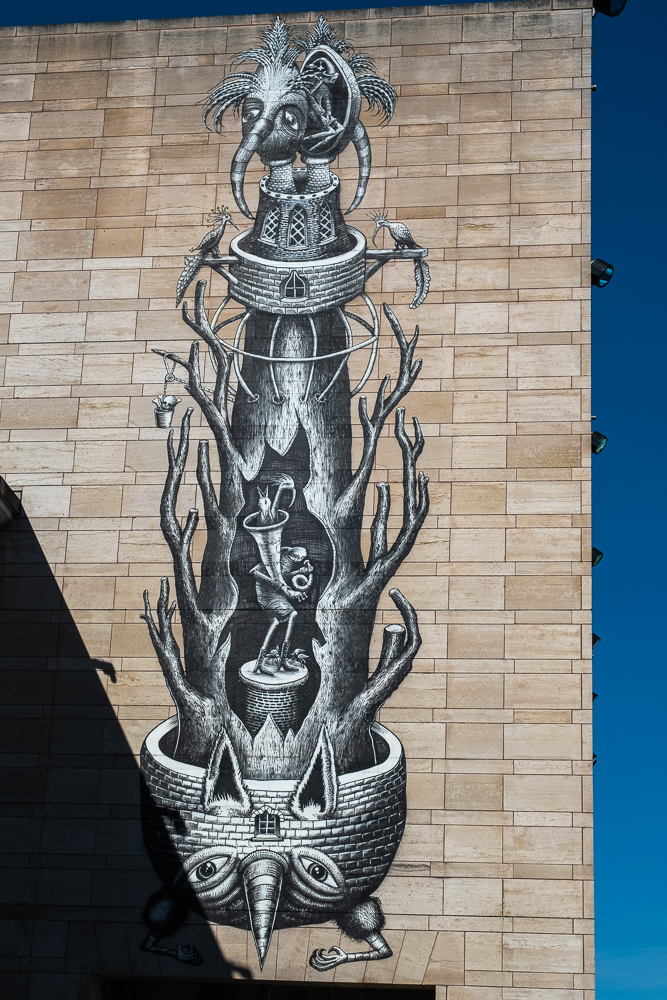
A few shots of street art!


The “tour” after the tour.

Oops!  Had to happen, eh? 

While preparing to stop in Ghent on my way from Bruges to Brussels, I said goodbye to my FABULOUS B&B hosts, Christine and Daniel, and hopped on my train.  At the Ghent Central Train Station, there were only a few luggage lockers.  All were full until – yay!  Two people emptied a locker and I tried to reserve it.  The pay pad wouldn’t take my Apple Pay, the way I’ve paid 99% of the vendors on this trip, so I dug out my coin purse with my debit card and…left my coin purse by the luggage lockers!  Oh, well.  I have my passport for ID, and I hid extra credit cards in my bags.  I locked my lost cards, ordered a new drivers license, and notified the train station about my lost coin purse.  Biggest bummer is the €150.00 which is lost forever…

I am NOT, however, going to let this mishap ruin my day or my trip! 🙂

This morning, during my lovely breakfast at B&B Stoega, I asked Christine about the best way to get to the train station.  She offered to give me a ride.  So nice!  Then I discussed photography with Daniel.  He’s a talented photographer who is taking his retirement hobby to an amazing level.  I’ve taken one course; he’s getting a degree in photography!  If you would like, take a look at some of his creative work on instagram:  @phototrail_dd.  And when (not IF!) you visit Bruges, I HIGHLY recommend B&B Stoega!

Ghent is so different than Bruges!  Bruges’ medieval buildings present a unified perception of the city.  The main sites are clustered within its walls, allowing visitors to imagine what the city was like long ago.  Ghent has some similar sites – churches, cathedrals, a castle, plazas, fountains, canals – but they’re interspersed with modern buildings and facilities.  Ghent is less unified than Bruges.

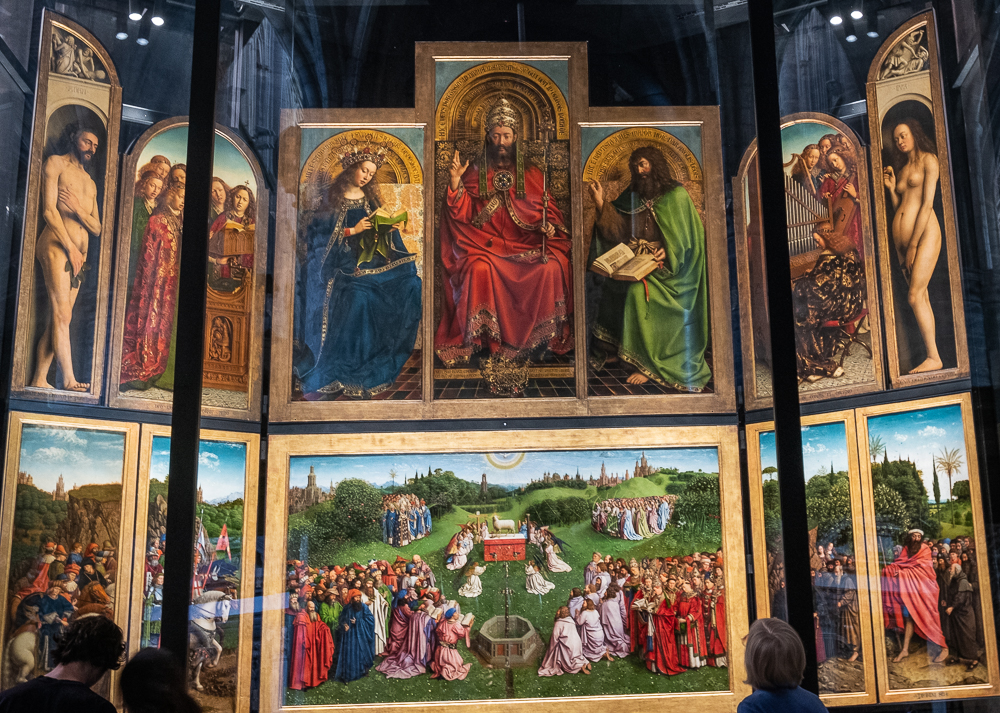
In Ghent, I had to see the Ghent Altarpiece, or ‘The Adoration of the Mystic Lamb,’ by the Van Eyck brothers in St. Bavo’s Cathedral.  One can explore the cathedral free-of-charge, but to see the Mystic Lamb, there’s a charge.  I decided to go whole hog – or should I say whole sheep?! – and paid for the augmented reality tour.  Wearing a special headpiece, I saw holograms as I listened to speakers sharing the history of the Mystic Lamb.  So cool!  I’ve never done anything like this and was very impressed with the engagement of augmented reality!

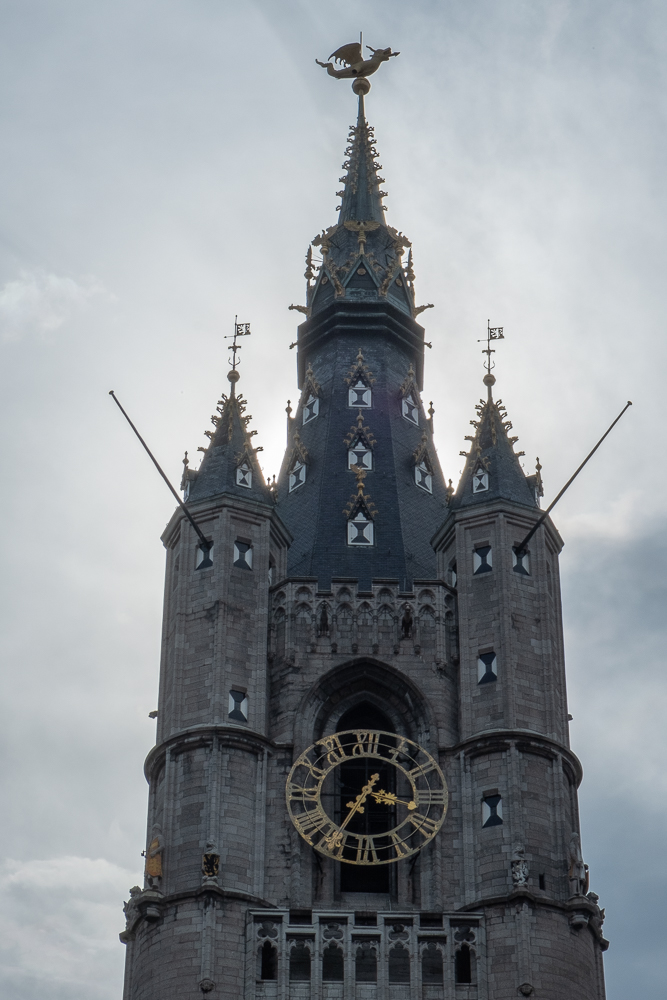
Following the Mystic Lamb, I wandered around the city, making sure to take a look at Gravensteen, a medieval castle.  Next up?  The dragon on top of the Belfry of Ghent!

Now, I’m ensconsed in my AirBnB in the center of Brussels.  Soon, it’ll be time for more exploration!

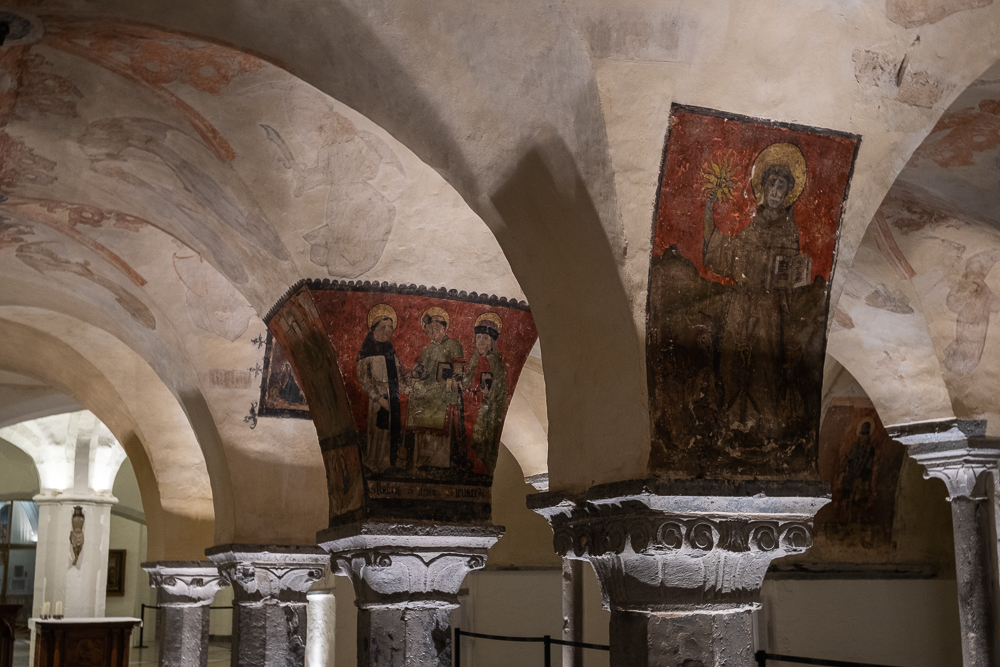
Frescoes in the crypt of St. Bavo’s Cathedral.


The Mystic Lamb, consisting of 12 panels, was stolen in part or whole six times.  After the most recent theft by the Nazis, it was recovered by the Monuments Men.  Glass protects it from visitors; getting a clear photograph of all 12 panels presents difficulties.


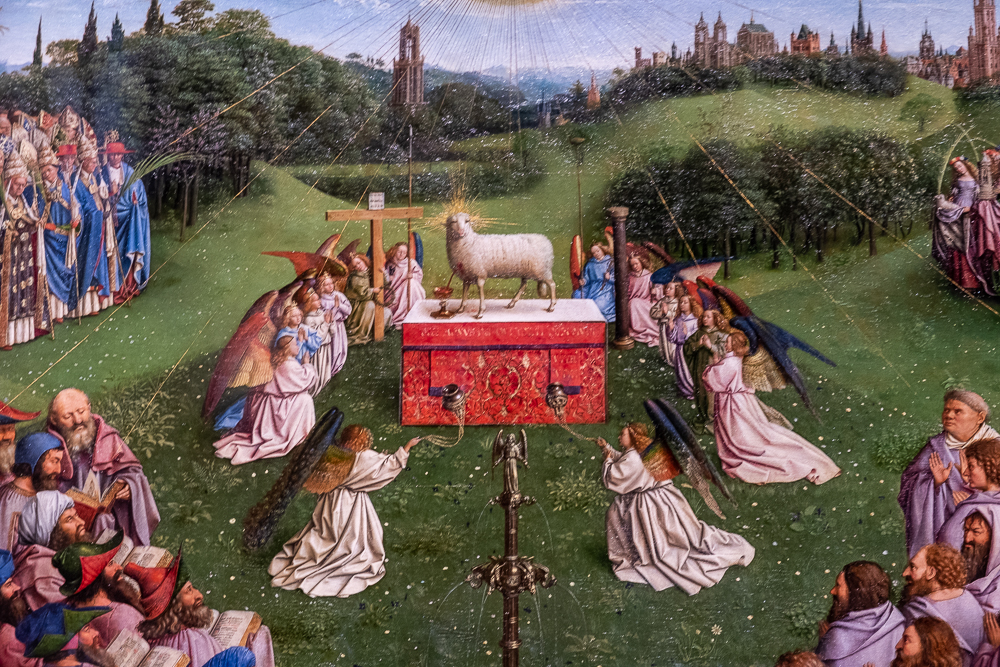
A close-up of the lamb itself.  I love looking at artwork from various distances.  Close, I can see detailed brushstrokes and color mixes.  Far, I can grasp the totality.  For this piece, I had to use my camera to help me “see” more of the work.


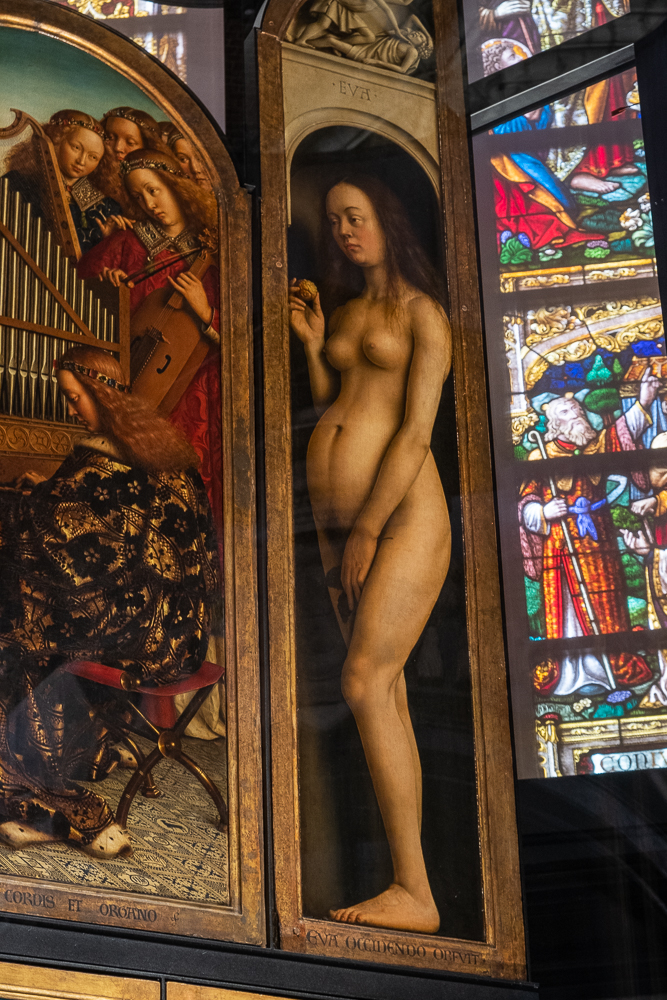
At one point in history, the Adam and Eve panels were stolen.  Artists created duplicates, with Adam and Eve wearing clothes per custom at that time.  Later, when the two panels were recovered, Adam and Eve returned to their natural state.  I find it interesting that Eve is pregnant.  A woman’s only – or most important – role according to the artists…?


I have no idea what this building is!  A pianist was playing inside…


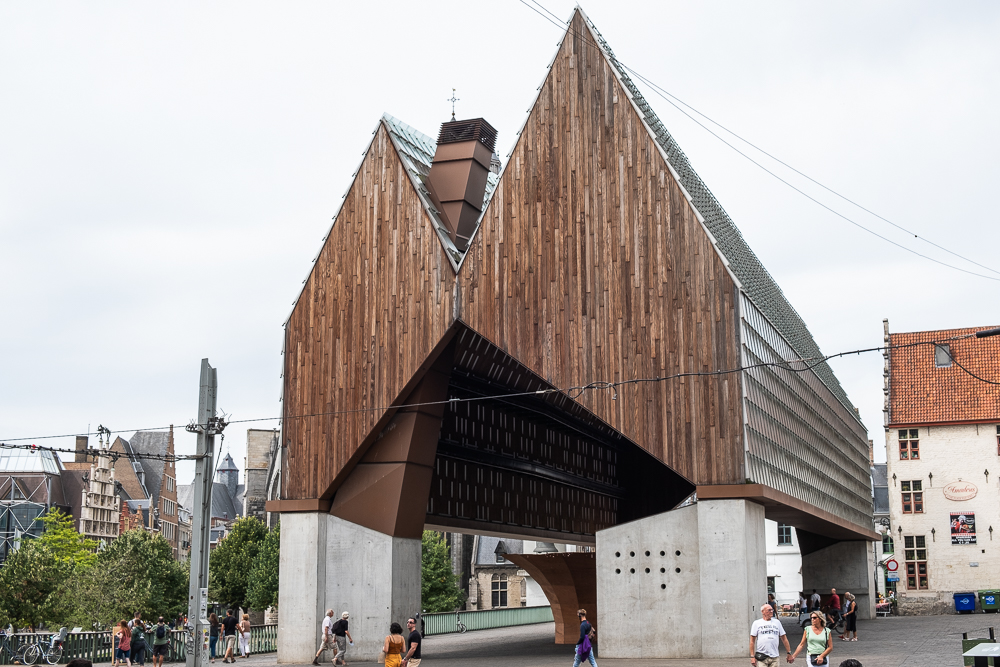
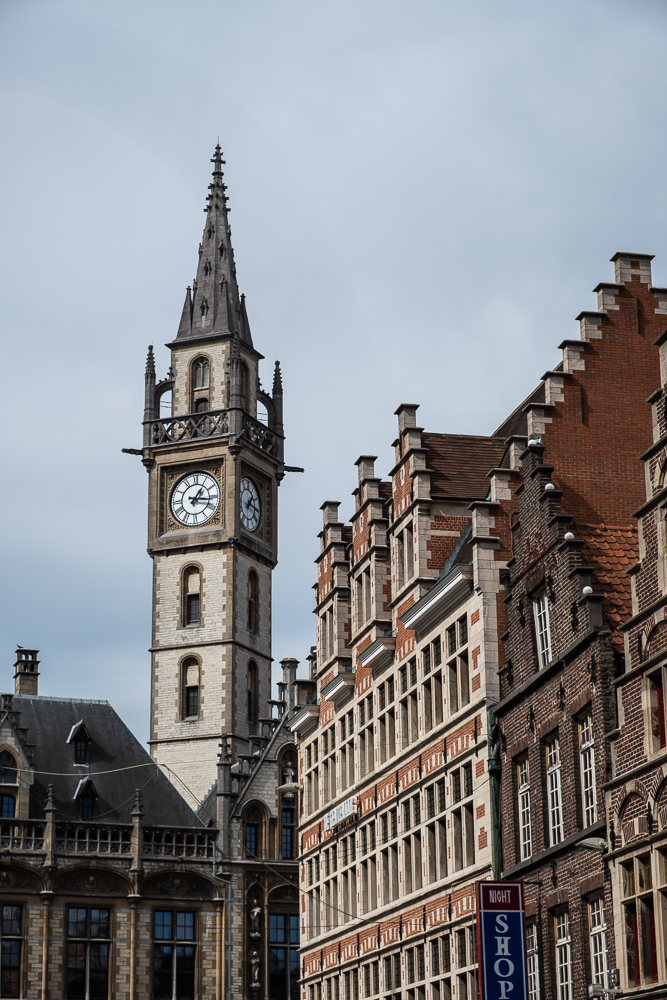
Ghent.


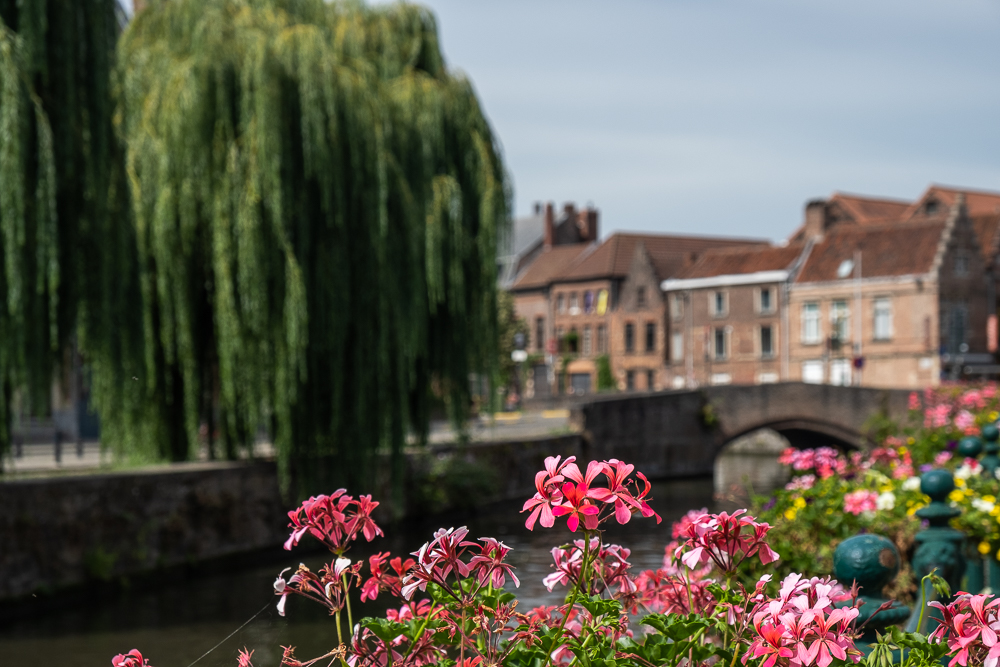
Weeping willow, canal, bridge…flowers!


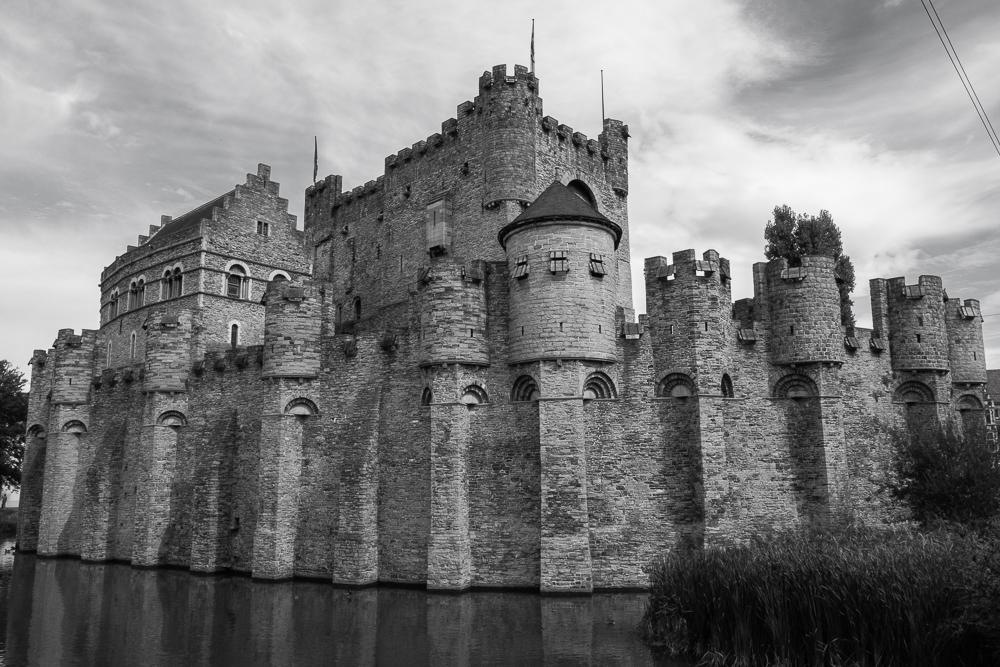
Gravensteen and its moat.  (Playing with black & white!)


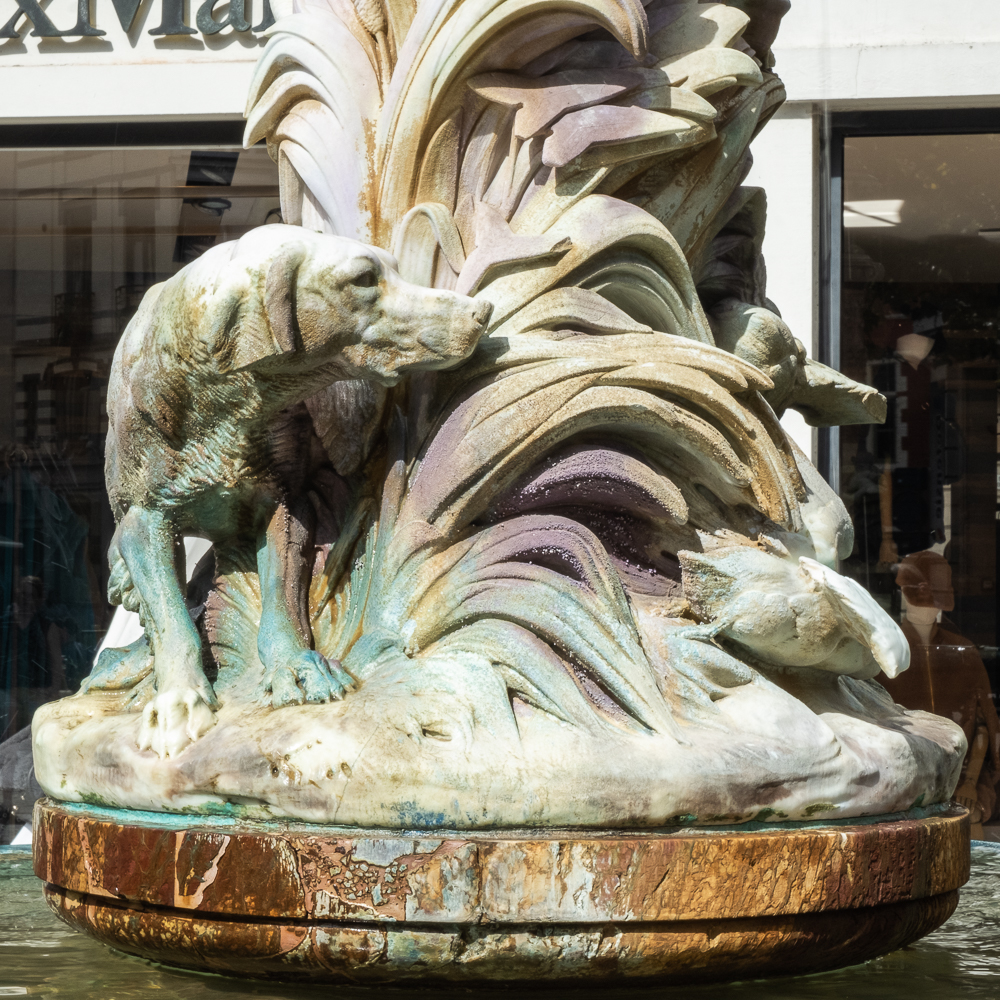
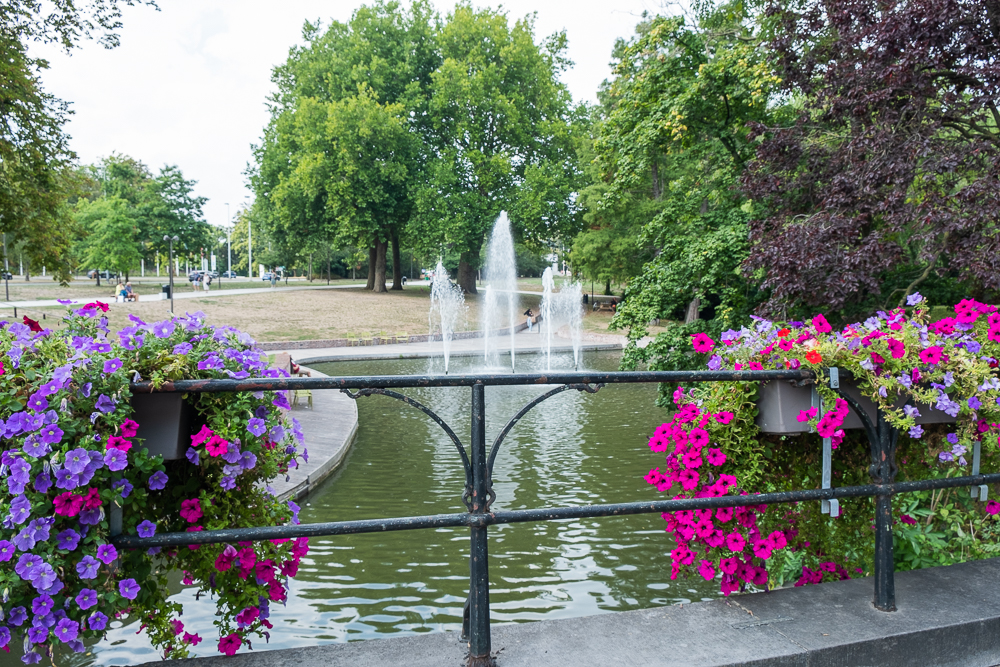
One of several fountains.  I thought the dog was cute and the colors surprising.


Dragon atop the belfry.

In the summer of 2019 BC (Before Covid), I taught for the University Studies Abroad Consortium (USAC) in Torino, Italy.  After my teaching stint ended, I solo traveled to Krakow, Prague, Cesky Krumlov, Bratislava, Budapest, and Athens.  (A few days later, Joel met me in Athens, and we continued onto Crete for his son and now daughter-in-law’s destination wedding.)

What became apparent to me is that as much as I enjoy cities, especially the architecture, gardens, and “surprises,” I do not enjoy crowds.  I also need nature!  I need to be out of the city and, preferably, in the hills or, at the very least, on a trail.

When my host Christine and I were chatting a couple of days ago, she suggested, knowing that I like to walk, a day trip to Damme, a nearby village.  I decided to take her advice, prepared my backpack, and headed to Damme this morning.  (My initial thought was to take a boat on the canal back to Bruges, but it wasn’t available today.  No problem!  It felt good to have a ten-mile day!)

What did I see?  Canals, a windmill, horse-drawn carriages, cows, vintage cars, cute buildings… It was another wonderful day!

[Note:  Such a wonderful day, I had to sort through 133 photos!  These represent my favorites from today.]

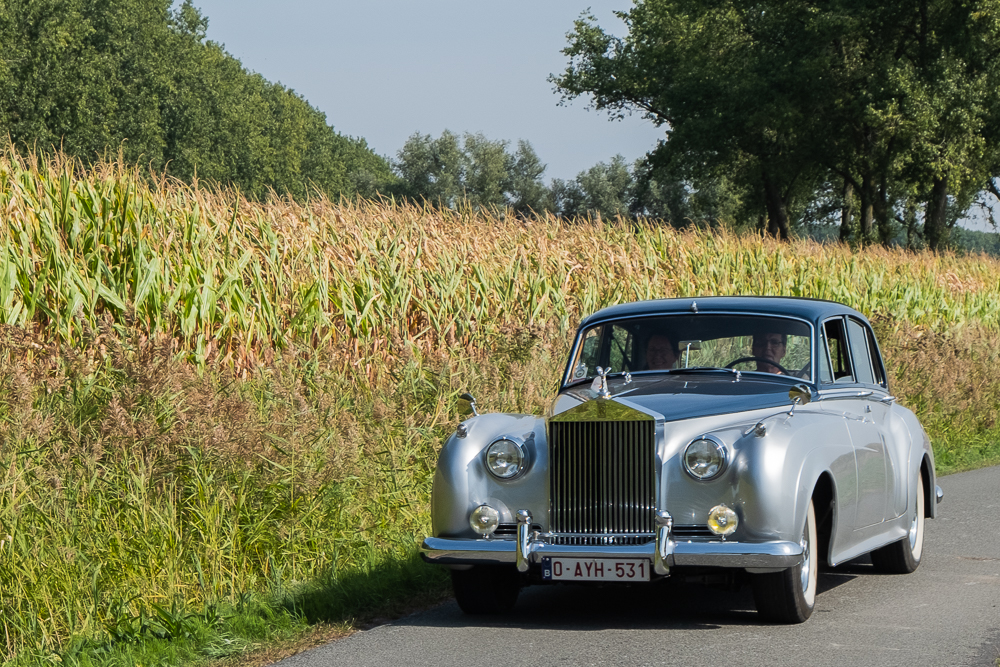
A line of vintage cars passed me on the road.  As they went by me, I quickly snapped some pics.  Here’s the best of the bunch.


I’m not in the big city (if we can call Bruges big!).


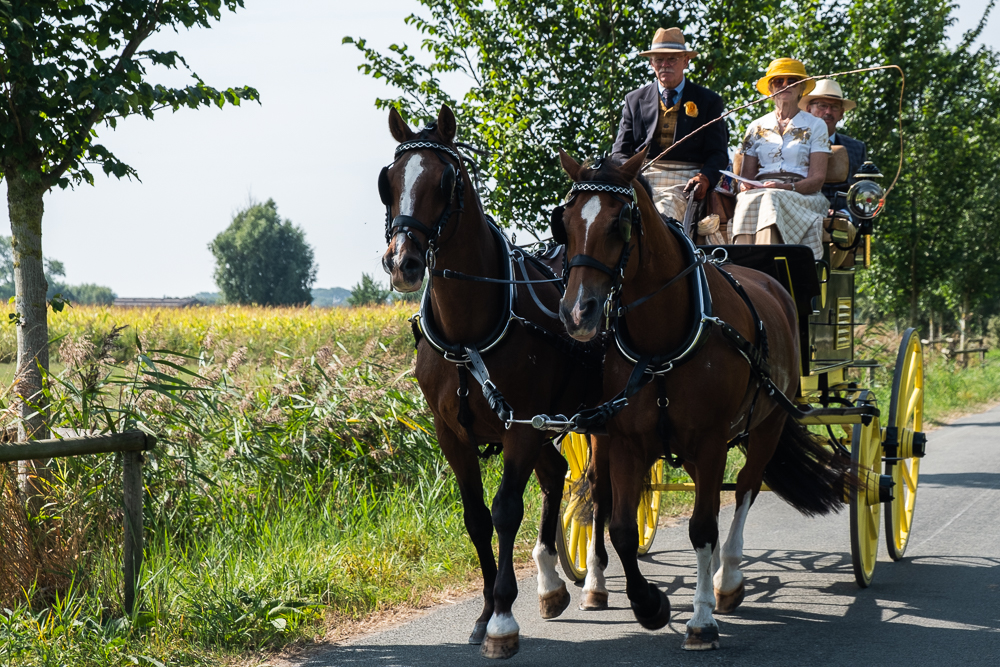
There must have been a festival or event happening along my route as horse-drawn carriages passed by me.


I was never alone.  Lots of cows and horses to keep me company!


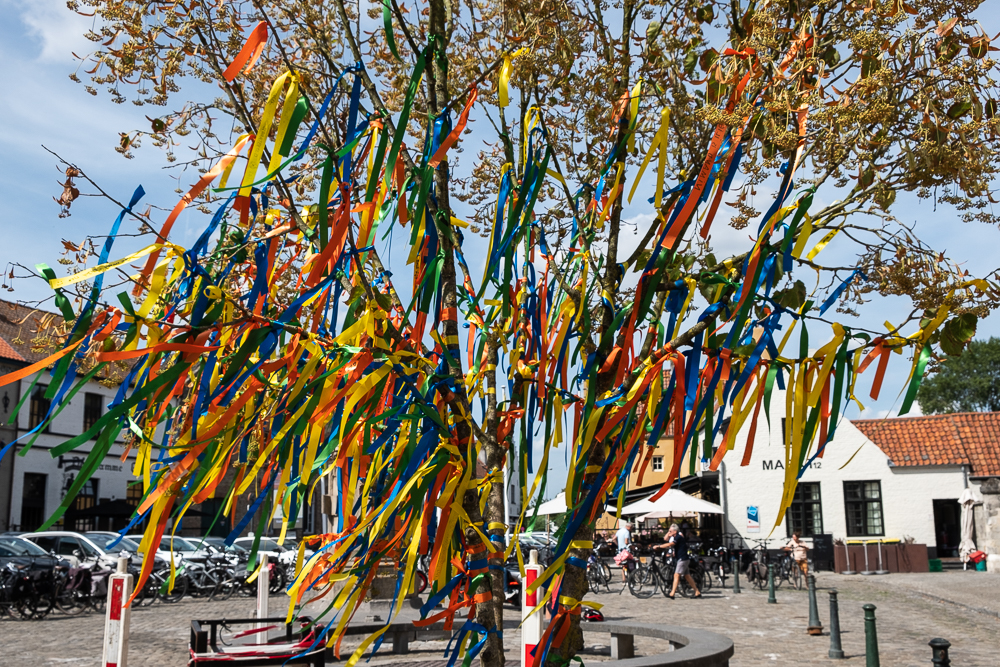
In Damme’s plaza, I found this “wishing tree.”
“After the past difficult corona years, the city of Damme wants its citizens and visitors to start dreaming again.  Put your dream, wish, or message in this wishing tree.  The tree stays put until 18 September 2022, when the event ‘Time for peace’ will take place.  The wishes that were placed in the tree will be used during this celebration and maybe some of them may actually come true.”


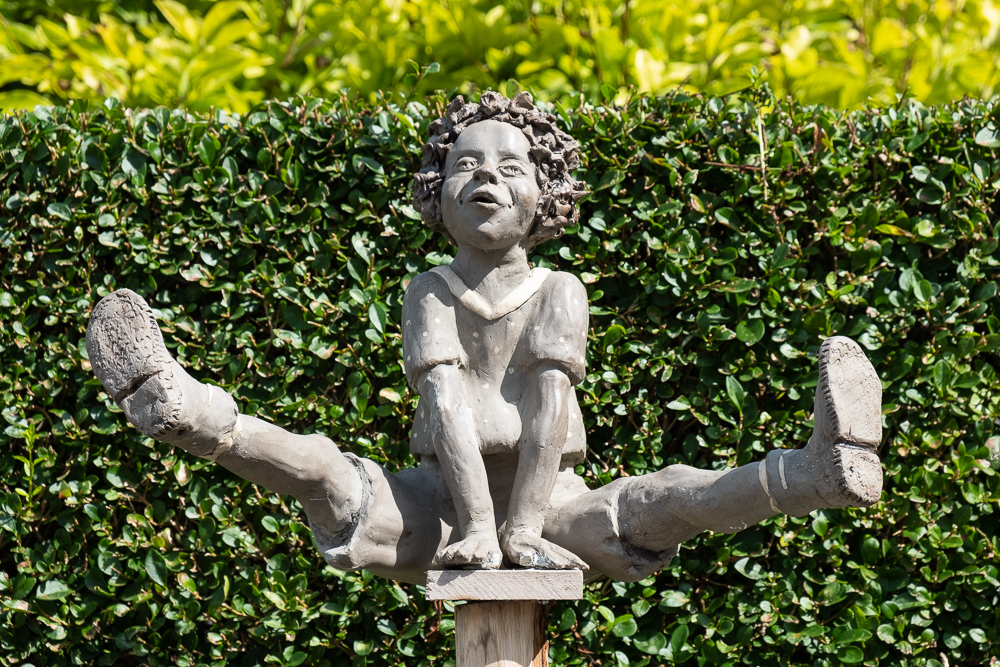
Oh, the joy on her face!


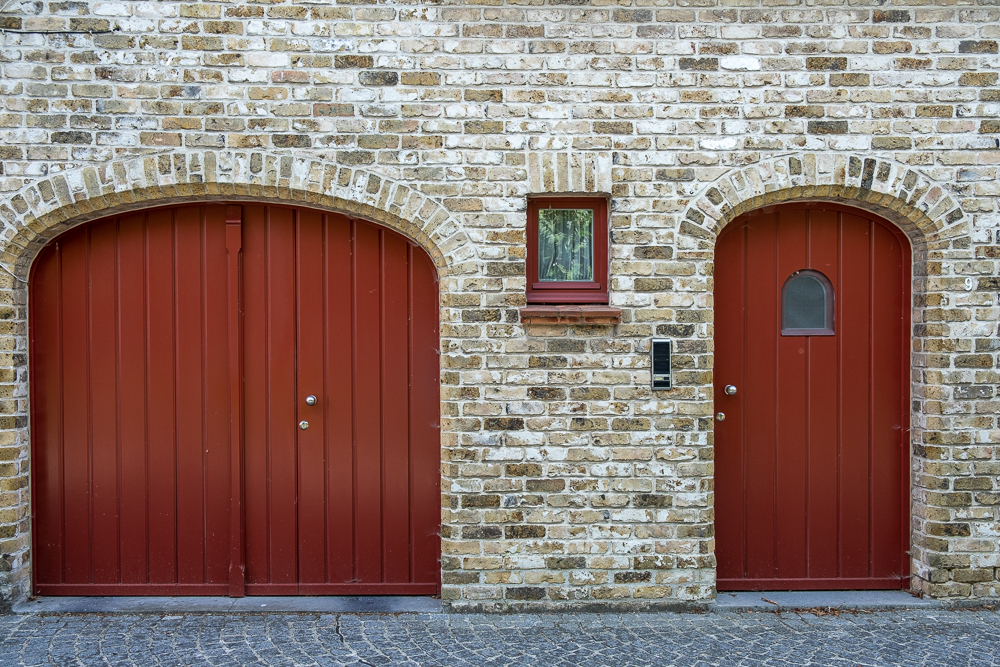
I am enamored with doors and windows!  I took so many photos of them but culled them down to just this one.


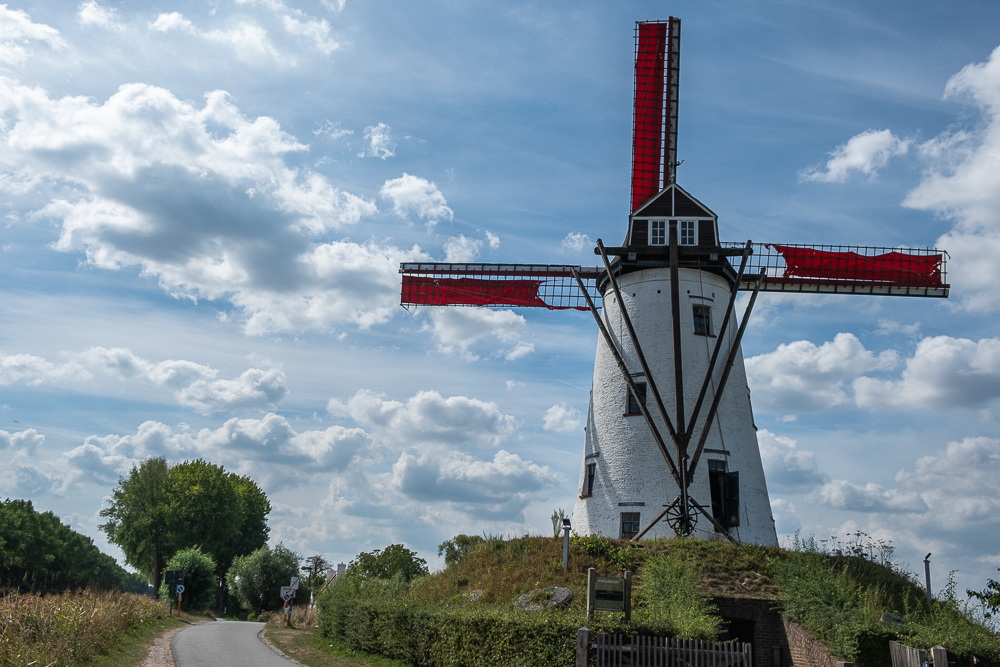
Windmills are not just in Holland!


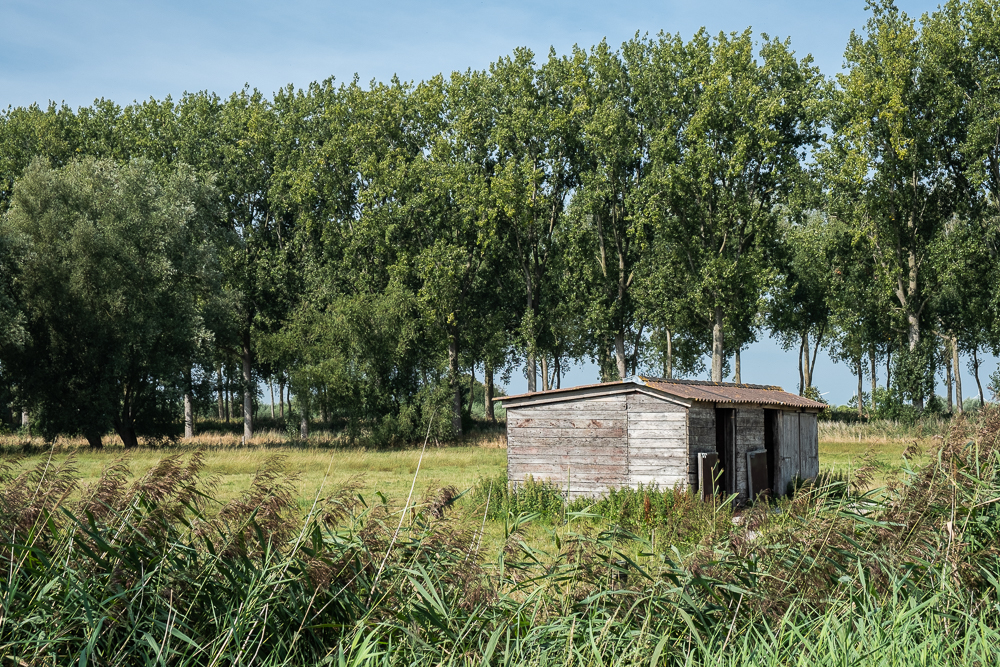
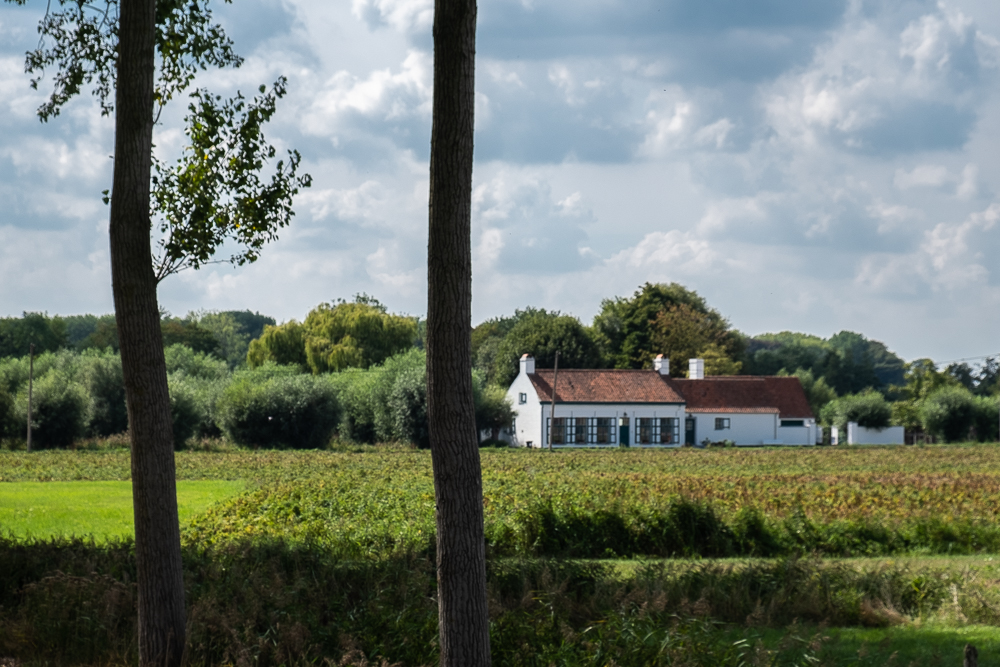
A far off farmhouse.


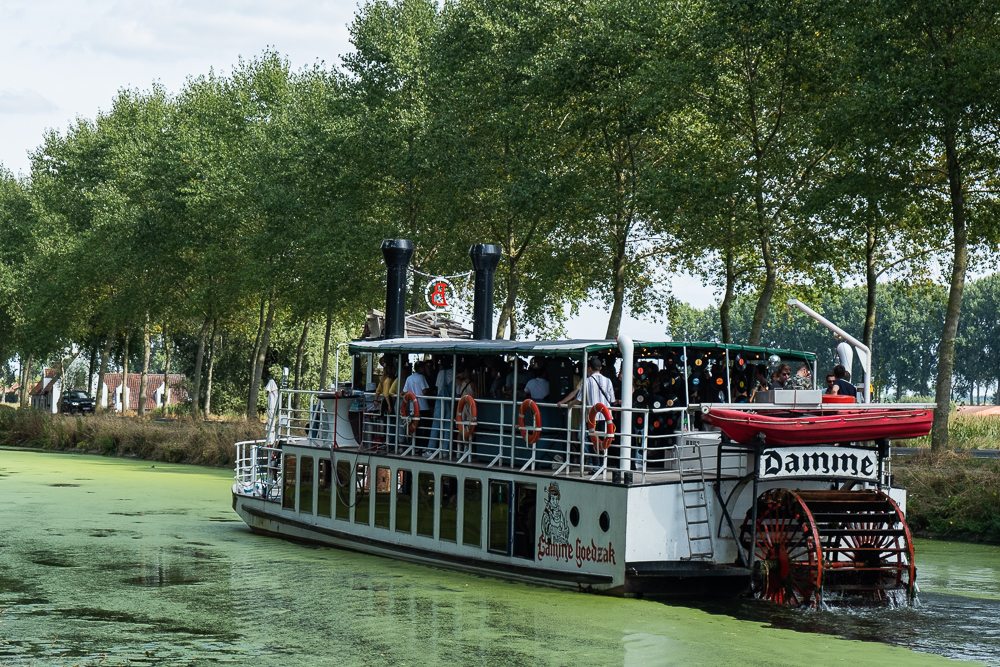
The canal boat I thought I would take instead was a “party boat” today.  I heard it coming very much before I saw it!

Today, I took it a little easier.

Following my delicious breakfast at my B&B, I met Geerte in the market square, thinking we’d see the first “knighting” in 430 years.  Oops!  That’s scheduled for tomorrow, not today. 

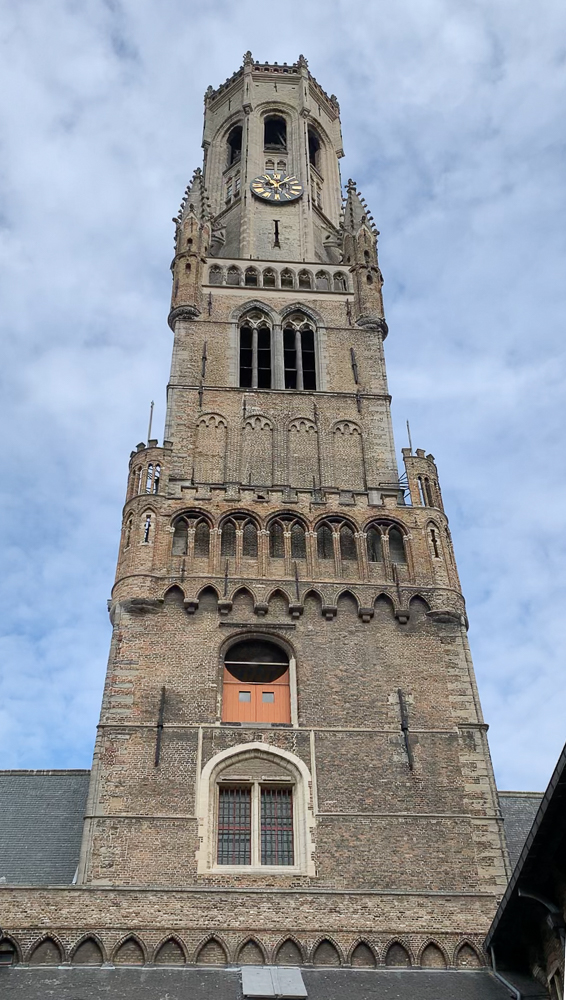
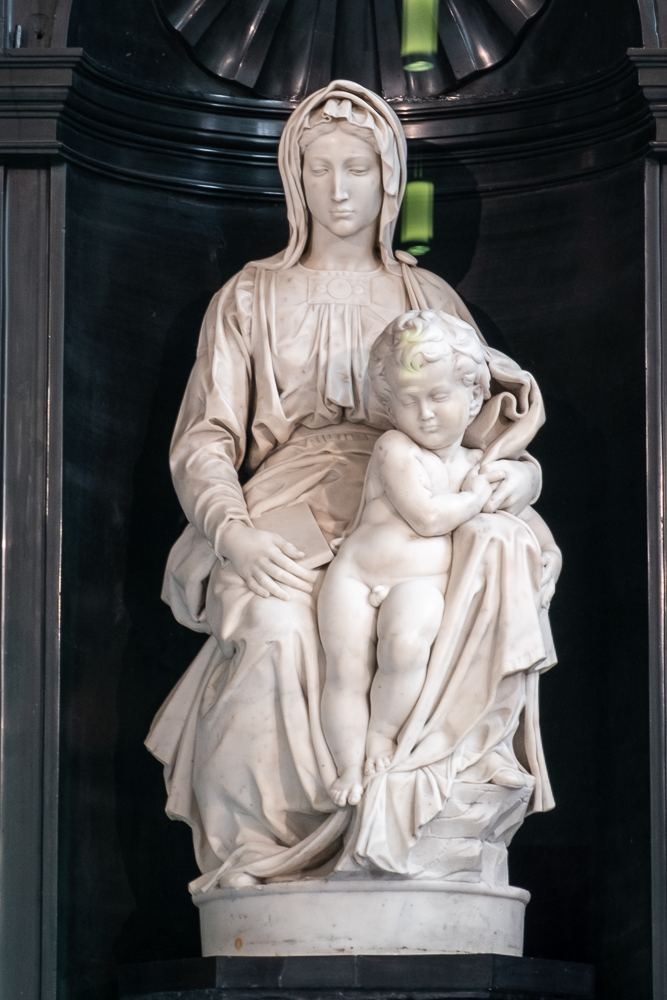
Instead, we sat in the courtyard of the Belfry of Bruges, a medieval tower, to listen to the 11:00 am free, live carillon concert.  Next, we visited Church of Our Lady so we could see Michelangelo’s famous white marble sculpture, Madonna and Child, the only sculpture of Michelangelo to leave Italy during his lifetime.  The sculpture was stolen twice from Bruges.  First in 1794, French revolutionaries captured the piece, which was returned after Napoleon’s final defeat at Waterloo in 1815.  In 1944, German soldiers smuggled the sculpture wrapped in mattresses using a Red Cross truck.  A year later, the “monuments men” recovered Madonna and Child from a salt mine in Austria.

Geerte left for Utrecht after seeing Madonna and Child, so I meandered over to Garlic and Greens, a vegetarian Indian restaurant for a relaxing and delightful lunch.

Then what?  I thought about going into some of the churches, cathedrals, and museums I’ve seen from the outside.  However, the crowds!  I’ve been in Bruges since Thursday afternoon, and the quantity of tourists was quite manageable.  This changed today!  Cruise ships arrived, visitors from nearby towns arrived, people from all over arrived.  Time to move out of the city center.  I walked to Beguinage Monestary and relaxed on a bench, with my book, by Minnewaterpark.

Slowly, with camera in hand and no map, I strolled (via a gelato shop!) back to my B&B.

Belfry of Bruges (click on photo for a 10 second video of the bell concert)


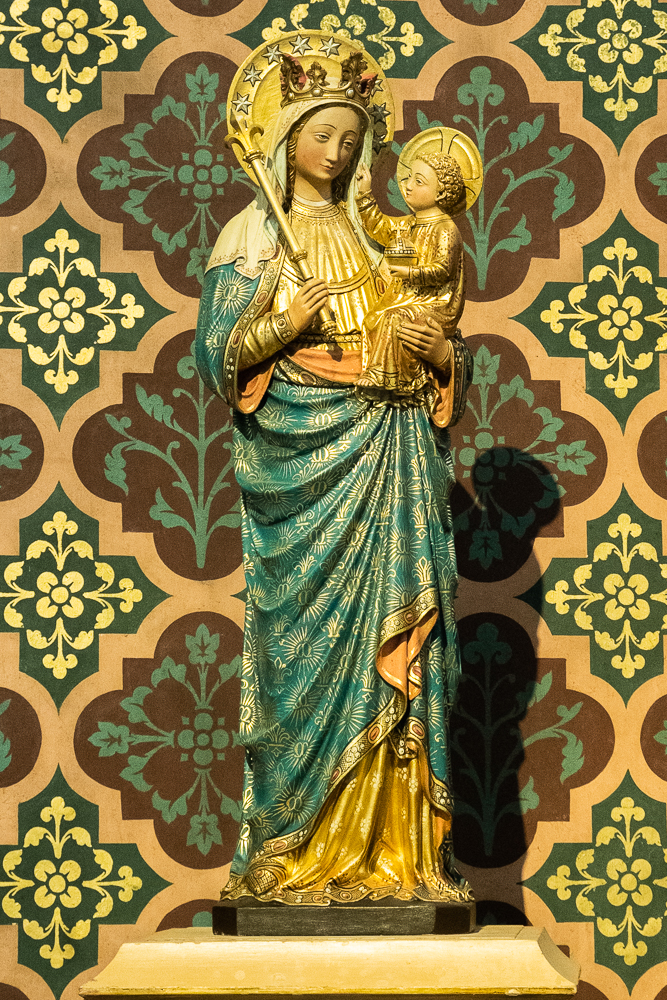
A traditional Madonna and Child…


Michelangelo’s Madonna and Child!


Saint John’s Hospital.


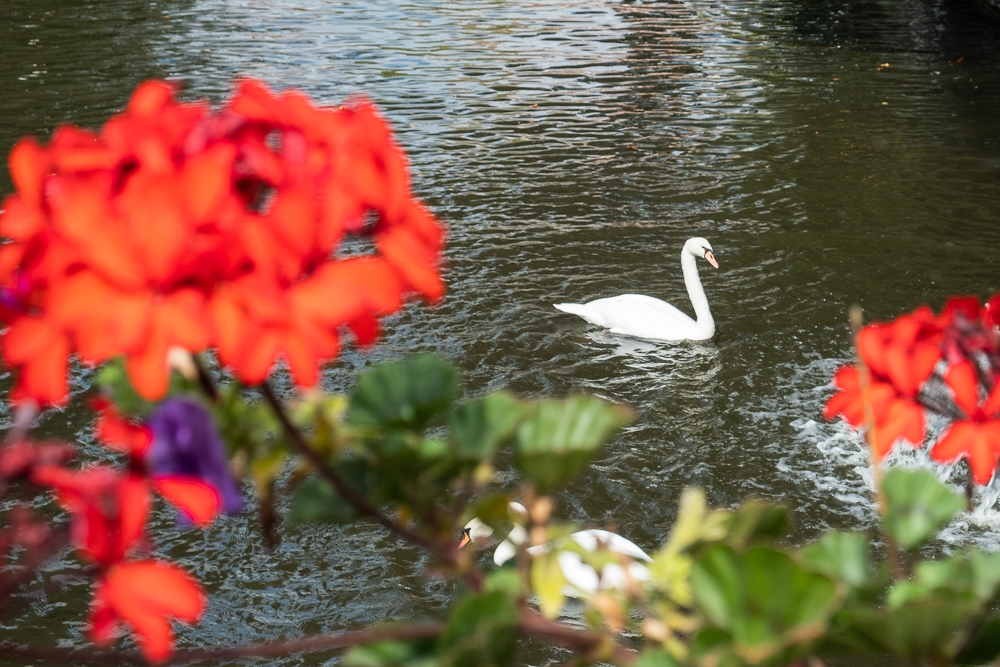
The goose that laid the golden egg?  No.  One of many geese near Beguinage.


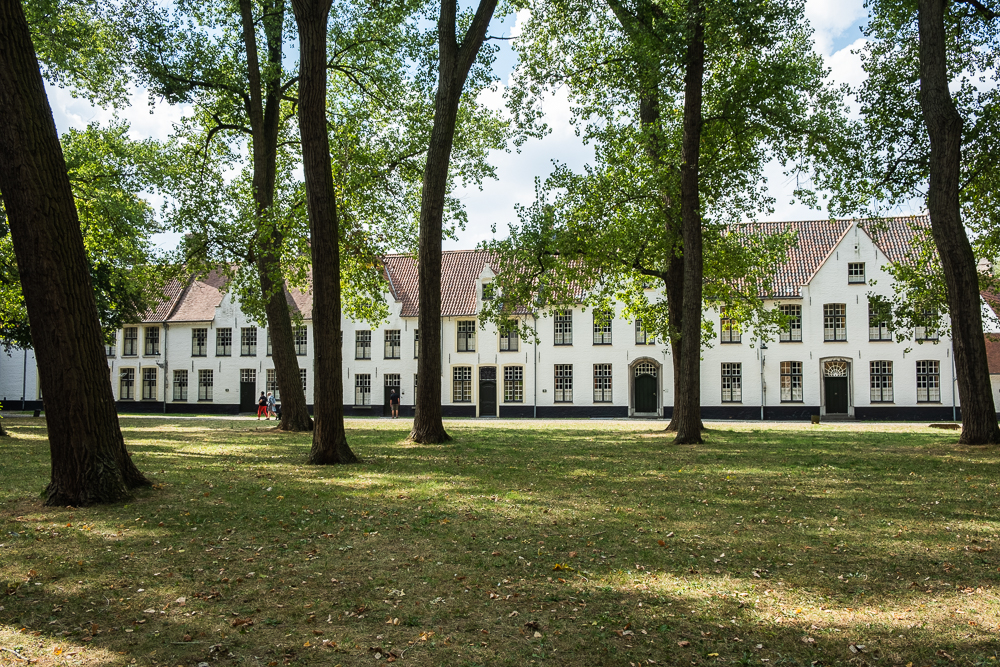
Beguinage Monastery.


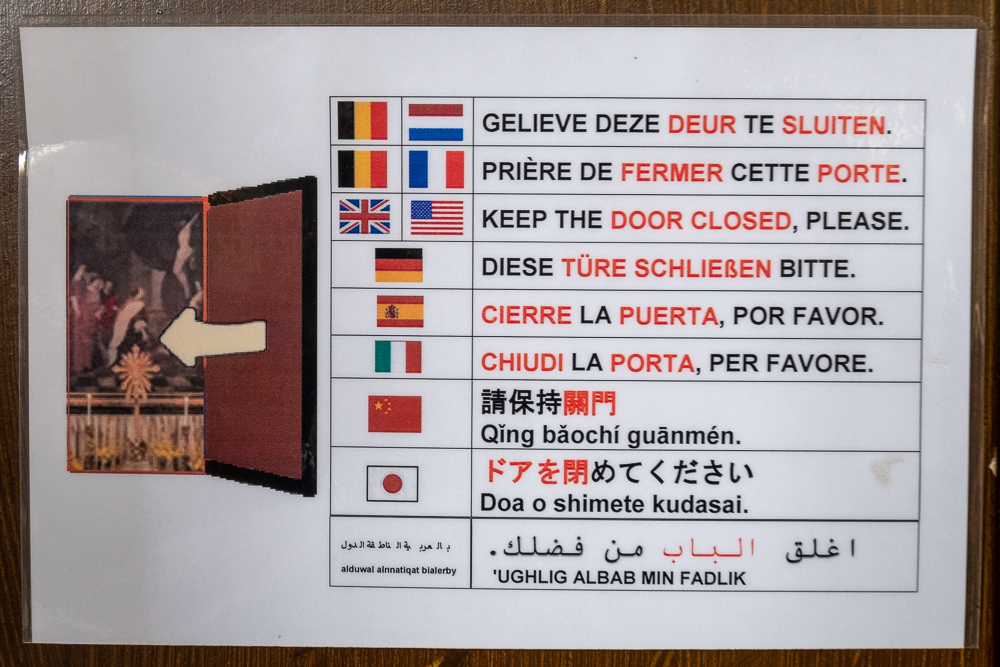
One of the few signs I’ve seen that show not only a British flag but also a US flag to symbolize English.


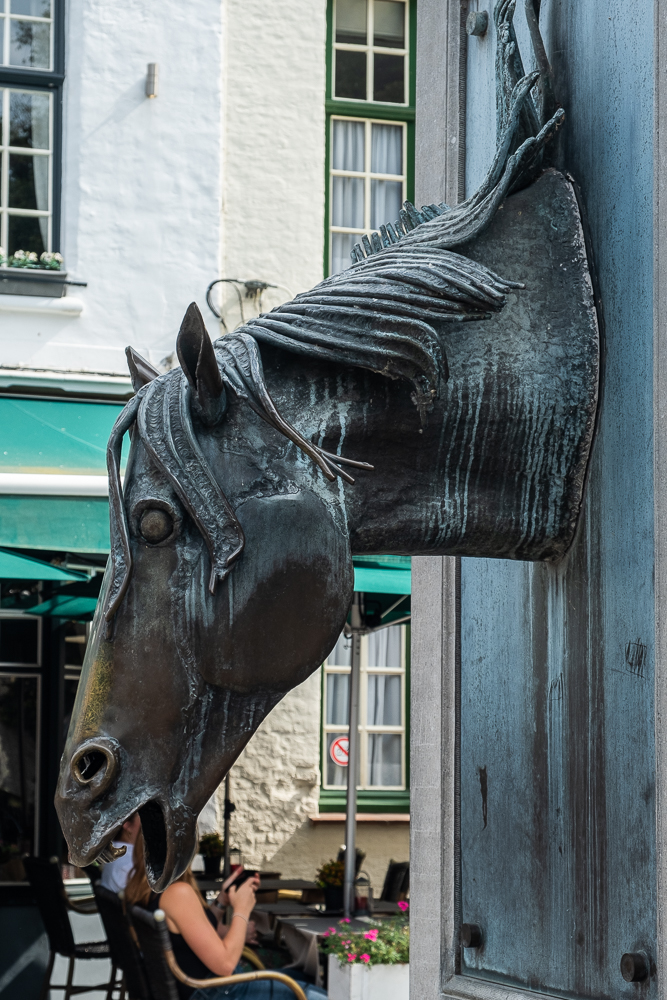
A horse fountain in a plaza.


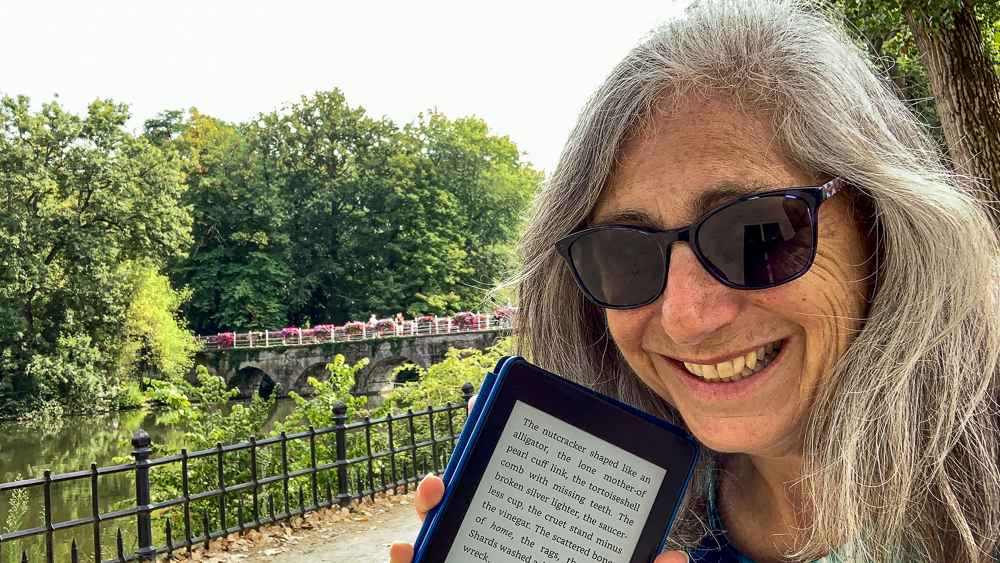
It’s hard to focus on my book…


…when this is my view!


A respite before returning to the crowds.


Today, I woke up after a short night’s sleep to a delicious breakfast served by my B&B hosts, Daniel and Christine.  If you’re ever in Bruges, I highly recommend B&B Stoega.  Daniel and Christine, who are just a few years older than I, converted their children’s upstairs bedrooms to en-suite units so they could host guests.  The room itself is large, fully furnished, and incredibly comfortable.  A surprise for those of us always trying to charge our phone: they have wireless and USB charging stations by each bedside.  Breakfast was a delectable array of yummy and healthy food.  Daniel and Christine both gave me great ideas of where to visit, adapting their recommendations to my preferences.  They even gave me a book with four local walking tours.  This is one of my most favorite lodging experiences!

After breakfast, I went on my second free walking tour – this one with a yellow rather than red umbrella!  Pascal, this guide, was fantastic!  Young, energetic, theatrical, knowledgeable, engaging.  He showed us areas of Bruges I hadn’t seen the night before with Louis.  Although Louis gave a good tour, his English was hard to understand.  Pascal, a Dutchman who relocated to Bruges, spoke very clearly.  It took no work to understand his English, so I could focus much more on his entertaining and interesting stories rather than on deciphering his words.

Next, I went to Cafe Vlissinghe, the oldest pub in Bruges, for a light lunch – salad, soup, small beer – and then walked…and walked…and walked.  There are so many intriguing sites to see in this small city!

Following a luxurious nap, I joined Janet and Geerte, the two women I met on the previous evening’s tour, for dinner.  What a wonderful evening!  For three hours, we ate, drank, talked, and laughed!

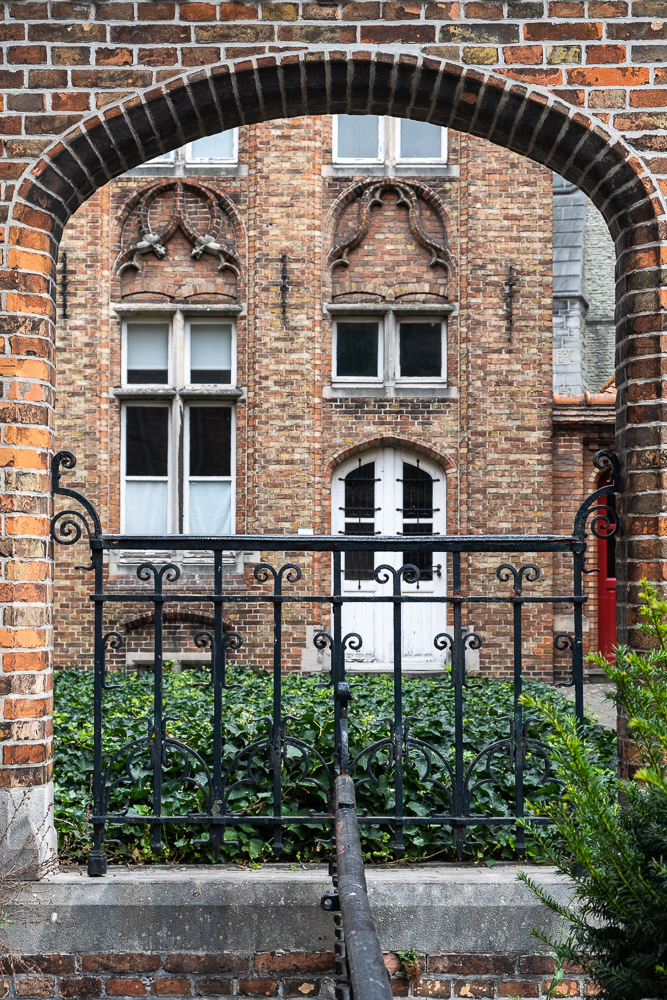
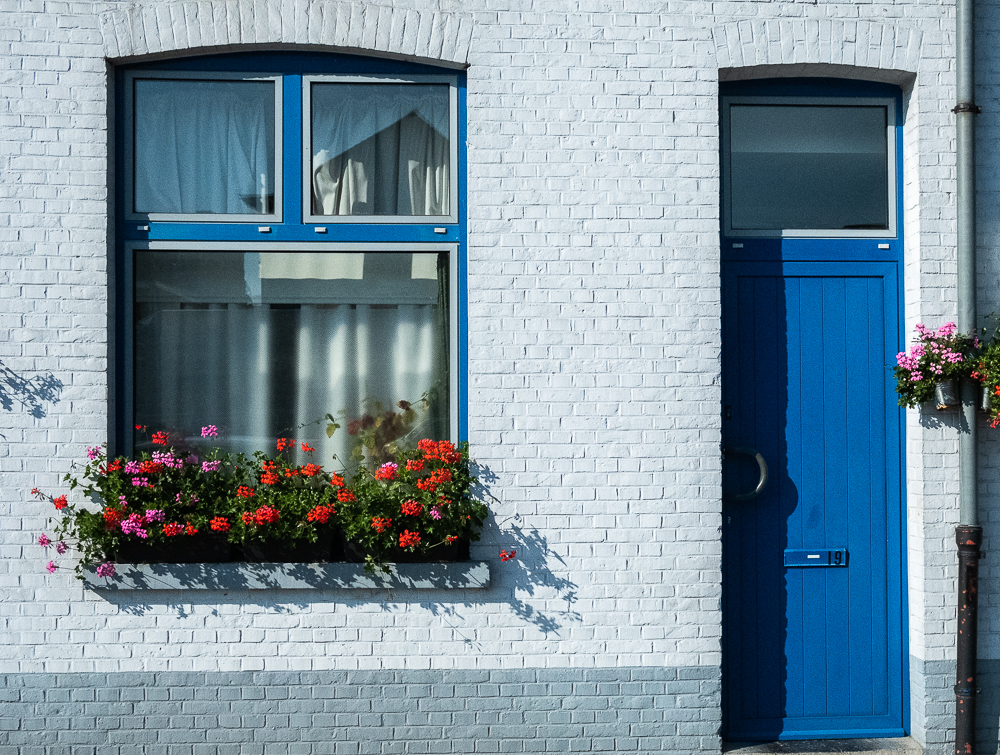
There’s something about doors and windows…and flowers…and blue…that I love!


Outside Saint John’s Hospital, one of the oldest hospitals in Belgium, they honor the women – mainly nuns – who cared for the ill.


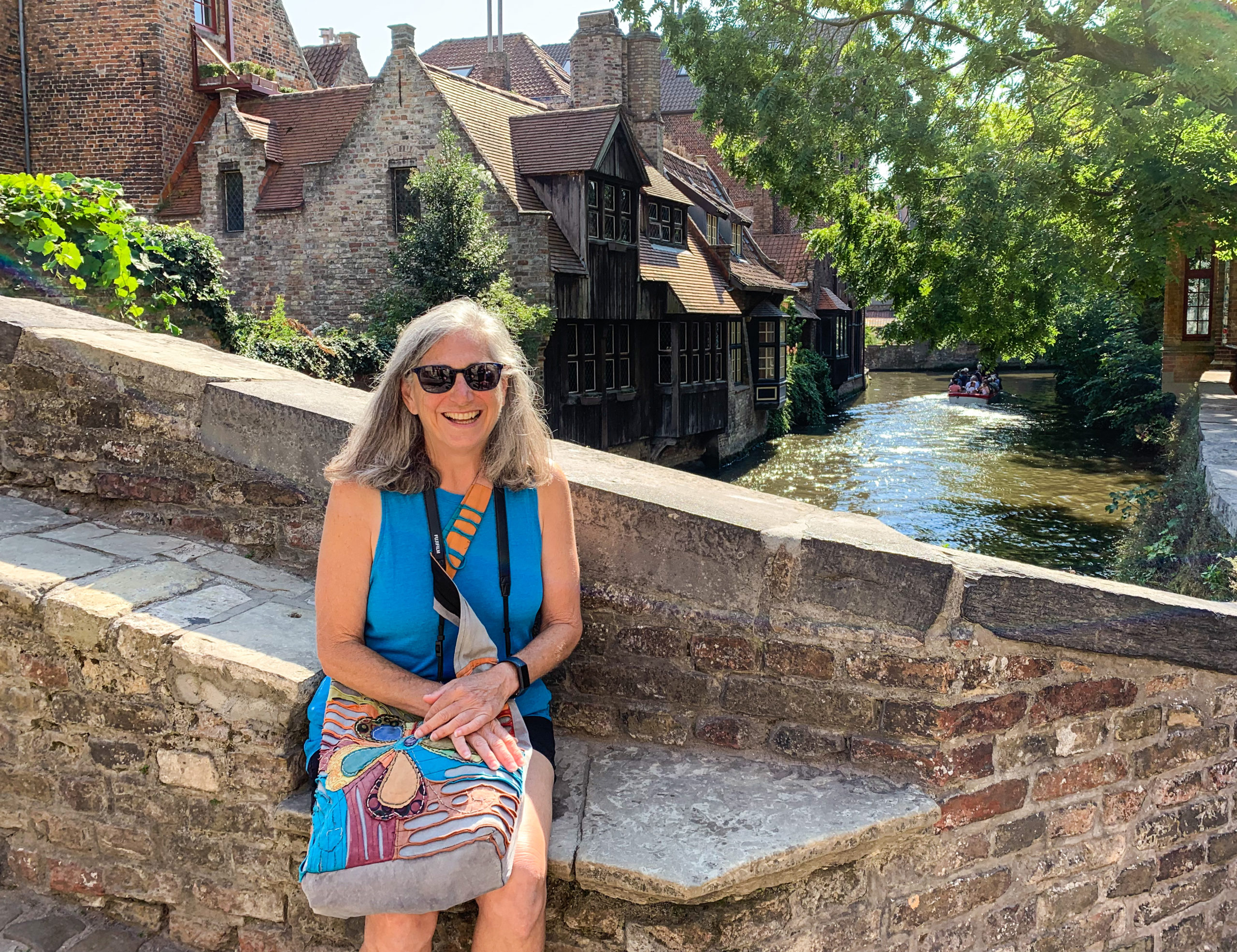
On the “Bridge of Love,” another popular place in Bruges for photos.


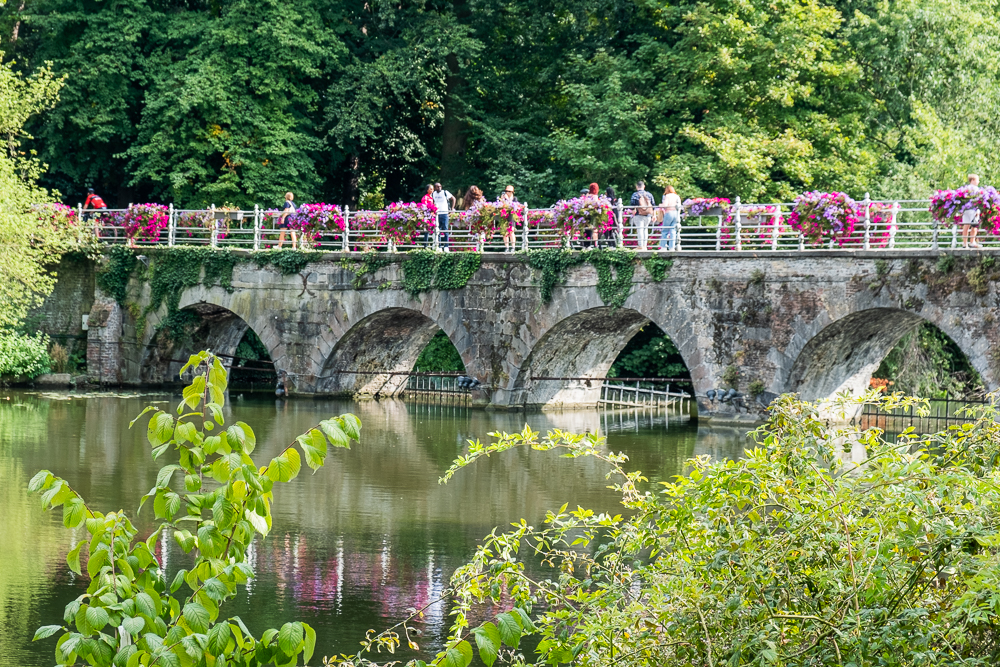
Along a canal.


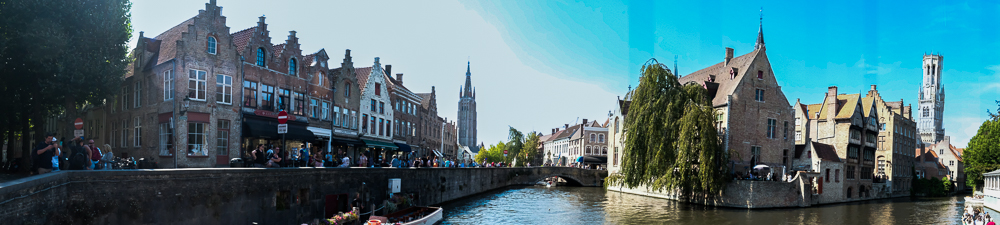
Panoramic photo of iconic Bruges.


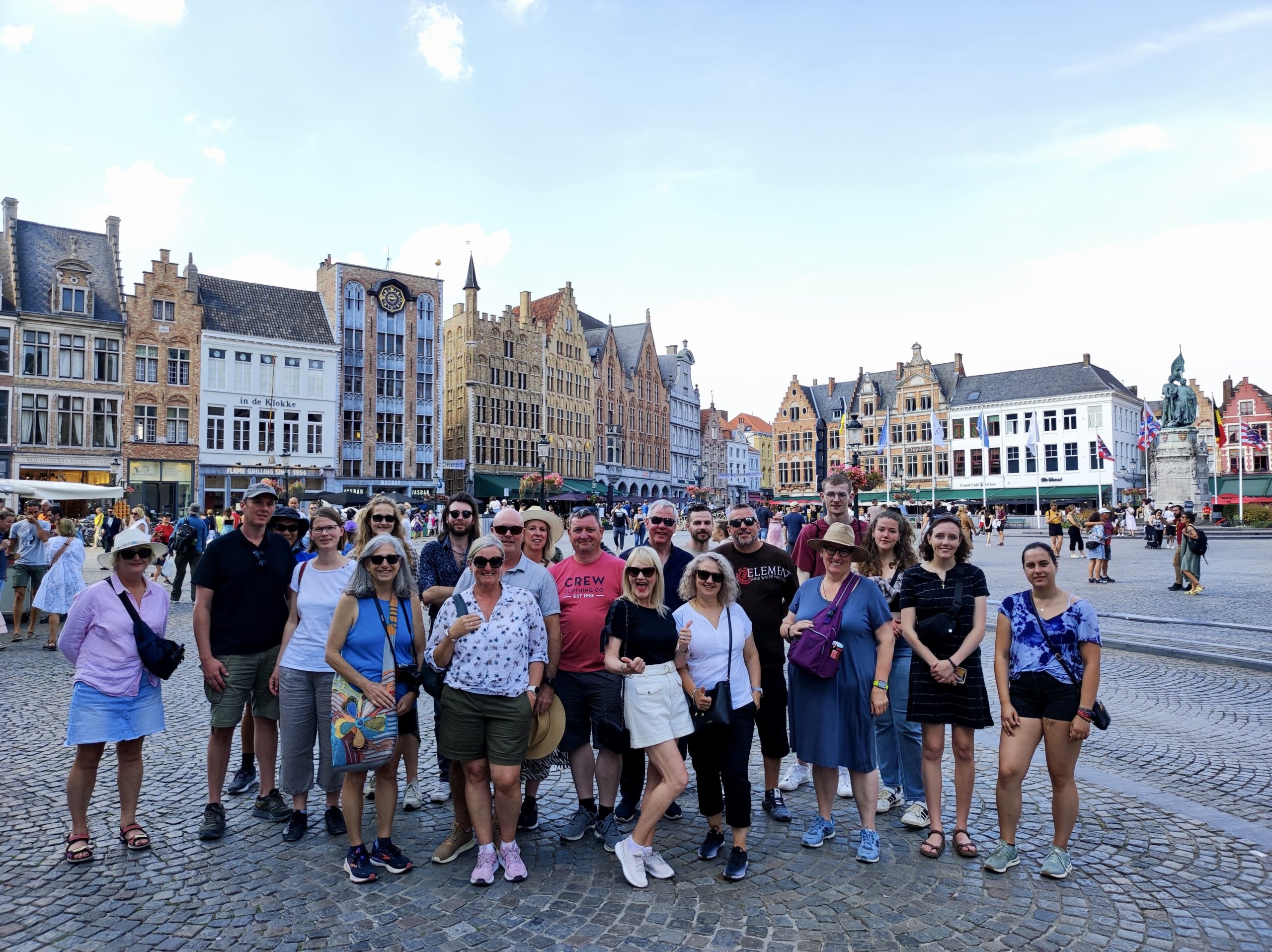
Before parting, our tour guide Pascal took this group photo.
[https://ambassadorstours.com/en/]


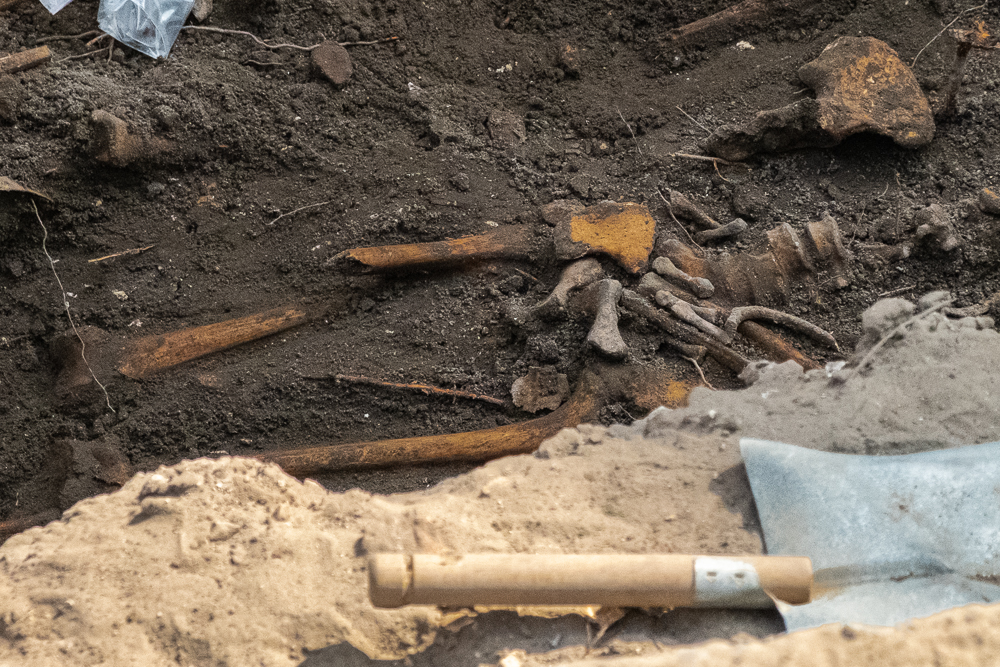
Archeologists uncover human remains near a church as the city prepares to upgrade its sewer system.


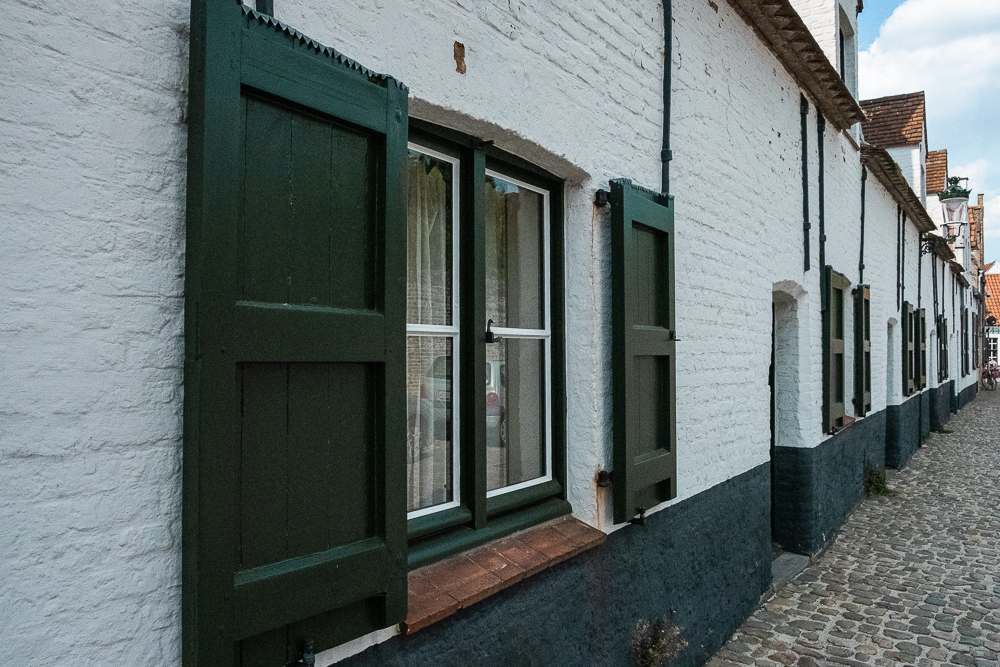
Many years ago, working families lived in each of these homes, consisting of one downstairs and one upstairs room.


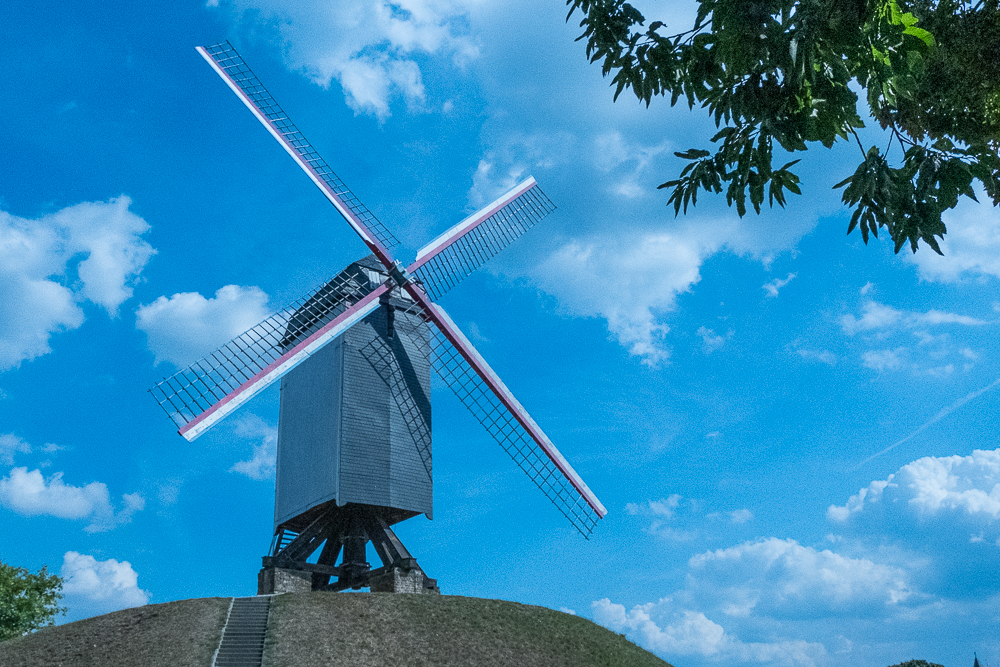
One of four windmills along the city’s ramparts.


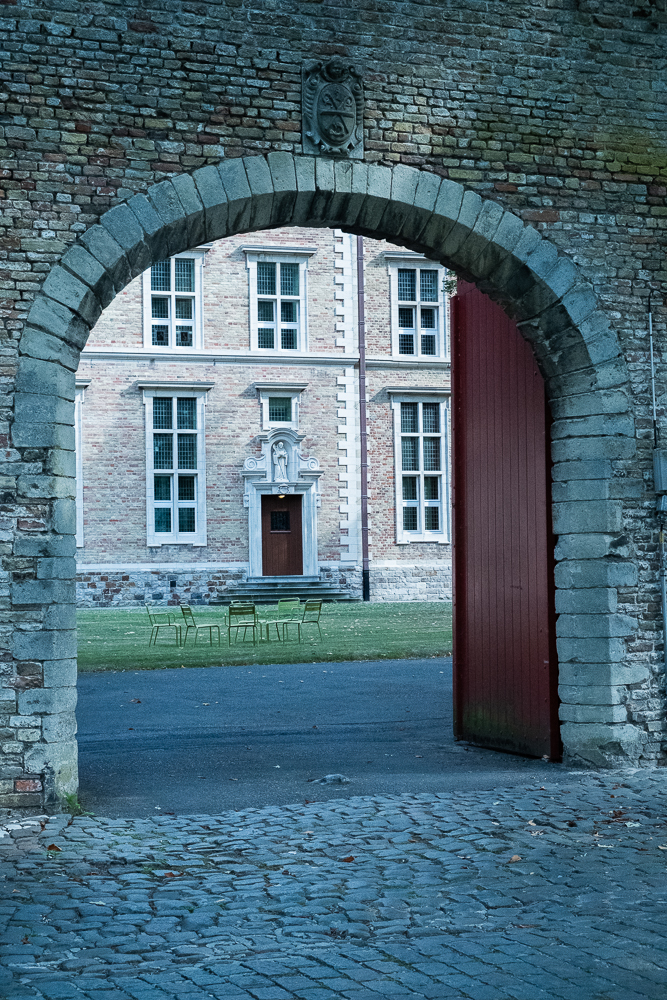
Entrance to a former monastery which now houses schools and a meadow.


With Janet (from New Jersey) and Geerte (from Utrecht).


I love travel, whether with Joel, friends, or solo.  The first phase of this adventure involved traveling with friends; the second part encompassed traveling with Joel.  For this part, I’m traveling solo.

What do I like about solo traveling?  I think of it as “squirrel traveling.”  Consider a dog.  If, say, Viza is walking with me in Poly Canyon and sees a squirrel, she’s OFF running after it.  She has no thought about checking in with me to see if it’s okay if she chases her new friend.

When I’m traveling on my own, if there’s something I want to see or do, I can take off in that direction without having a conversation. Even when I travel with someone very compatible, it’s important to check in with each other if we see a “squirrel.”  When I’m on my own, I see the squirrel and off I run – just like Viza.

In Luxembourg, though, I didn’t have that “squirrel travel” feeling.  Maybe it was because of the train strike transportation drama on Monday. Maybe it was adjusting to being on my own after being with Astrid and her cousins in Germany.  Maybe it was missing being with Joel after our fabulous barge and bike trip in Holland.

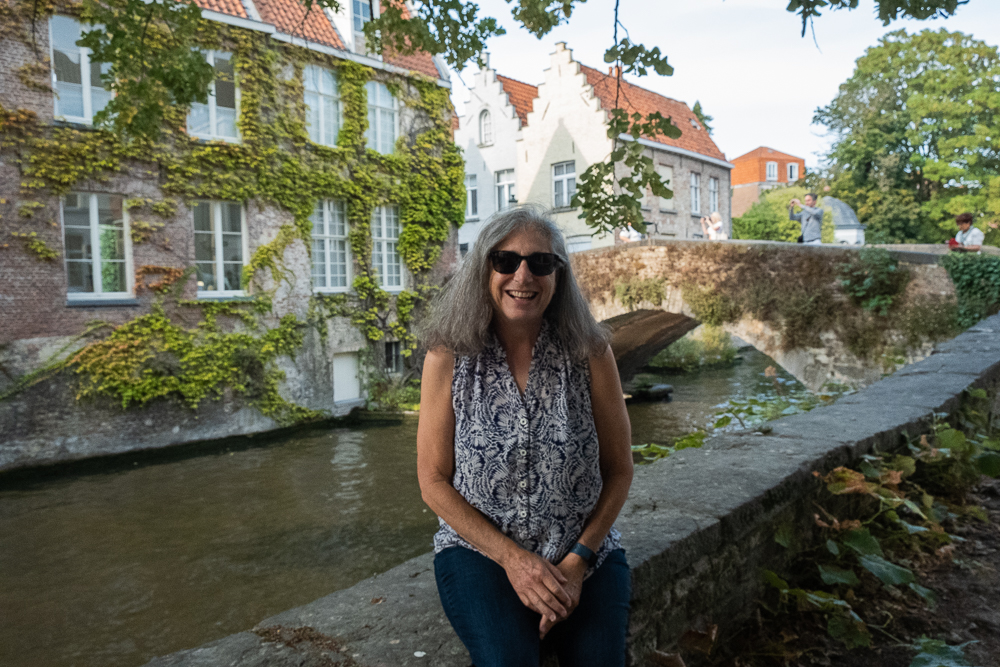
Regardless, while on the train from Luxembourg to Bruges, I felt I no longer enjoyed solo traveling.  Then I arrived in Bruges.  I LOVE IT HERE!!!  Not only is the city beautiful but also my B&B hosts are phenomenal.  Furthermore, I went on a free evening walk and met a couple of other solo female travelers.  After the walk, we grabbed a beer and decided to connect for dinner the next day.  All in all, a great welcome to this fabulous city!

Welcome to Bruges!


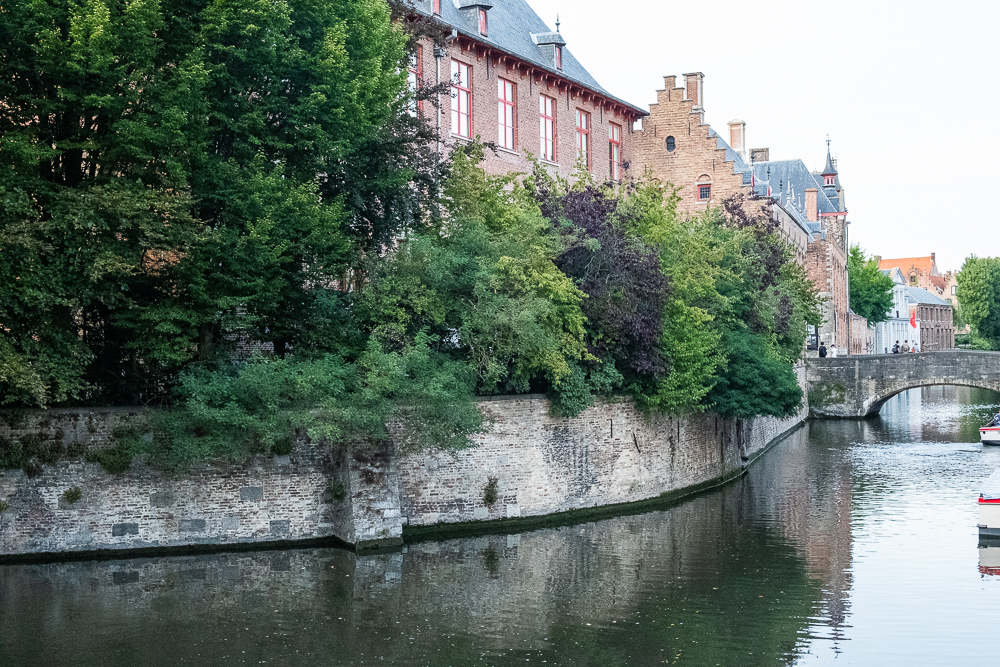
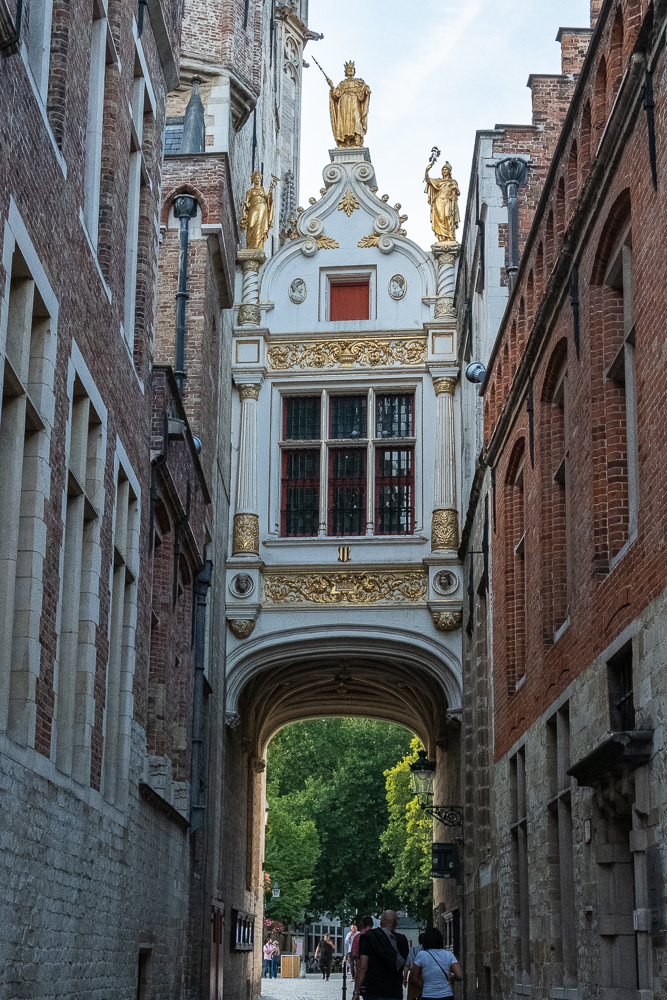
Pics of this fabulous city.  More to come!


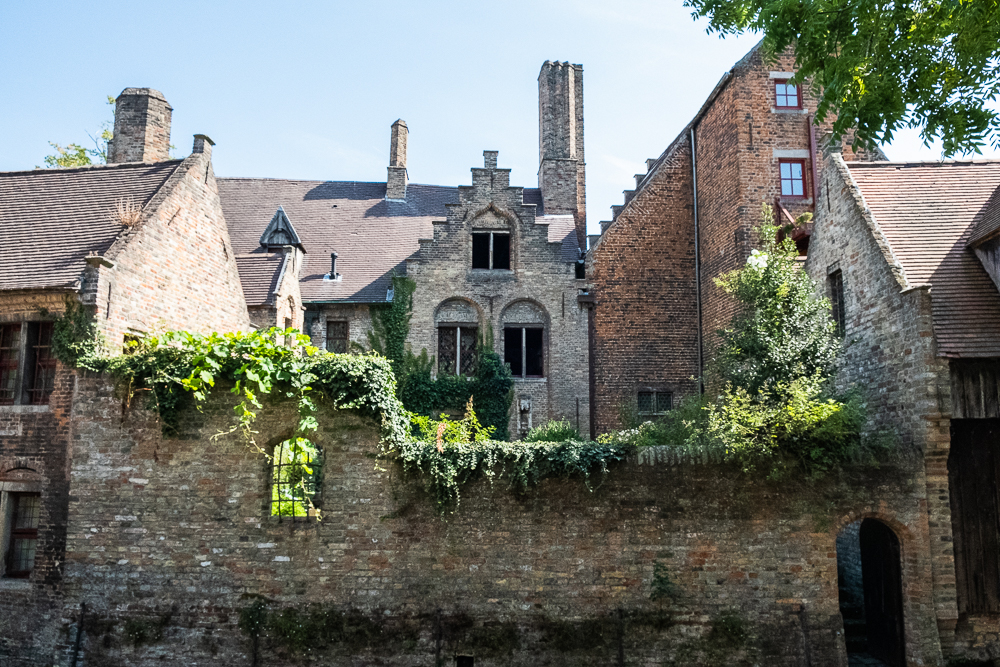
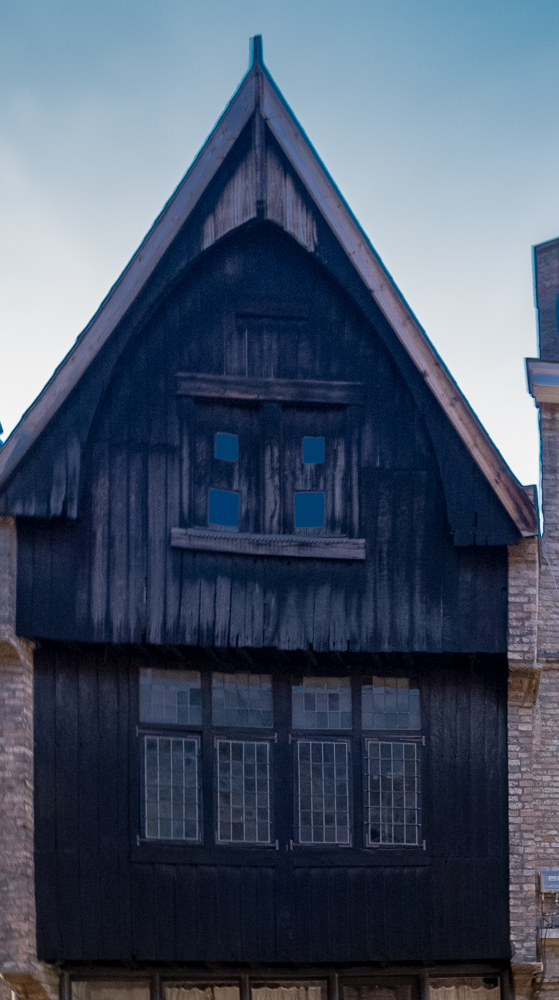
One of the few remaining wooden houses.  Most have been replaced by brick or stone due to fire danger.


The only standing part of the wall which used to surround Bruges.


First bathrooms!  Women on the second floor, men on the first floor.  Open on the bottom so everything flowed downward…


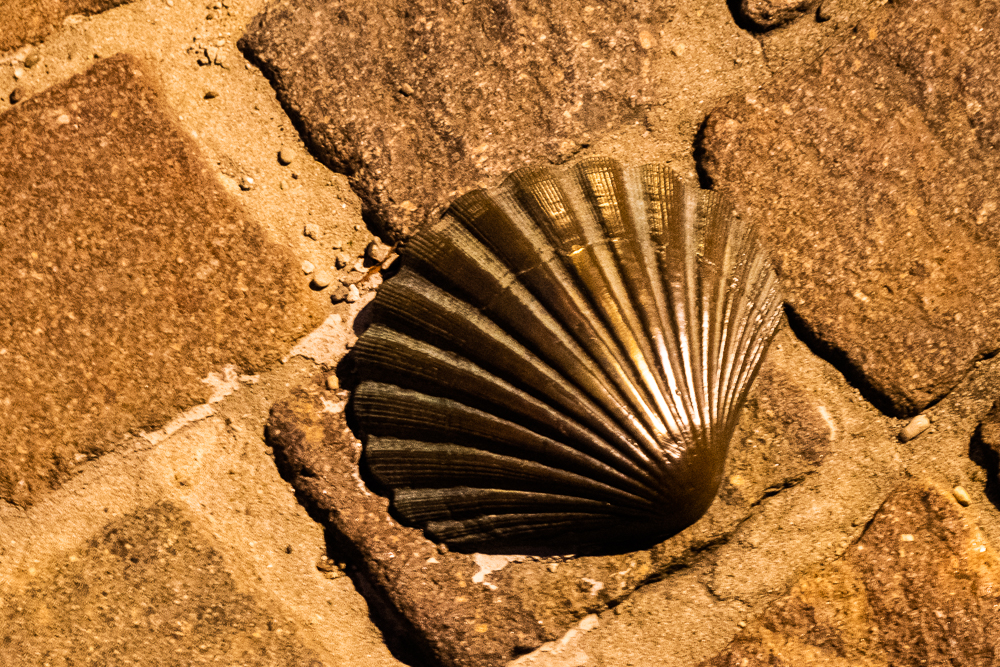
Shells directing pilgrims on the Camino.


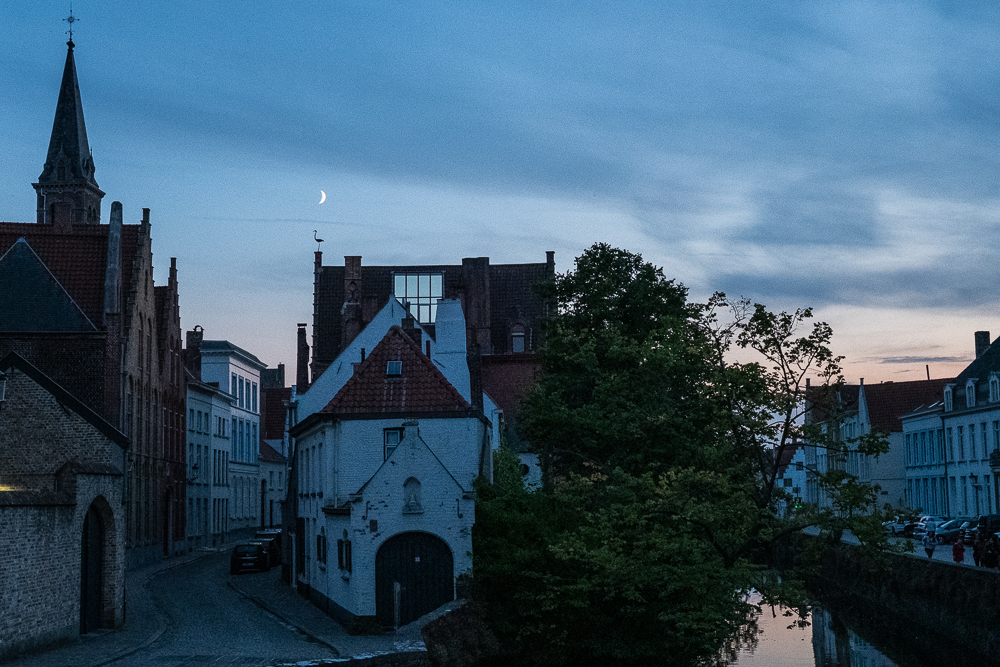
Goodnight, Moon!


I woke this morning to a sound Californians are not familiar with – rain!  Not only did I hear the sound of rain splashing all over but also the boom of thunder!  My initial idea of hiking in the hills of Luxembourg – or even exploring some of the faraway parks – disappeared with the wet stuff falling from the sky.

Instead, I had a leisurely breakfast – even achieved Queen Bee status while playing the New York Times’ Spelling Bee game! – and walked with raincoat on and umbrella in hand to the Cathédrale Notre-Dame and the Musée national d’histoire et d’art Luxembourg.

The cathedral tickled me in an ironic way.  Signs posted all over the cathedral warned visitors to be quiet, while the noise generated by renovation power tools drowned out any possible conversation.

The museum, though, captivated me.  A combination natural history, archeological, and art museum, the five floors each offered new insights into life long ago and currently in Luxembourg.  The final exhibit, The Rape of Europe, evoked the pain of Putin and his military campaign again Ukraine.  See below for details.

While enjoying today’s lunch (a goat cheese salad and sparkling water at the museum cafe), the rain stopped and sky cleared.  Next up, a nice walk around the old city.

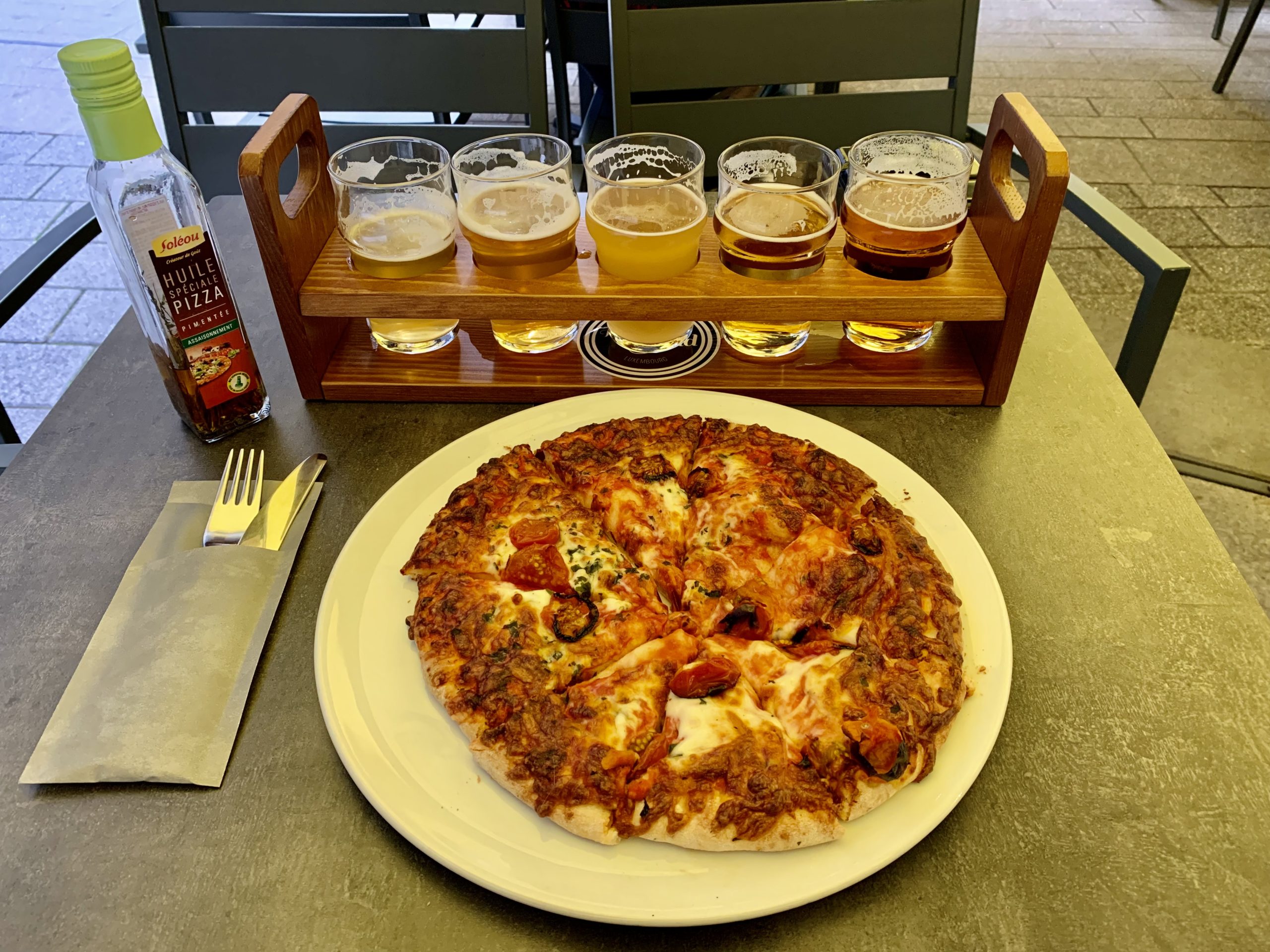
Dinner…well, at lunch yesterday, my server said Rock Solid has the biggest selection of beers on tap…and patrons can buy tasters…so… 🙂

Rain!


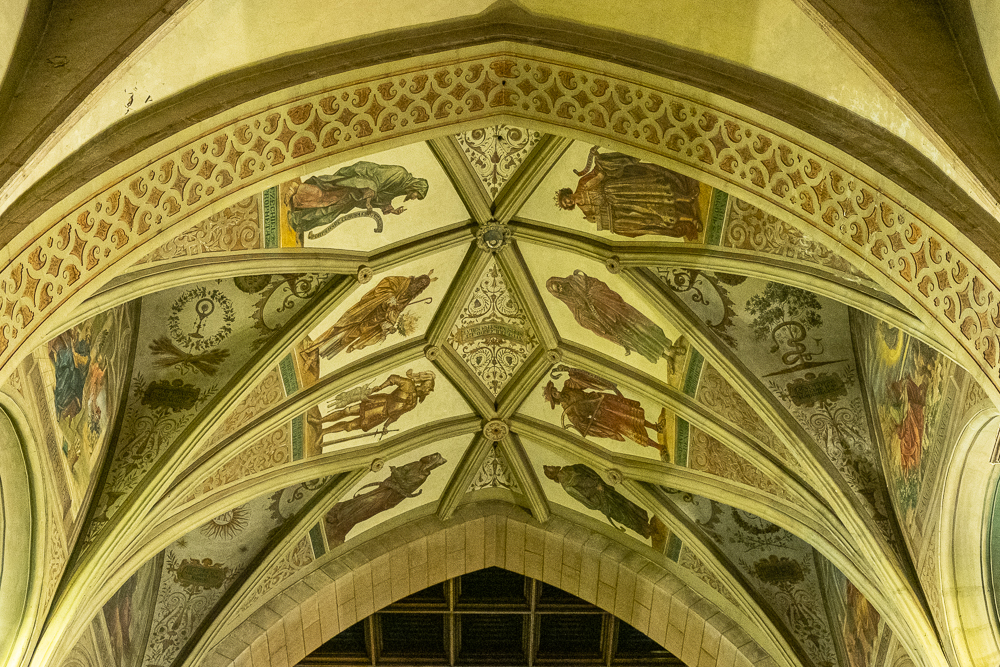
Beautiful ceiling in the cathedral.


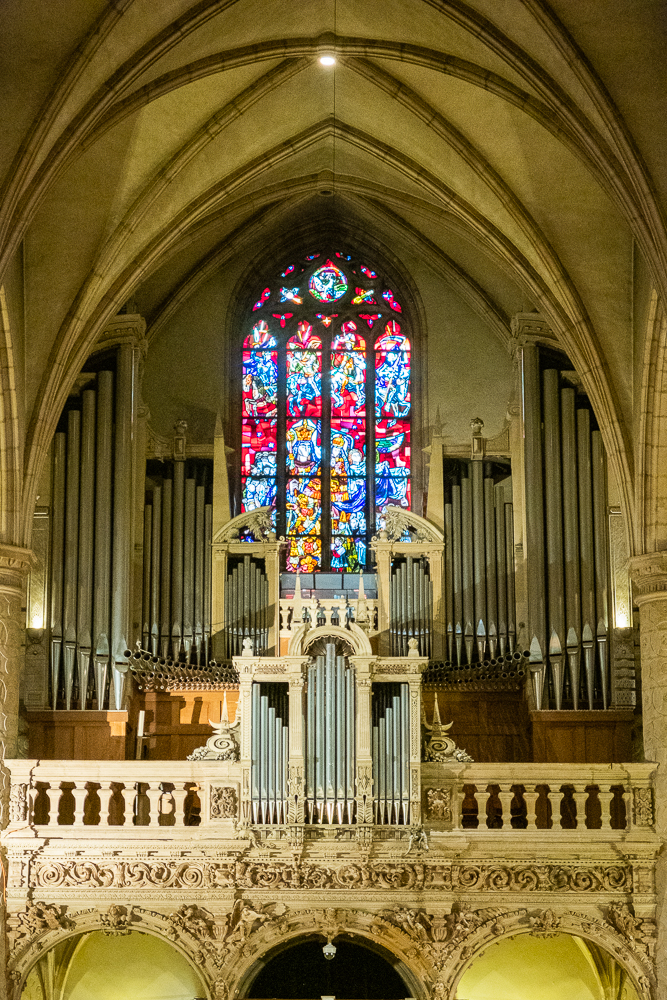
Intricate decorations all over the cathedral, including near the organ.


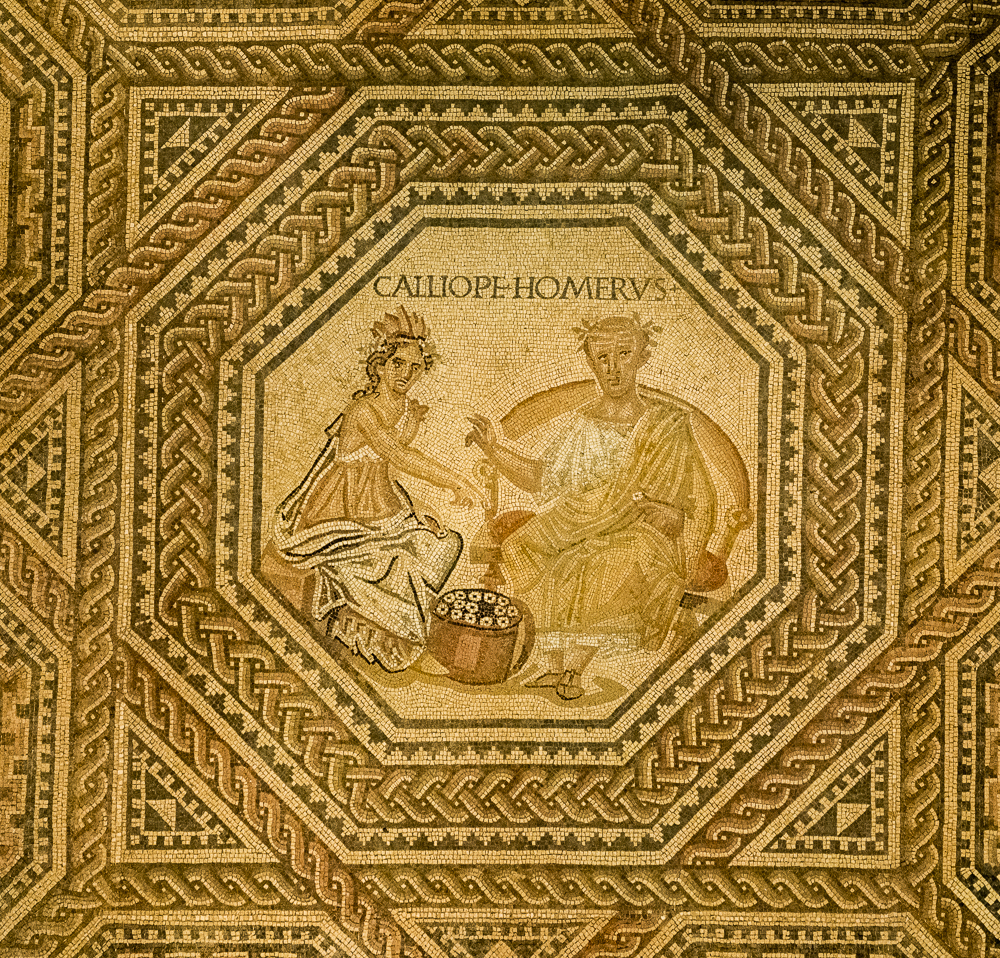
Gorgeous mosaic tile in the museum reminded me of the mosaics in Istanbul.


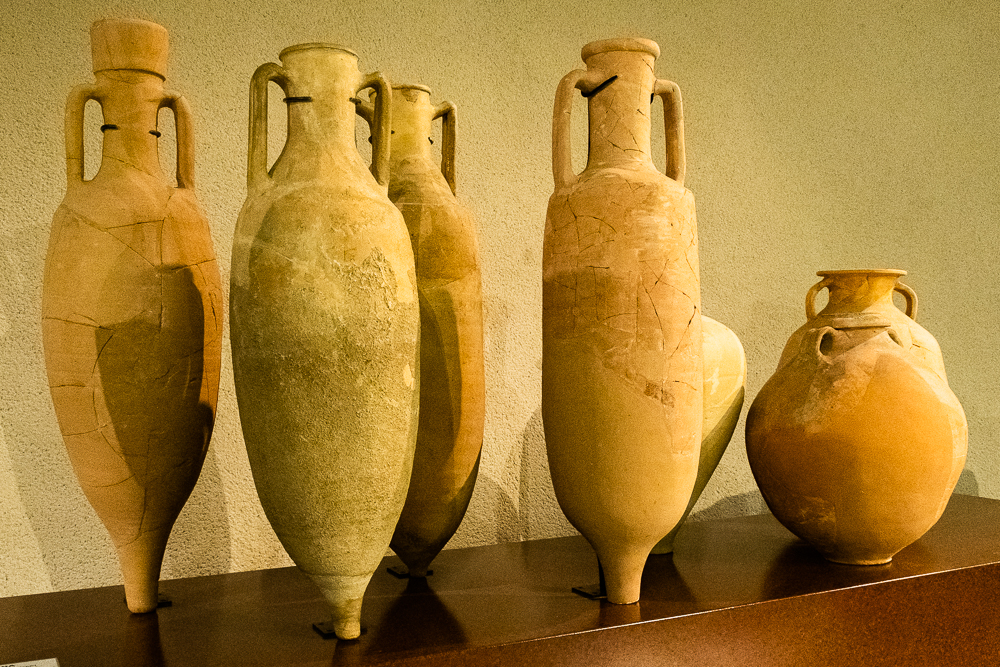
Pottery recovered during a local archeological dig,


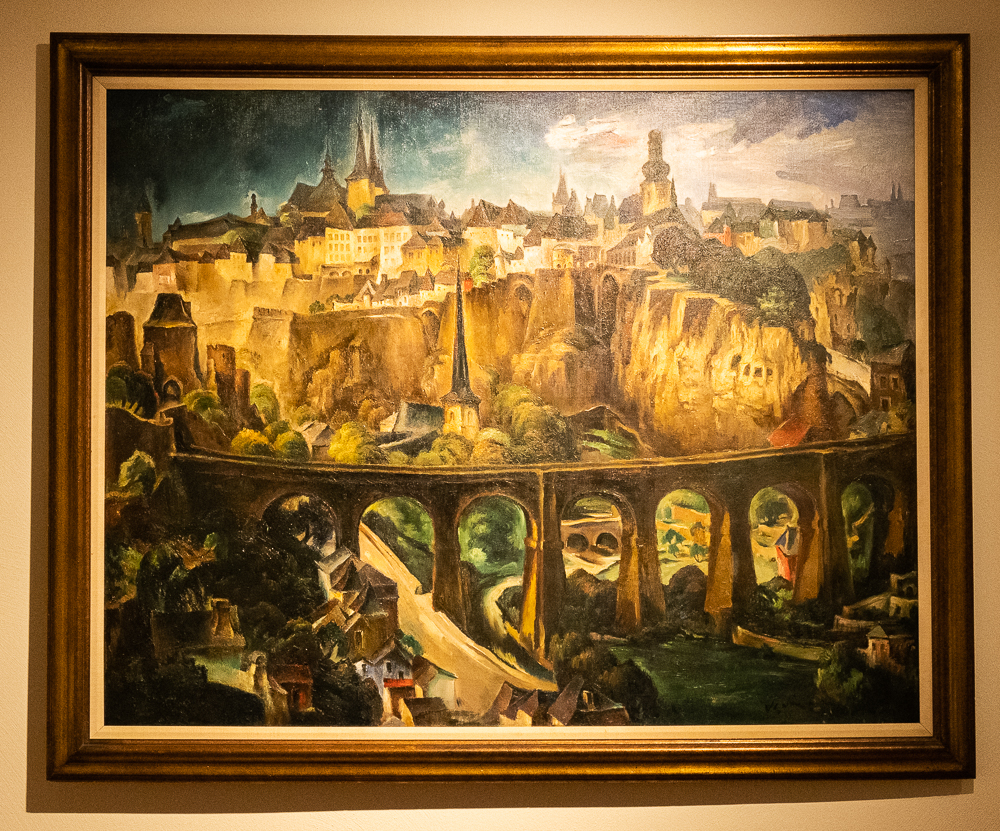
This painting matches the view of the city I saw while walking on the Corniche yesterday!


The Rape of Europe
Maxim Kantor on Putin’s Russia (1992-2022)

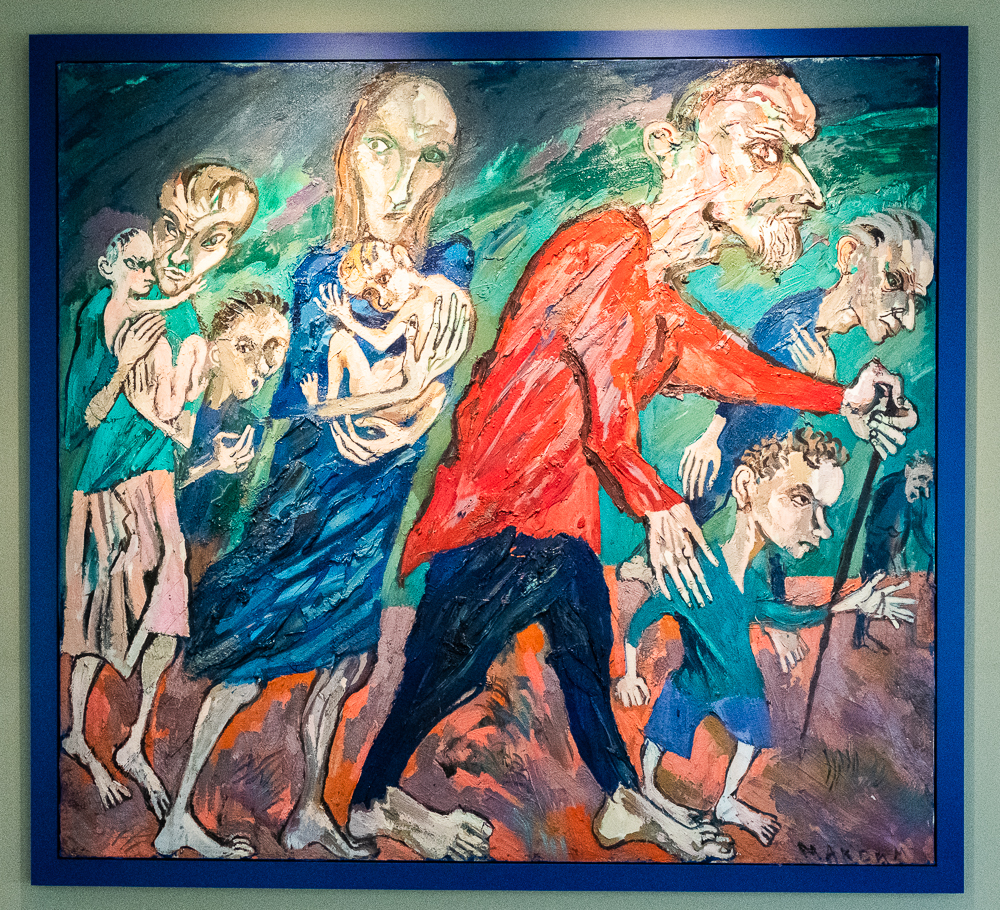
Since 24 February 2022, Russian aggression and the murderous war against the Ukrainian people take us back to the darkest times in European history. Tens of thousands dead, cities partially razed, millions of Ukrainian refugees wandering across Europe. How to react, as a museum, how to show a sign of solidarity with those under attack when direct cooperation with a Ukrainian museum is currently proving impossible and our own collections contain almost no objects related to this country?

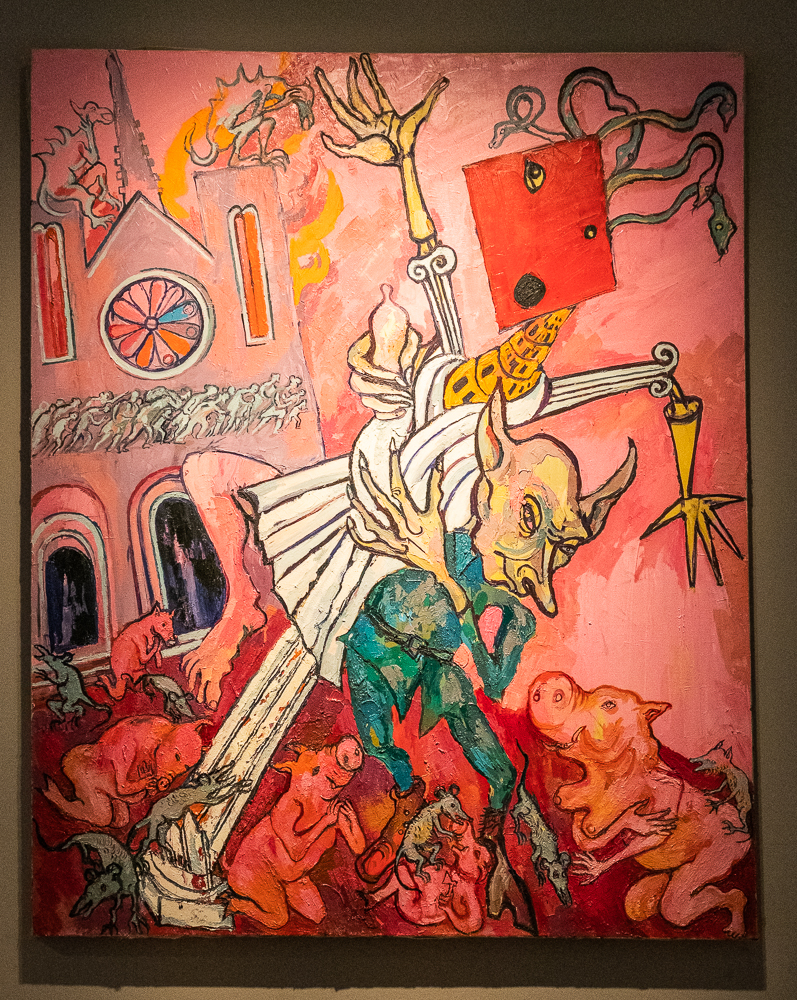
By pure coincidence, MNHA was already long before the start of hostilities in contact with Russian born artist Maxim Kantor, well known for his very critical attitude towards the Putin regime and recent developments in Russia. Kantor spontaneously agreed to show more than sixty of his works that unmask the totalitarian and aggressive character of the current Russian regime.

[https://www.mnha.lu/en/exhibitions/the-rape-of-europe]
 
The Rape of Europe, 2022, by Maxim Kantor.


Refugees, 2014, by Maxim Kantor.  [Note the date – 2014.  When will we ever learn???]


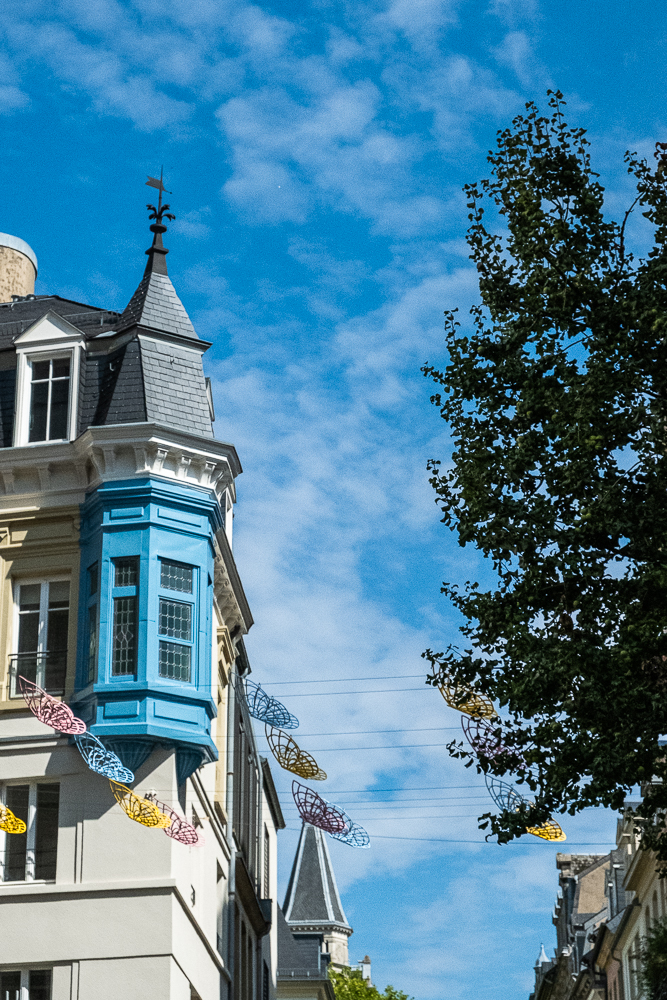
Time to walk around and enjoy the blue skies…


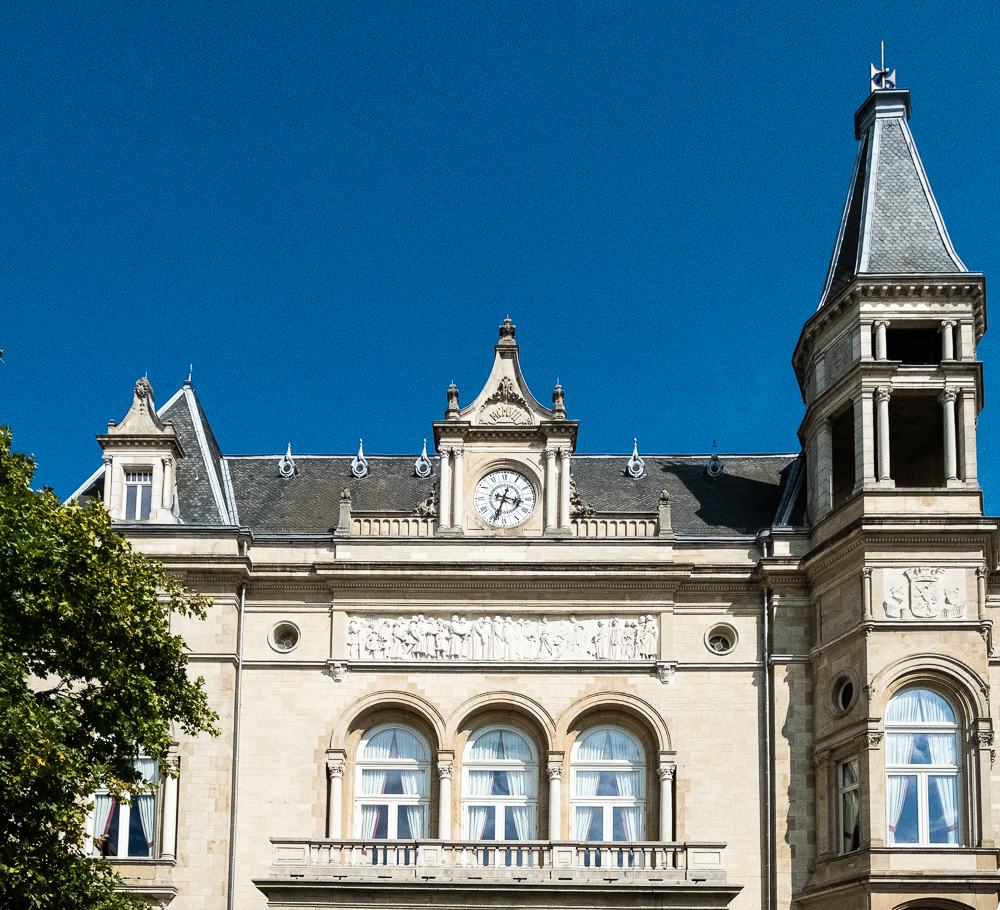
Cercle Cité:  Ornate early 20th-century palace, a former government building, now used for exhibitions & events.


Dinner.  No, I didn’t eat or drink all of it!
Confirmed: I like lagers more than ales.  Research completed!

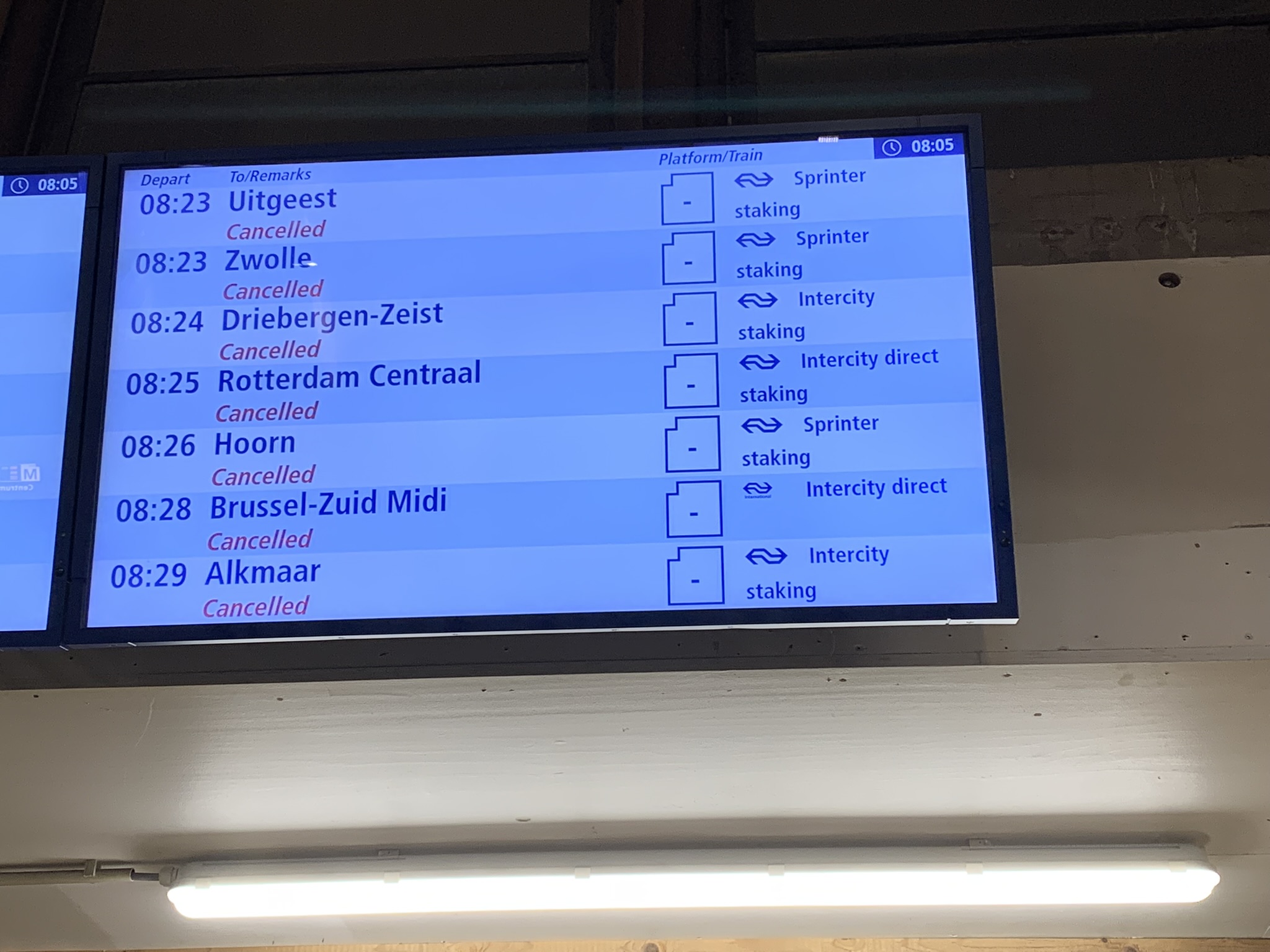
Yesterday is a bit of a blur.  I woke up early, after a tough pre-travel night’s sleep, and said goodbye to Joel outside our hotel.  The plan (ah, that word!) was for him to take a bus to the airport so he could meet his son, son-in-law, and a friend in Turkey for a mountain bike trip.  My plan was to take the tram to the train station and take a train to Luxembourg, via Brussels, for the third phase of my adventure – the solo travel portion.  We had heard that there was going to be a train strike in Amsterdam, which is why Joel took a bus.  The clerk at our hotel said my trains should not be affected.  WRONG!  Joel’s bus and plane rides went swimmingly.  My journey was much more convoluted.  I get to the train station and what do I see?  ALL TRAINS ARE CANCELED!

I considered flying to Luxembourg ($$$$$) or renting a car (none available) and instead decided to take FLIX bus.  The bus wasn’t scheduled to leave until 4:00 p.m., but I headed to the other train station thinking I could, perhaps, squeeze onto an earlier bus.  Nope.  Impossible.  And then…my 4:00 p.m. bus is CANCELED.  I rebook for a 5:55 p.m. bus to Brussels with an hour and a half layover before hopping onto another bus to Luxembourg, set to arrive at 2:25 a.m.  Those two buses were NOT canceled.  Although I arrived very late to my hotel, taking a taxi from the train station to my lodging rather than walking at that hour, my key and room were ready for my sleepy head.

When I decided to visit Luxembourg, I thought Joel and I would have been barging and biking in Germany on the Mosel and Saar rivers…so very close to Luxembourg…that trip, of course, was canceled due to low water levels in the Rhine River.

Oh, well, I woke up at 8:00 a.m., had a nice breakfast at my hotel, and headed out to explore this gorgeous city.  After lunching on a veggie burger, salad, and beer, I took a very long and refreshing nap!

CANCELED!


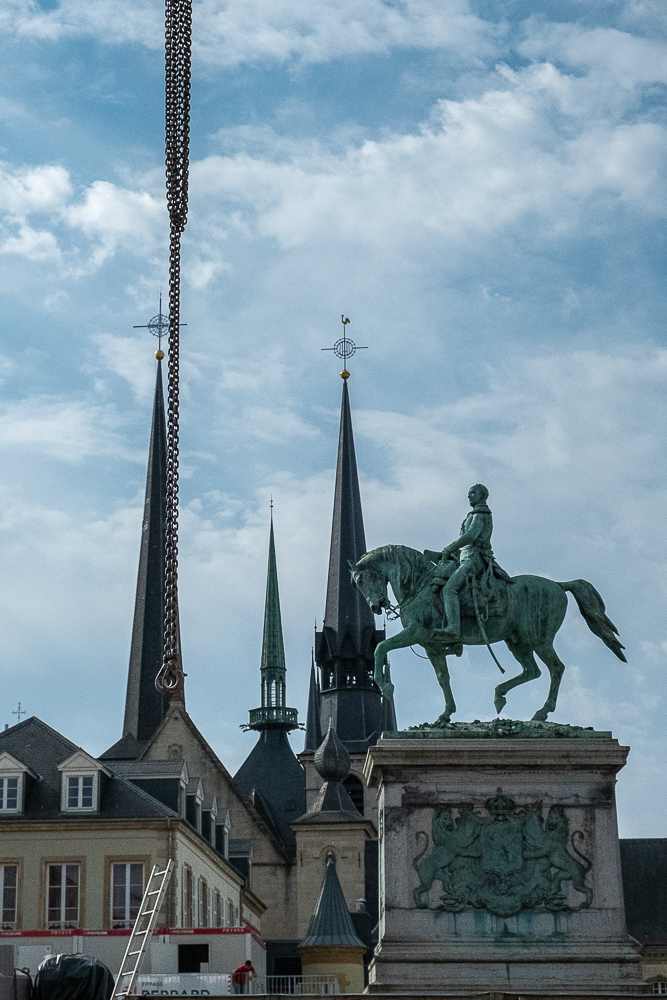
Place Guillaume II: My hotel is on the plaza…which is under construction!  Looks like some archeological digging happening, too.  This is the equestrian statue of William II.


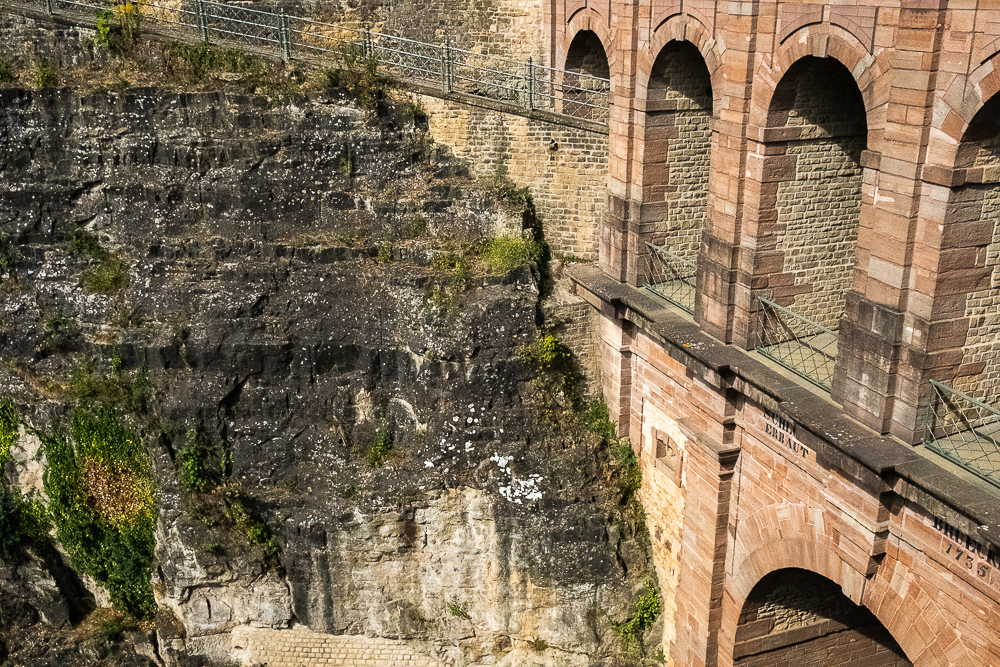
Bock Promontory:  The old wall which once protected the city.


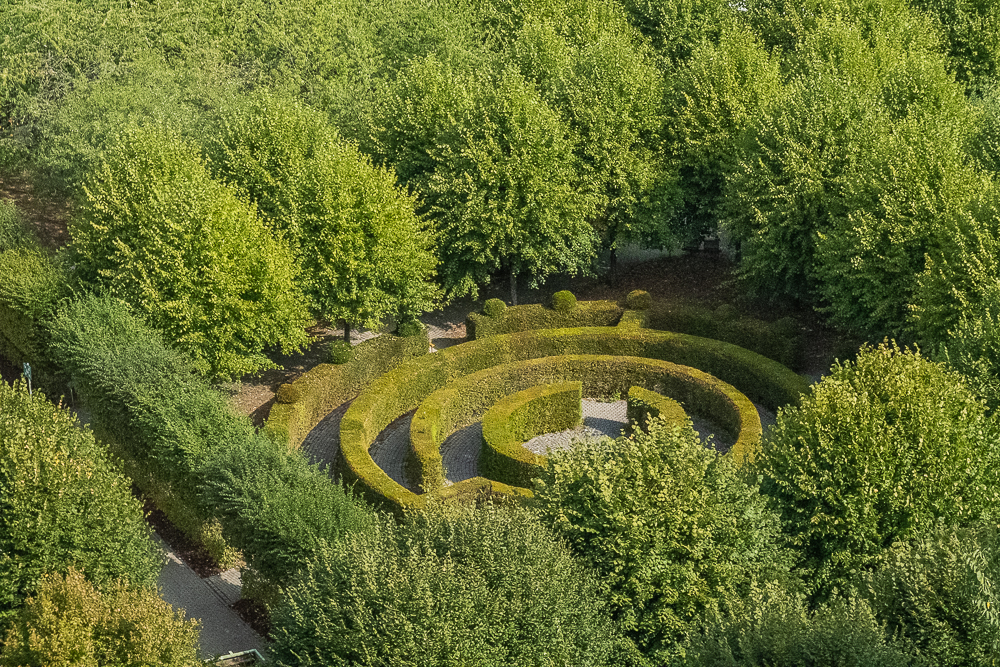
From the top of the old wall surrounding the city, I saw this cool configuration.


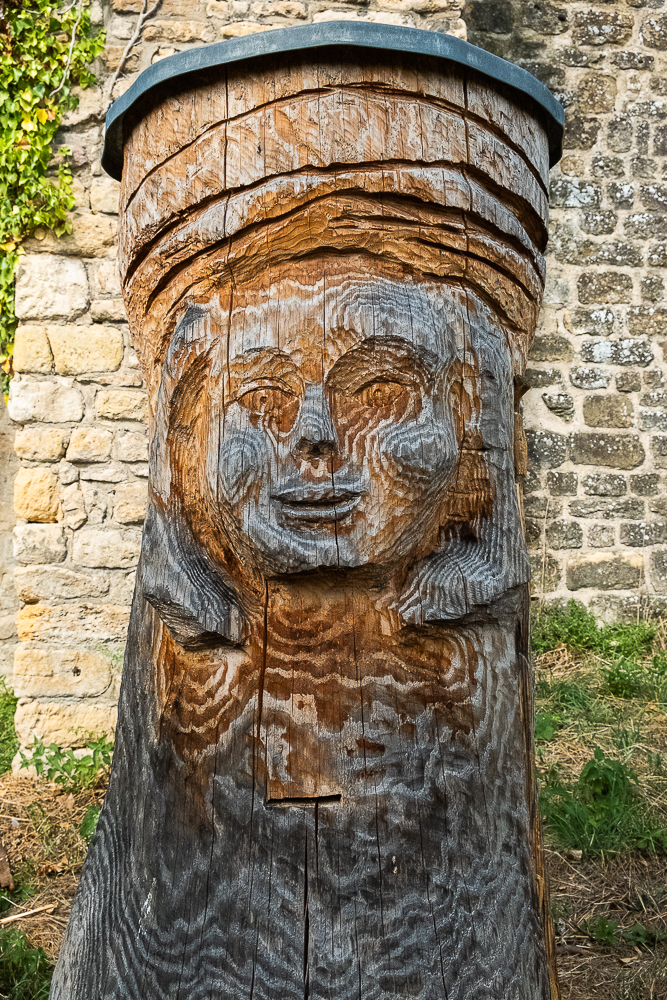
A beehive in a hollowed out and carved tree!


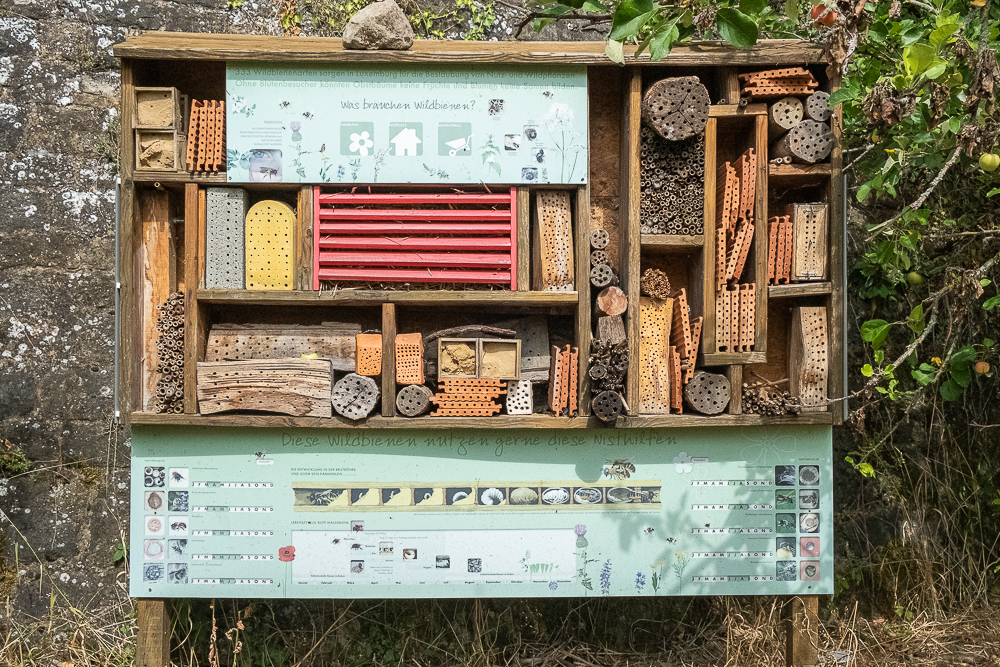
Another beehive.


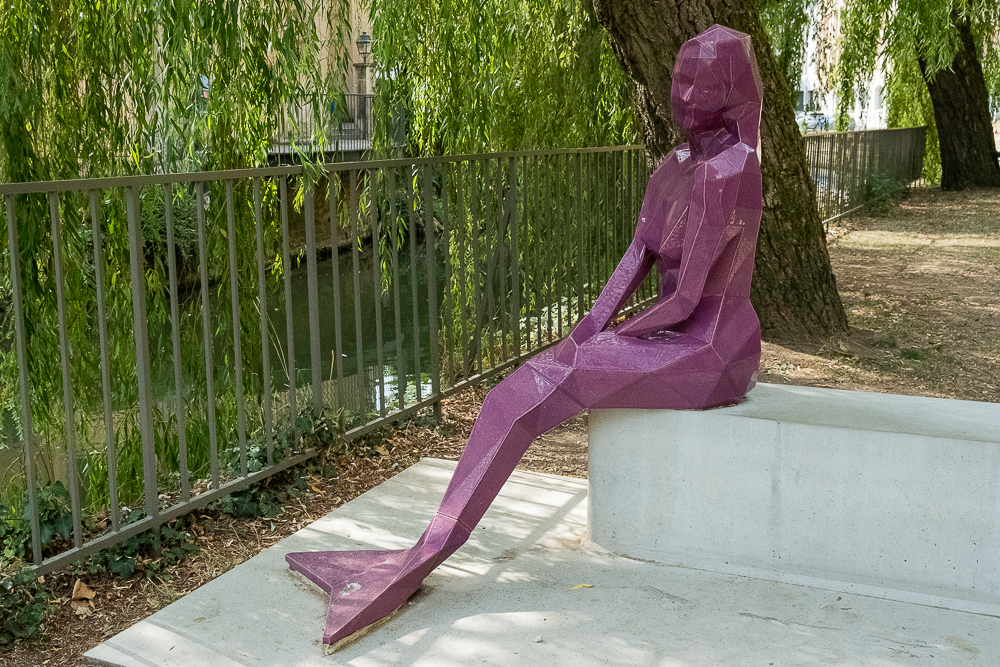
Mermaid sculpture along the former moat.


View of the Corniche.


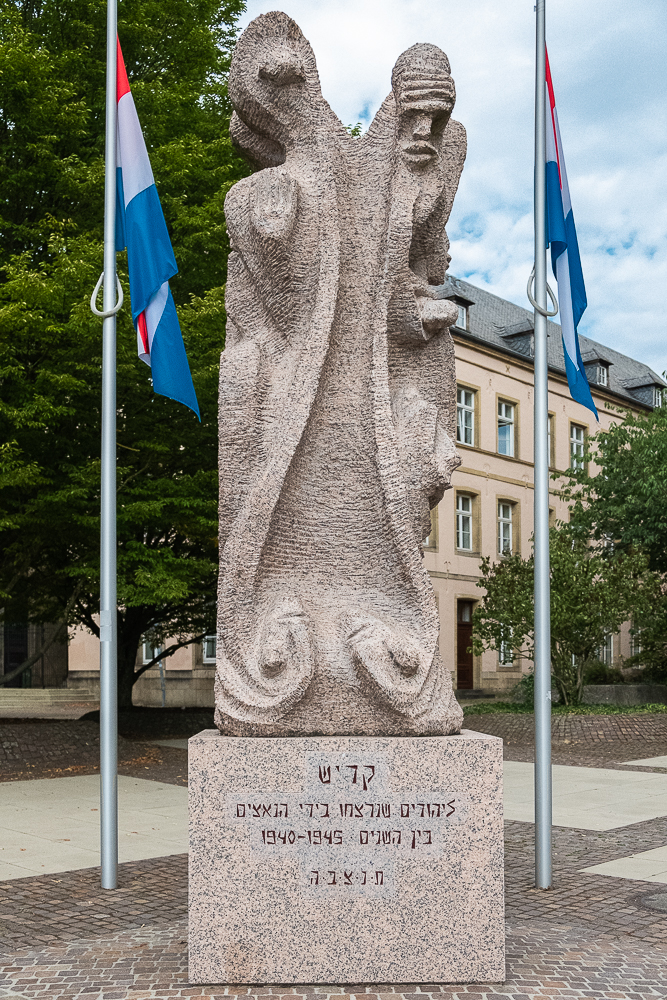
Luxembourg’s first monument honoring victims of the Holocaust.

On 17 June, 2018, a monumental 4-meter high sculpture commemorating the victims of the Holocaust was inaugurated in Luxembourg City. It is a work by Shelomo Selinger, a French-Israeli artist of Polish origin who is a survivor of nine concentration camps, among them Theresienstadt. [https://www.holocaustremembrance.com/news-archive/unveiling-luxembourgs-first-monument-honouring-victims-holocaust]


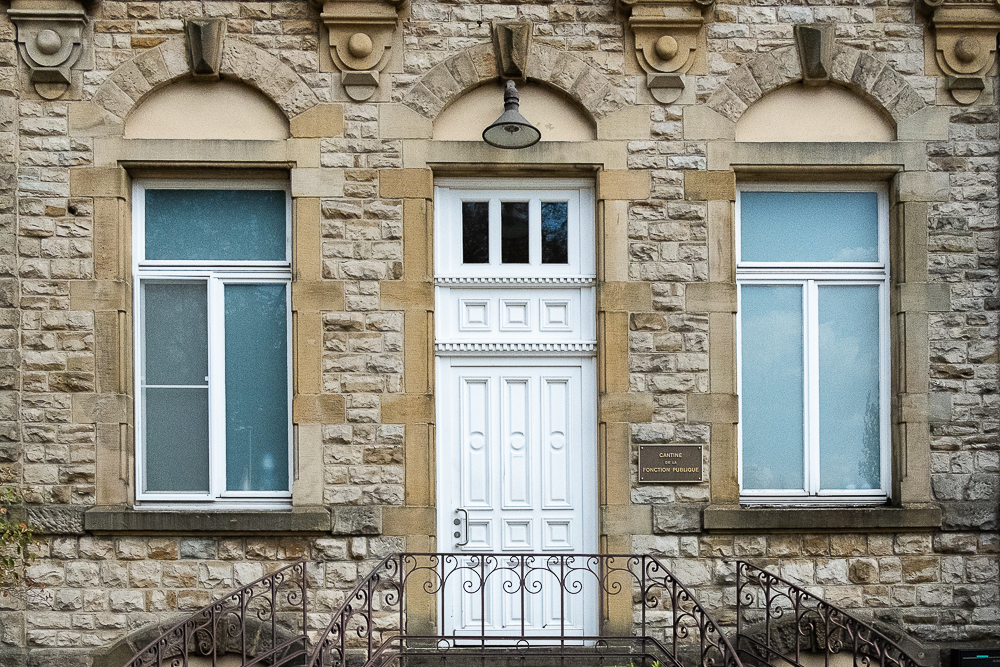
Building seen when meandering around town.


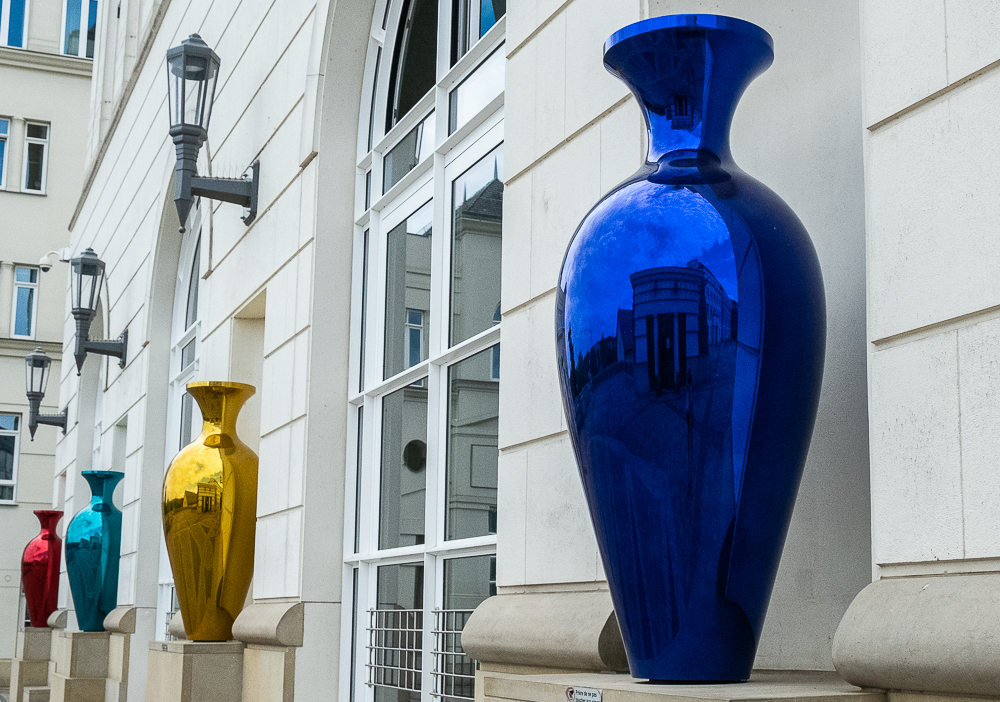
Vases in front of a museum.


Lunch, then NAP!

I thought I’d be typing today’s reflections on the train from Amsterdam to Luxembourg.  Instead, I’m sitting in a cafe waiting for my bus…

Train strike: Yep, another Plan B! Or I should say Plan C since this delay is due to Conveyances. (So far, plans have changed because of Covid, Climate, and Conveyances!) Amsterdam is having a one-day train strike. I had been told that my trains from Amsterdam to Brussels to Luxembourg would be okay. Wrong! The earliest bus I can get leaves at 4:00 pm, arriving in Luxembourg just before midnight. Flexibility and travel insurance are key!  [Update:  Bus cancelled.  Rescheduled to leave almost two hours later and arrive in Luxembourg almost three hours later.  Total delay:  12 hours.]

Jewish and Dutch Resistance: In the Netherlands, due in part to extraordinary record keeping including logging each resident’s religion, the greatest percentage of Jewish citizens were killed in the Holocaust than in any other country. For example, only 5,000 of Amsterdam’s 80,000 Jews survived. Jews were once nearly 10% of the Dutch population.  Jewish resisters, located mainly in the poorer parts of Amsterdam, tried to fight back and, if caught, were immediately murdered. The Dutch Resistance tried to help, including hiding some Jews in the zoo.

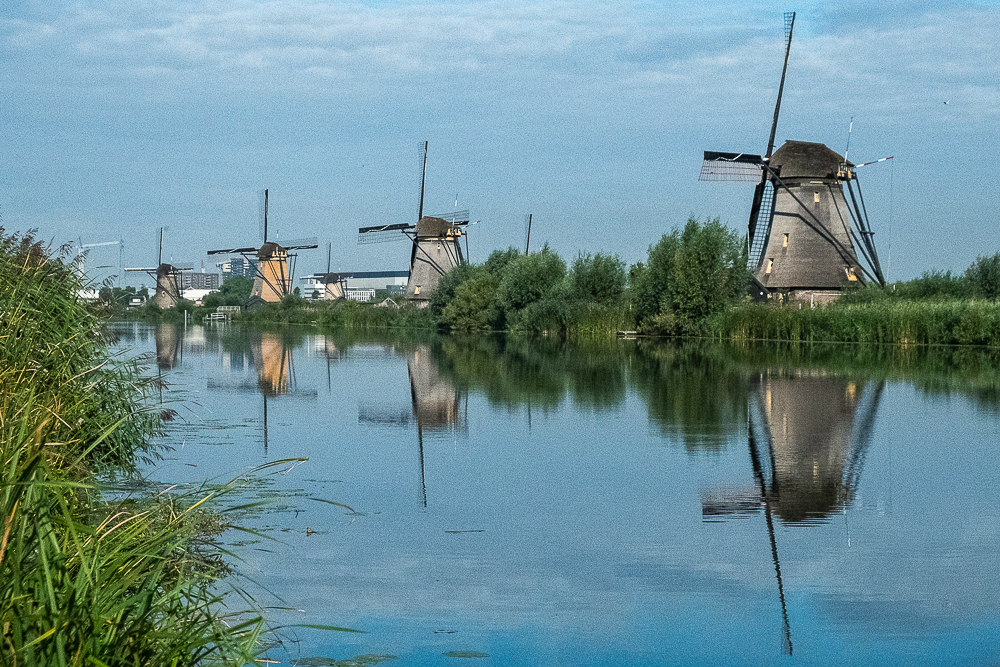
Windmills, dikes, and technology of the 1600s: Necessity breeds innovation! Located below sea level, Holland developed techniques to reclaim land by draining lakes and moving excess water via canals, surrounded by dikes, to the North Sea. Windmills and then steam engines – along with human power and ingenuity – created land fertile for agriculture and livable for people.

Boat/bike travel: I’ve been reticent to go on a bike trip since I’m not a cyclist – I’m much more of a hiker than a biker. Buying an e-bike about a month before this trip and deciding to rent an e-bike for this adventure made the riding so much easier. Add to that only having to unpack ONCE for a week in a comfortable cabin and having all meals handled – wowza! I’m definitely a fan of boat/bike trips!

Windmills – technological innovation of the 1600s.

 
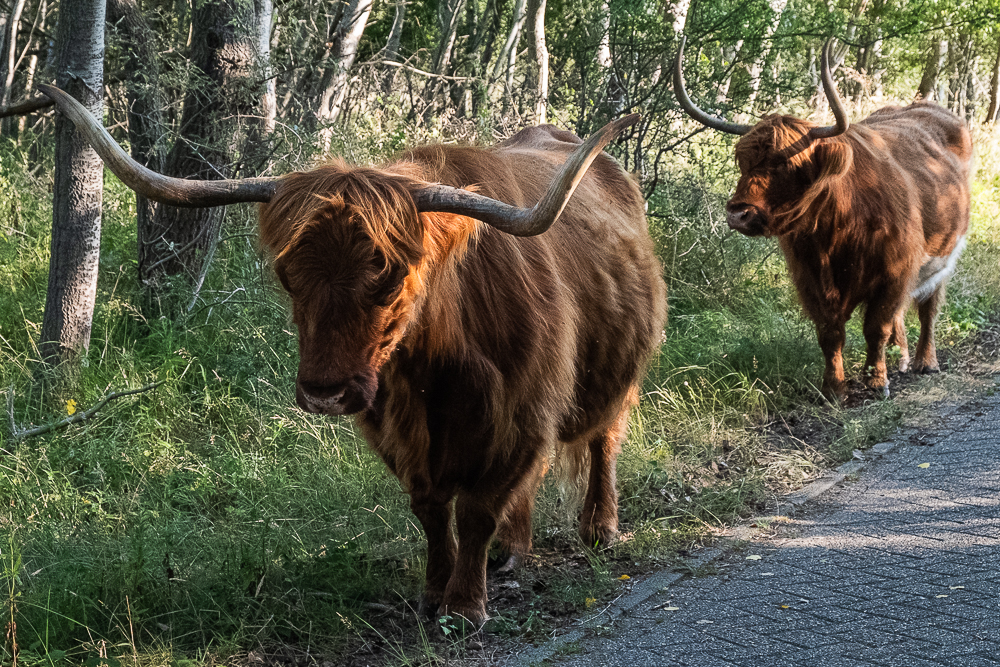
Scottish Highlander cows in Holland.


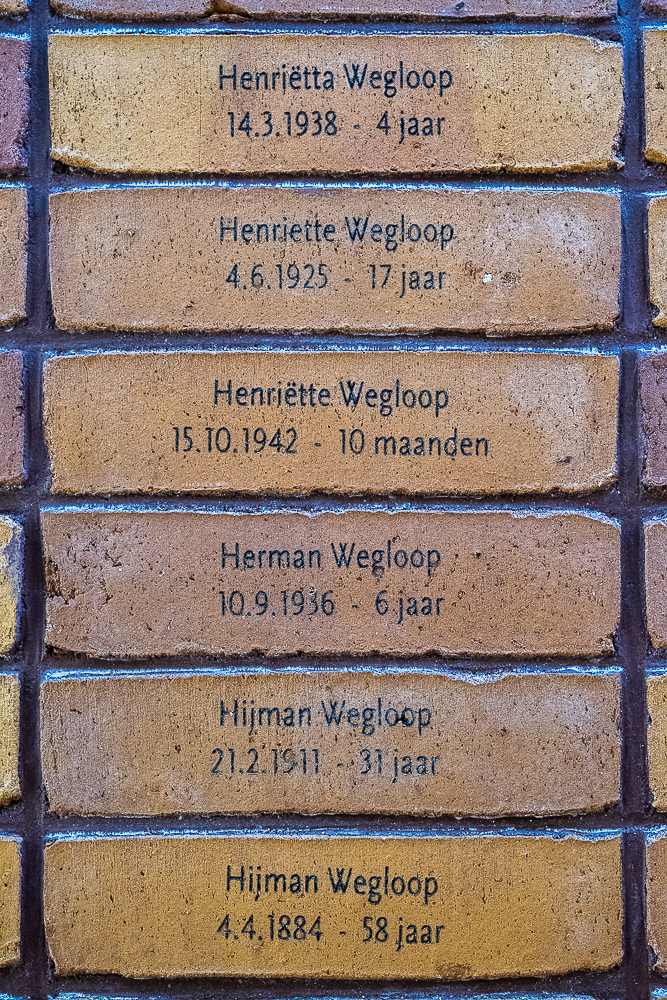
104,000 painful stories.


Ready for my next boat & bike trip!

Following our barge & bike trip, Joel and I spent two wonderful days exploring Amsterdam.  After dropping off our luggage at the Apollofirst Boutique Hotel, we embarked on Rick Steves’ audio tour of the city, hitting some of the tourist highlights from the outside.  We lunched at a canal cafe before heading back to our hotel for naps and a nice dinner.

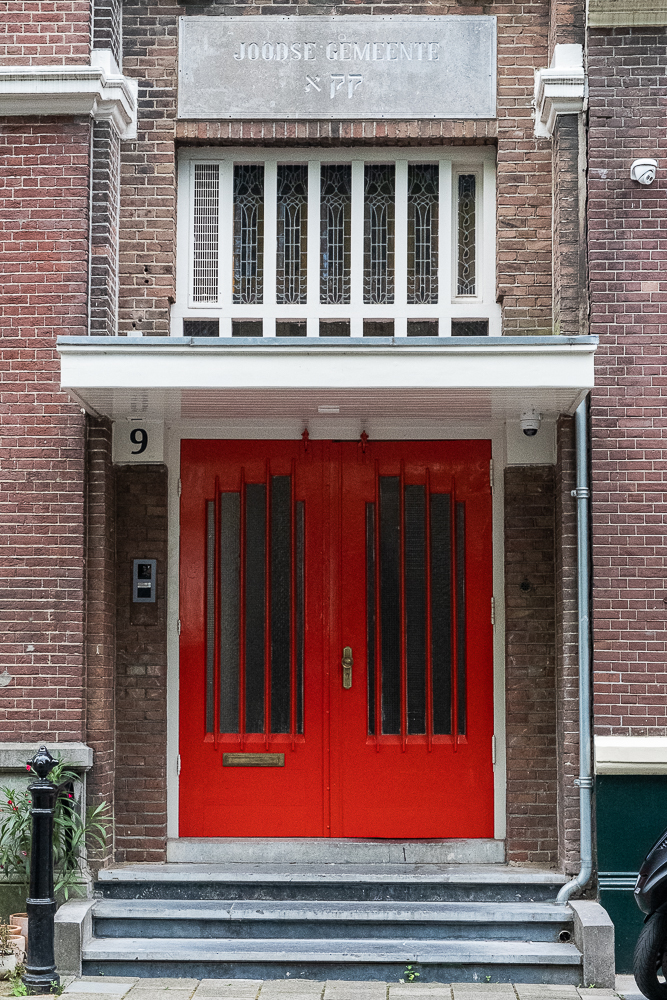
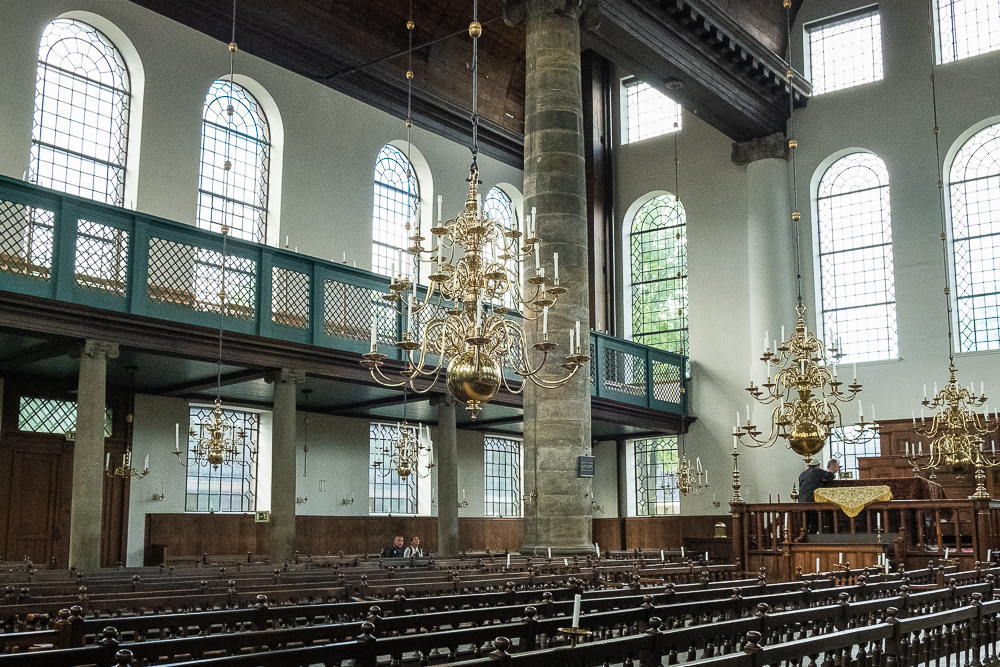
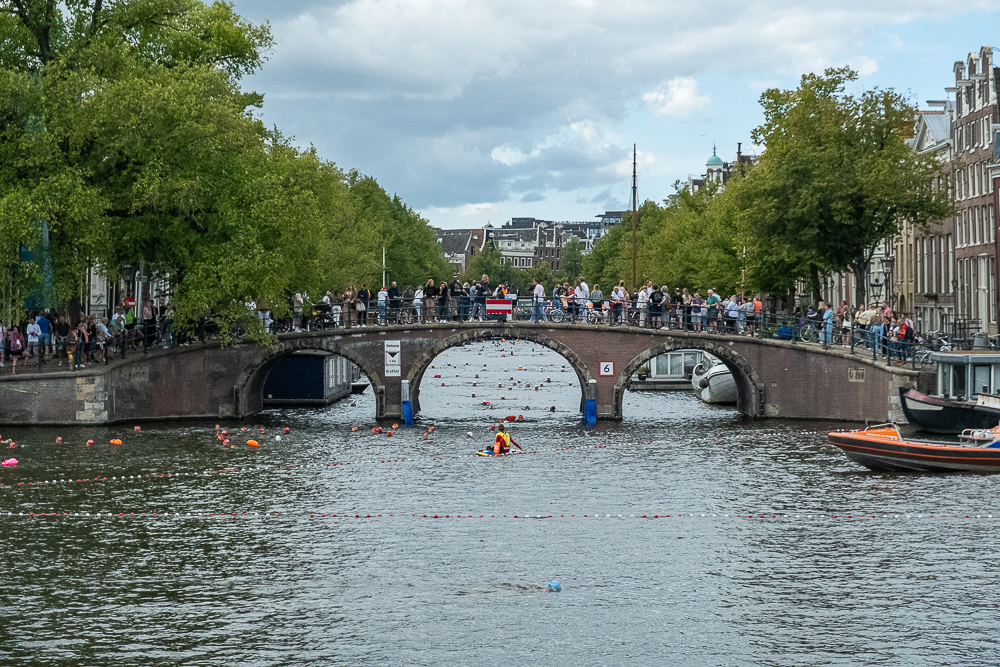
On our second day, we explored the Jewish Quarter with a tour guide.  Next, we visited the largest Sephardic synagogue in Europe (the Portuguese Synagogue) and the Jewish Museum.  While walking back to the tram, we saw 3,000 swimmers in the canals for an ALS fundraiser.

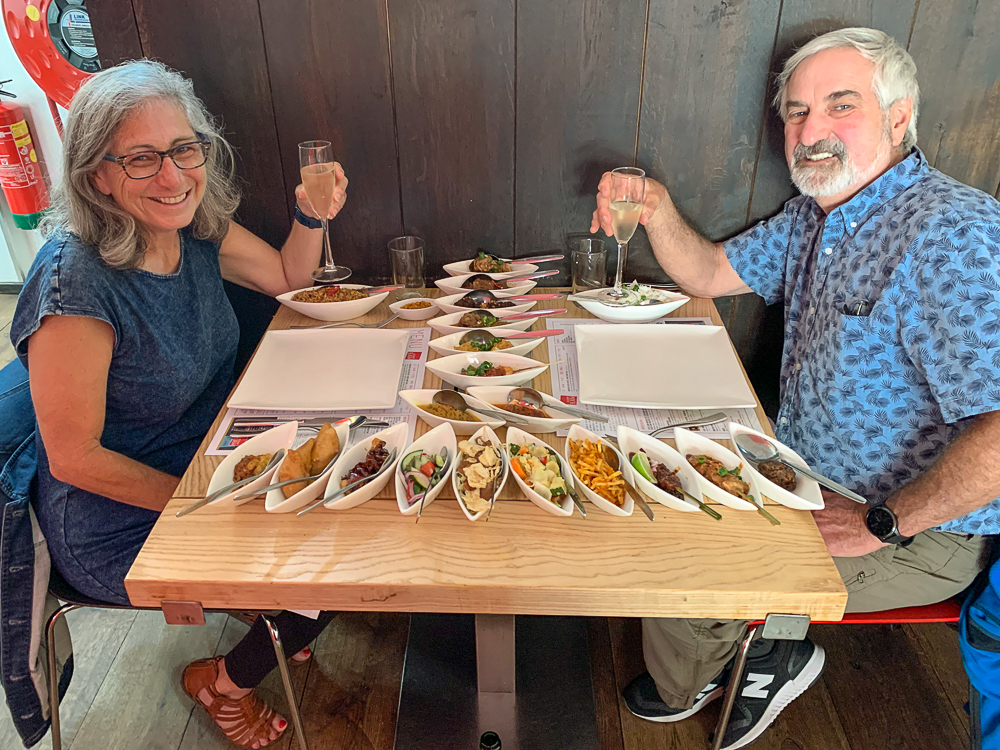
Dinner tonight was delicious Indonesian rijstafel, with many types of foods and a big variety of flavors.

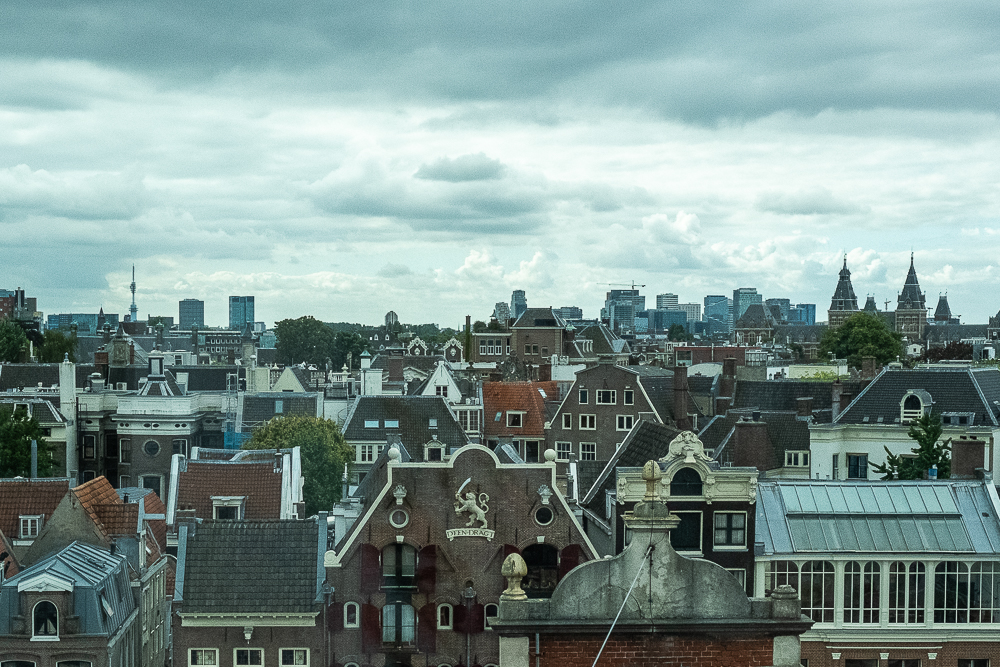
View of Amsterdam from the Mint Tower.


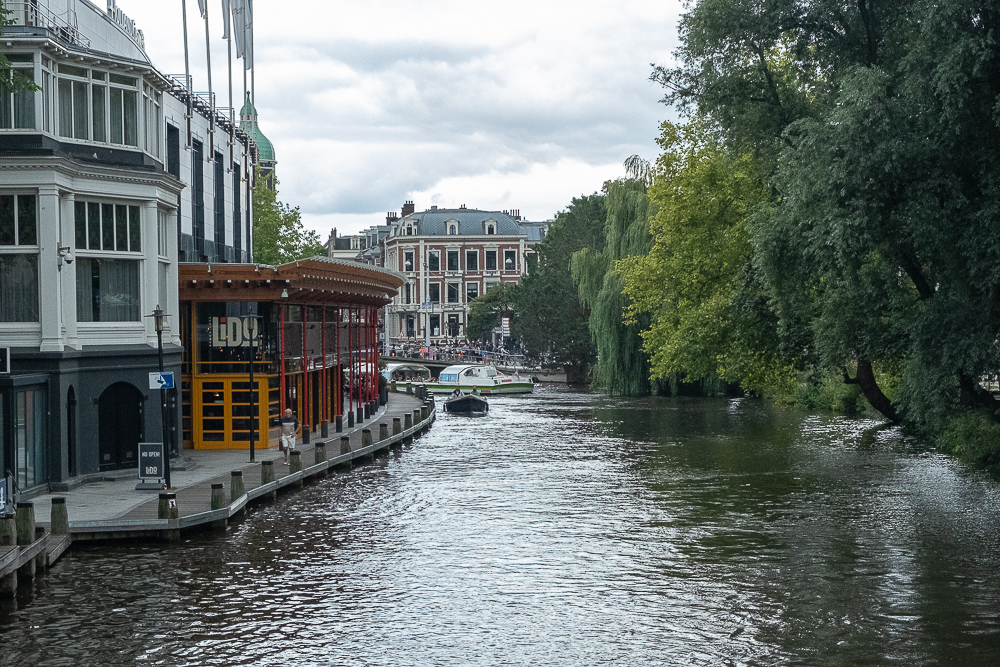
Nope.  I don’t remember this canal’s name!


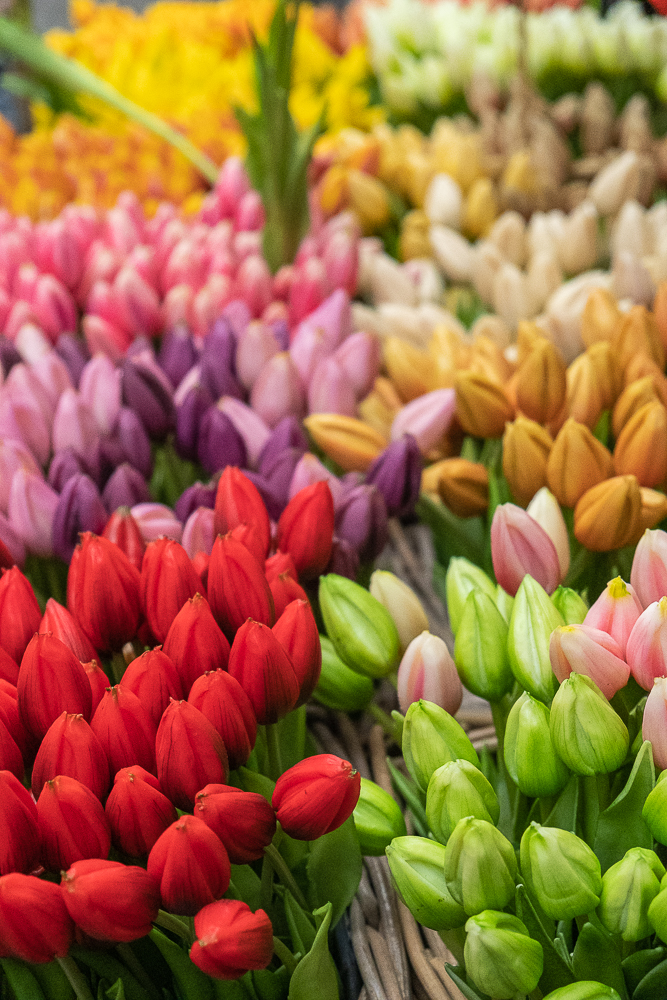
Flower market.


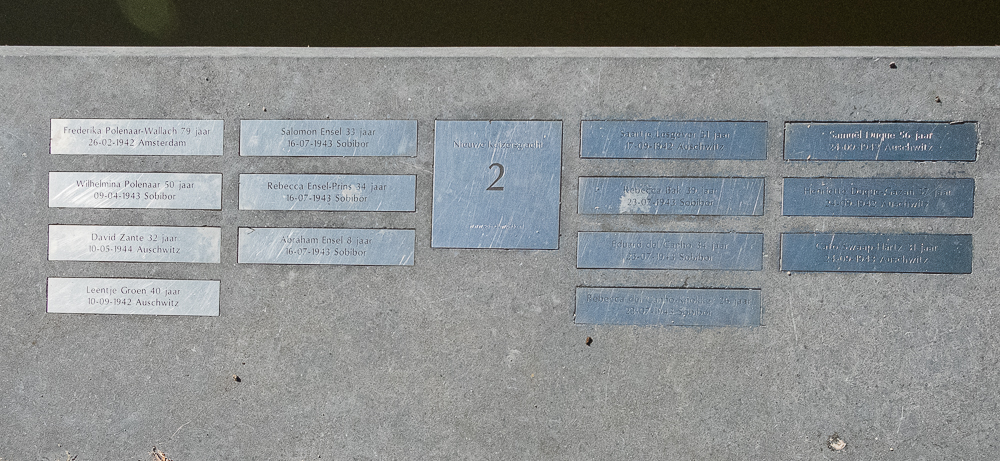
Until about ten years ago, there was only one memorial recognizing the Holocaust.  This new memorial, along the canal bordering the Jewish ghetto, mentions the people living in the home and their ultimate demise.


Building where the Jewish Council was located, including where they distributed yellow stars which were to be worn by every Jewish person on every piece of clothing.


National Holocaust Names Monument:  Designed by Daniel Libeskind, the names memorial lists 104,000 Dutch Jews and and 220 Sinti and Roma killed during the Holocaust.


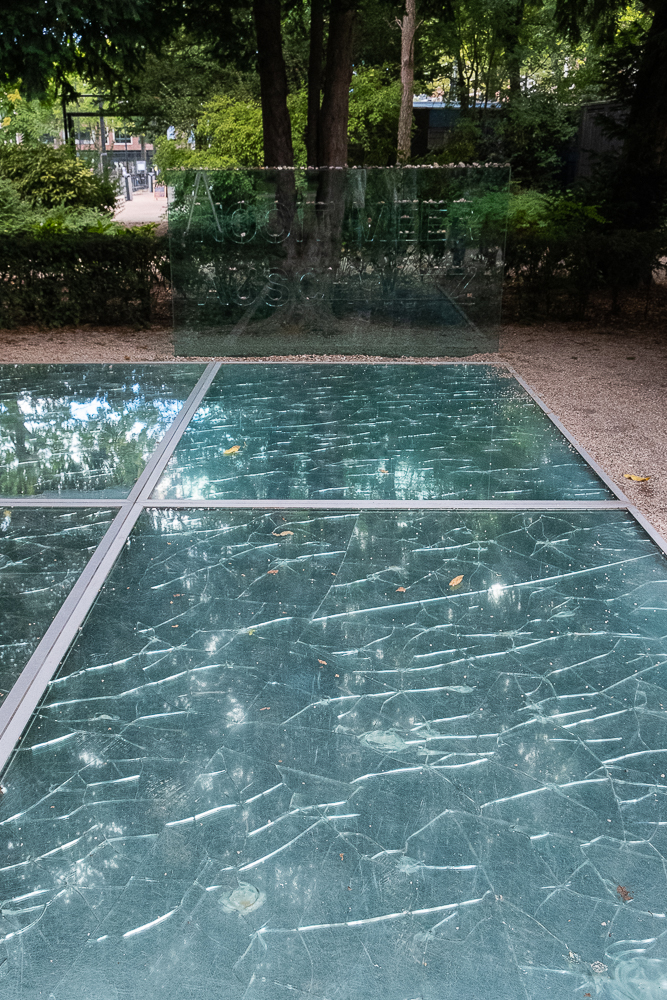
Memorial to Auschwitz Victims:  The oldest memorial in Amsterdam related to the Holocaust.


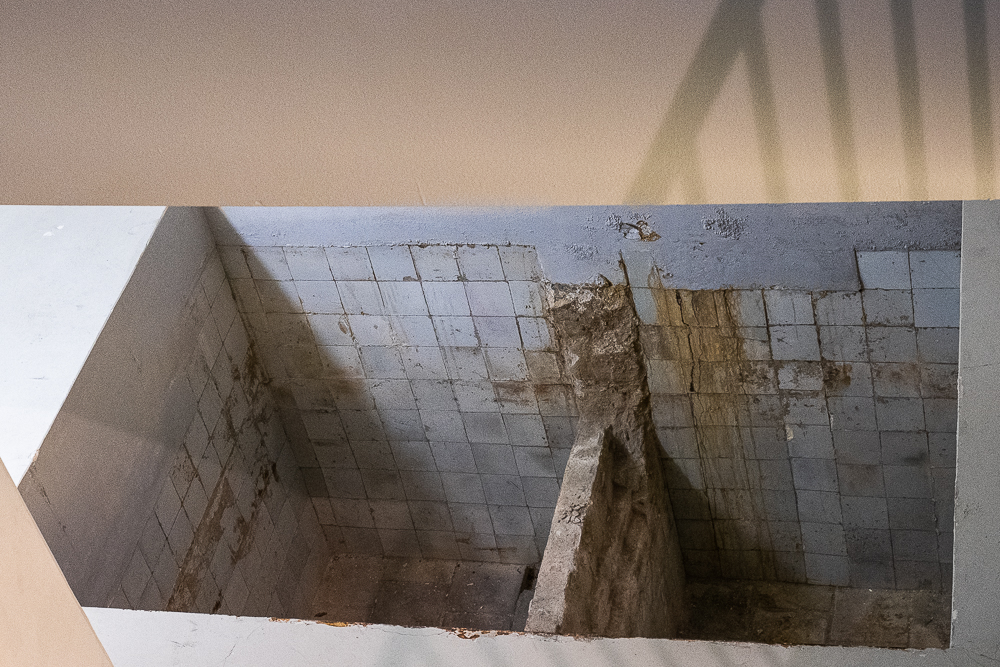
The Jewish Museum, housed where the Ashkenazi synagogues used to be, includes a mikvah discovered during renovation.


Inside the Portuguese Synagogue, which is still active.


Amsterdam Swims:  Fundraiser for ALS.


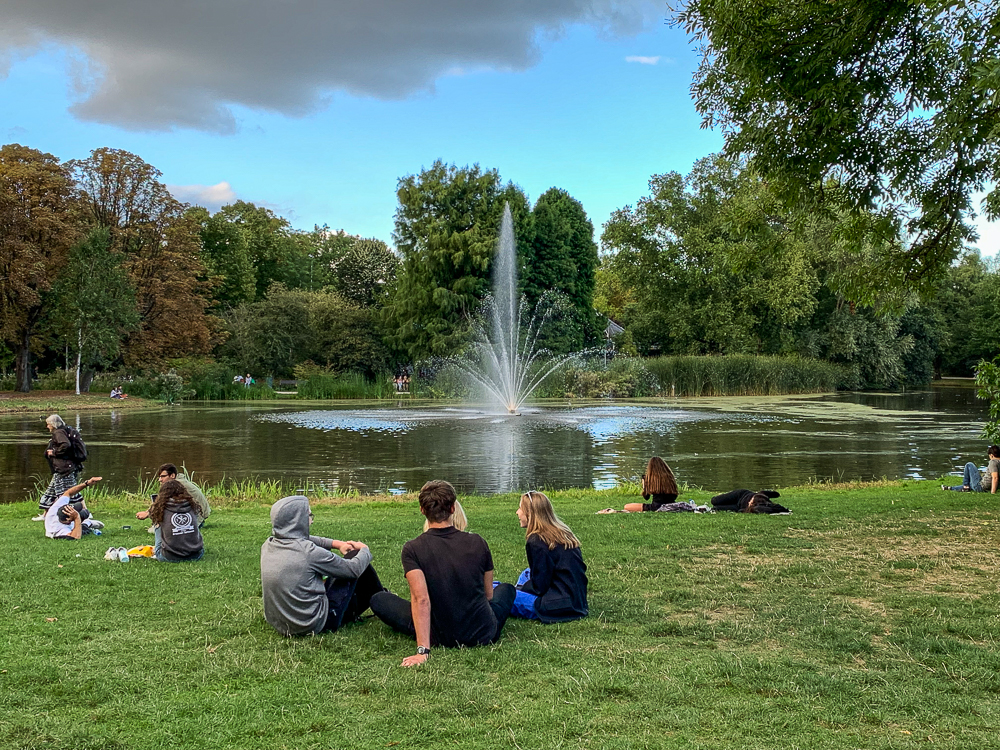
Vondelpark:  Amsterdam’s Central Park.


Indonesian delights for dinner!

I have mixed feelings about our last day of riding.  On the one hand, sitting on a bike for many hours can be a bit…uncomfortable (frequent sightseeing stops help!).  On the other hand, an e-bike, great company, and beautiful scenery make the cycling very enjoyable. 

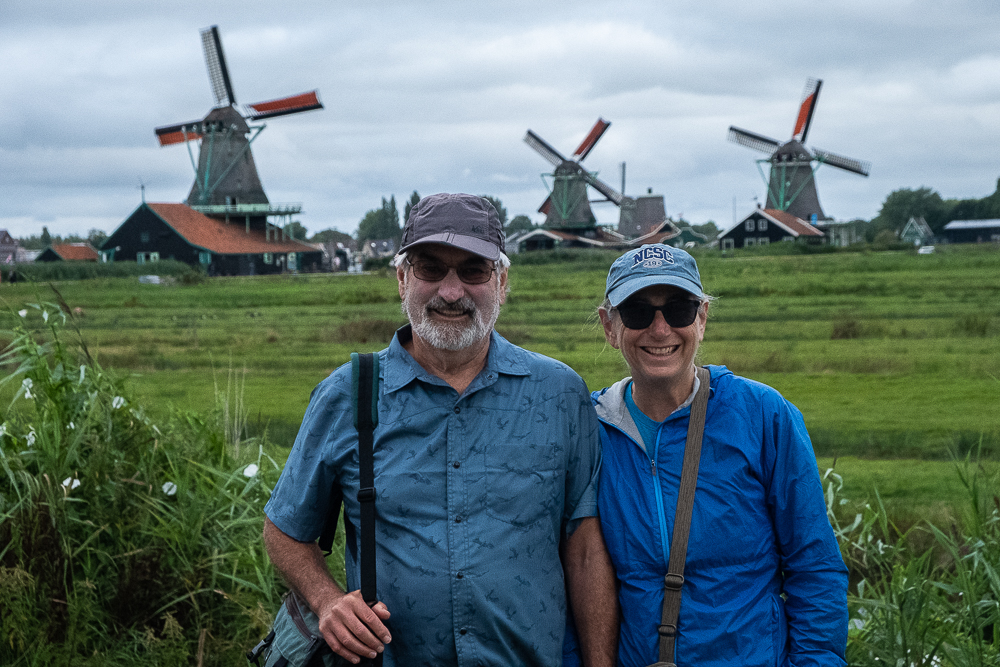
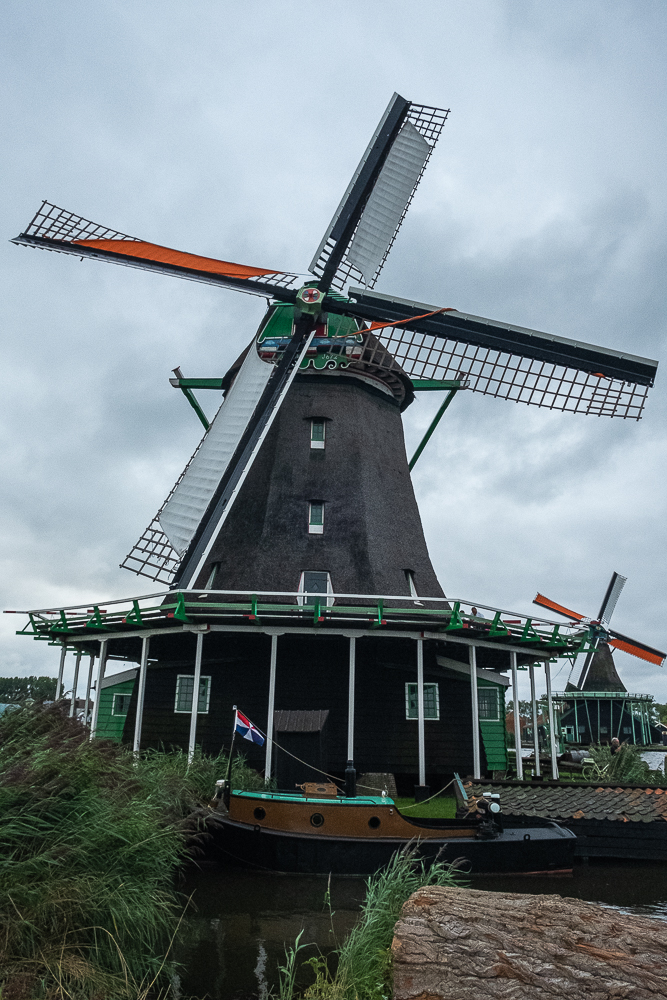
We began in Zaandam and went to the open-air museum Zaanse Schans with beautiful windmills, traditional wooden houses, an old Dutch village, a cheese farm, and a traditional wooden clog maker. After spending over two hours at Zaanse Schans, we cycled through the recreational area of Twiske to Amsterdam.

Upon returning to the boat, we packed in time for the Captain’s dinner – mimosas and a toast in the lounge followed by our last dinner on board.  Dessert?  Flaming baked Alaska.

I thoroughly enjoyed my first bike tour.  Yes, it was luxurious – a cruise, full meals, great service, a comfortable cabin.  Riding an e-bike made the biking part much much easier.  The scenery, the experiences, and the excitement of the whole tour make me ready to book my next boat and bike adventure!

First view of the many windmills at Zaanse Schans.

 
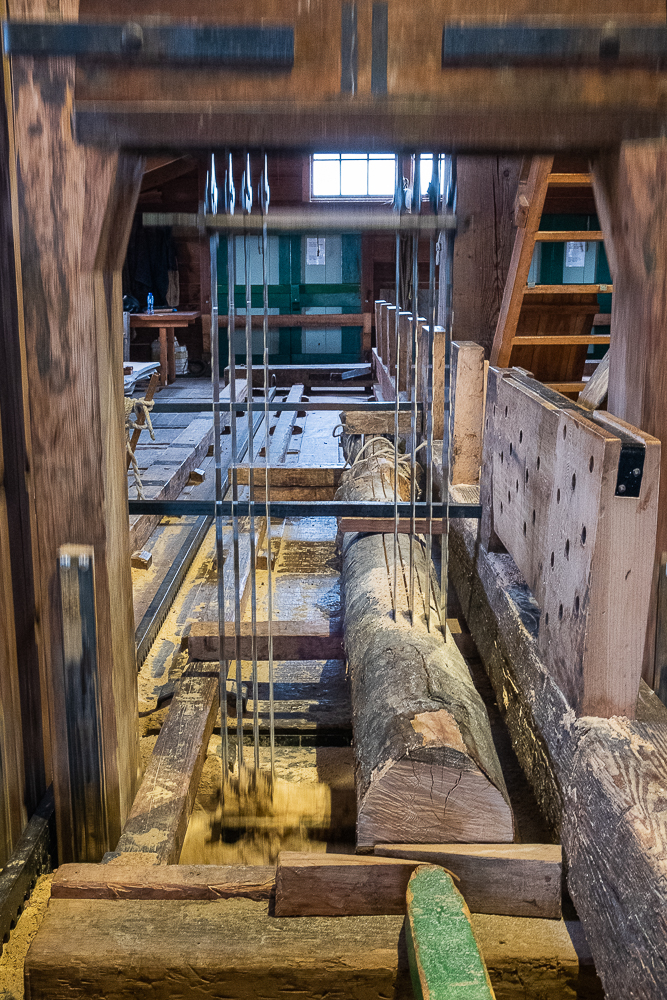
We went into a sawmill to learn how windmills work.  The wind blows the blades, they turn, gears turn a crank, blades hang from the crank, and the crank cuts the wood.  Local craftspeople buy wood from this mill to repair and build homes, furniture, etc.


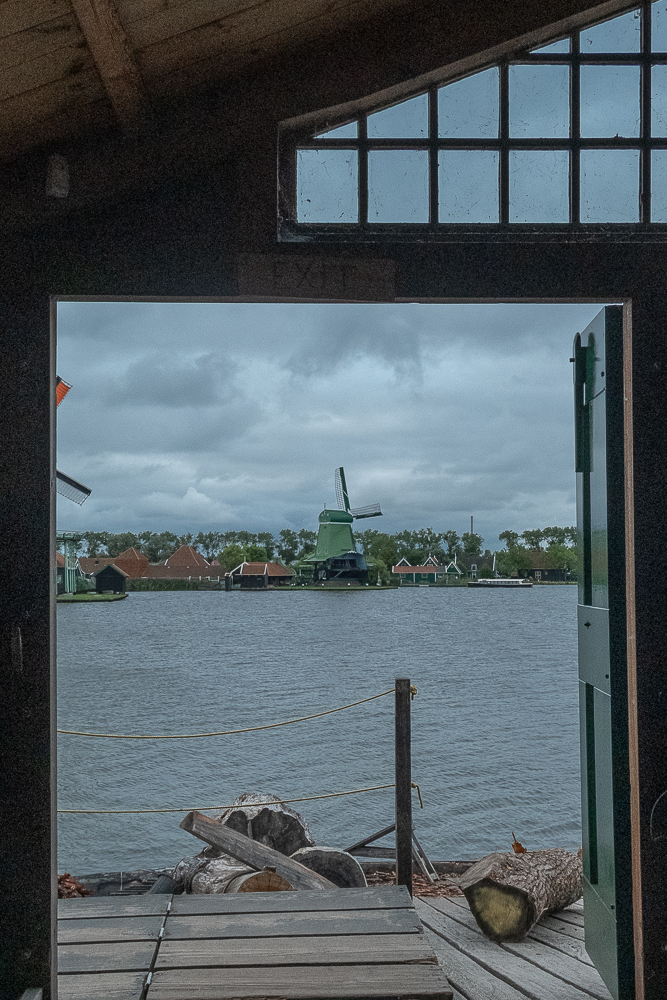
Logs soak in the water and then are pulled into the mill for cutting.


Each windmill works.  For example, another windmill makes linseed oil and another one makes paint.


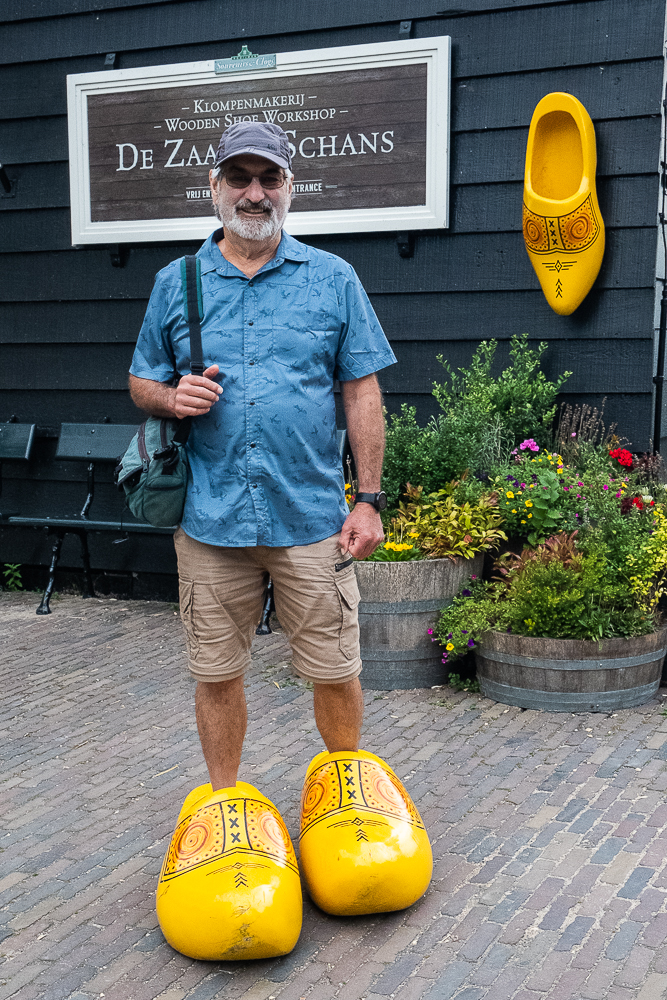
Some pretty big shoes to fill!


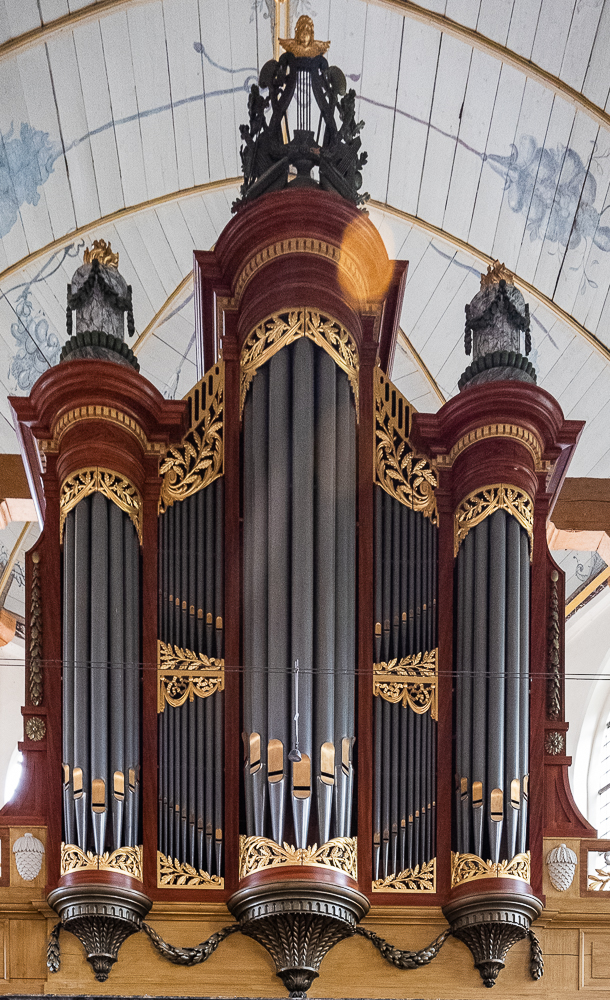
Church organ in the village of Twiske.


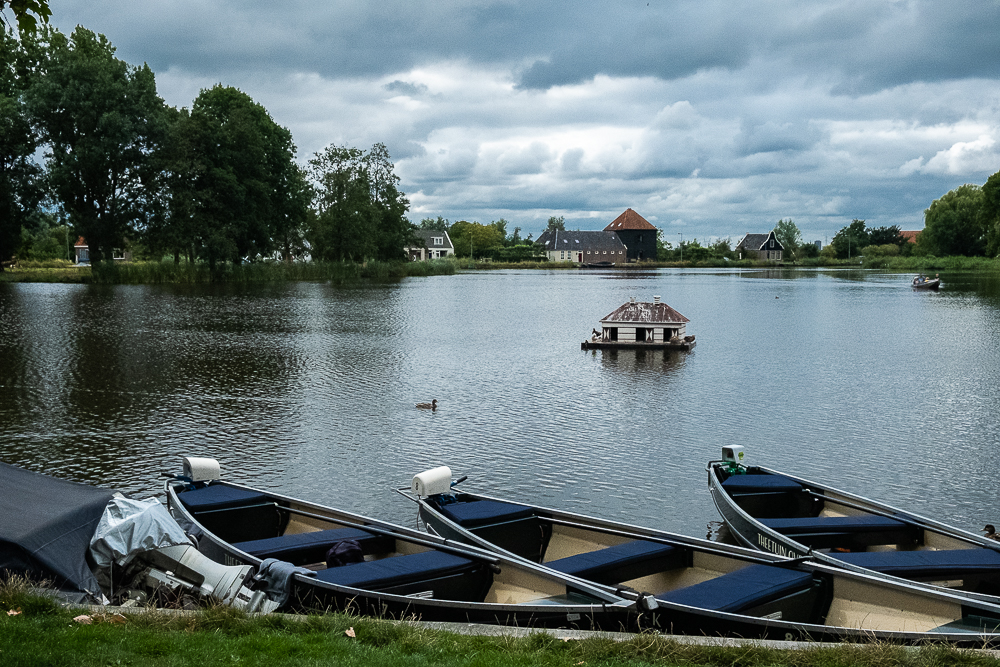
Twiske recreational area.


A very enjoyable boat and bike trip!


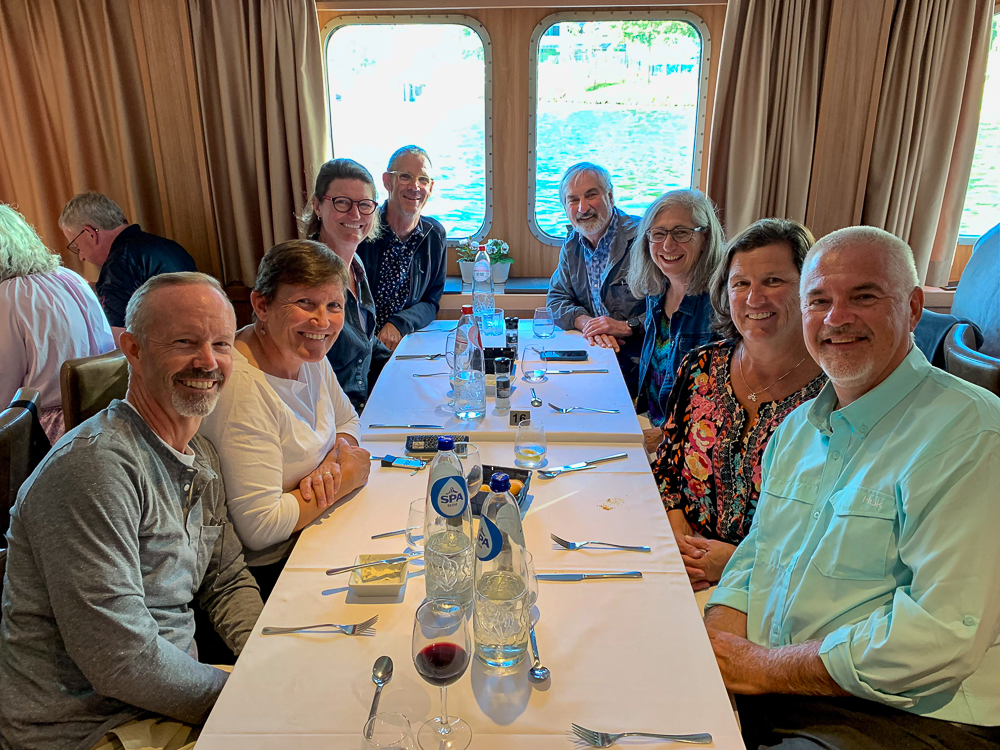
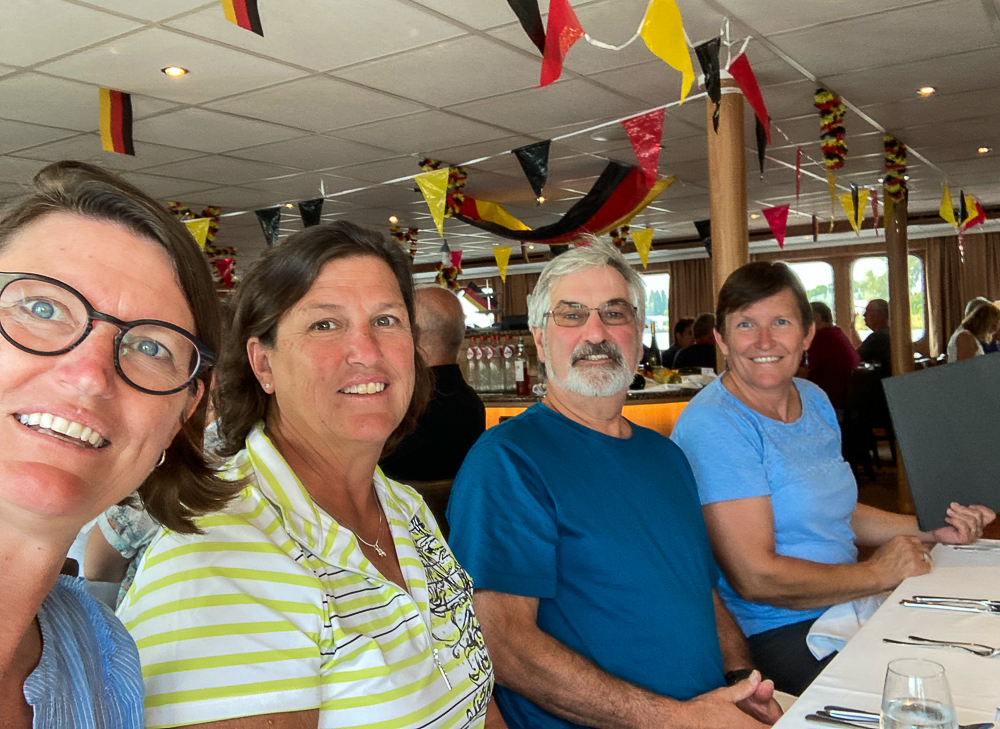
Table 16:  Yun, Sari, Jean, Paul, Joel, Lisa, Brenda, Paul.  We couldn’t have asked for better table and travel mates!

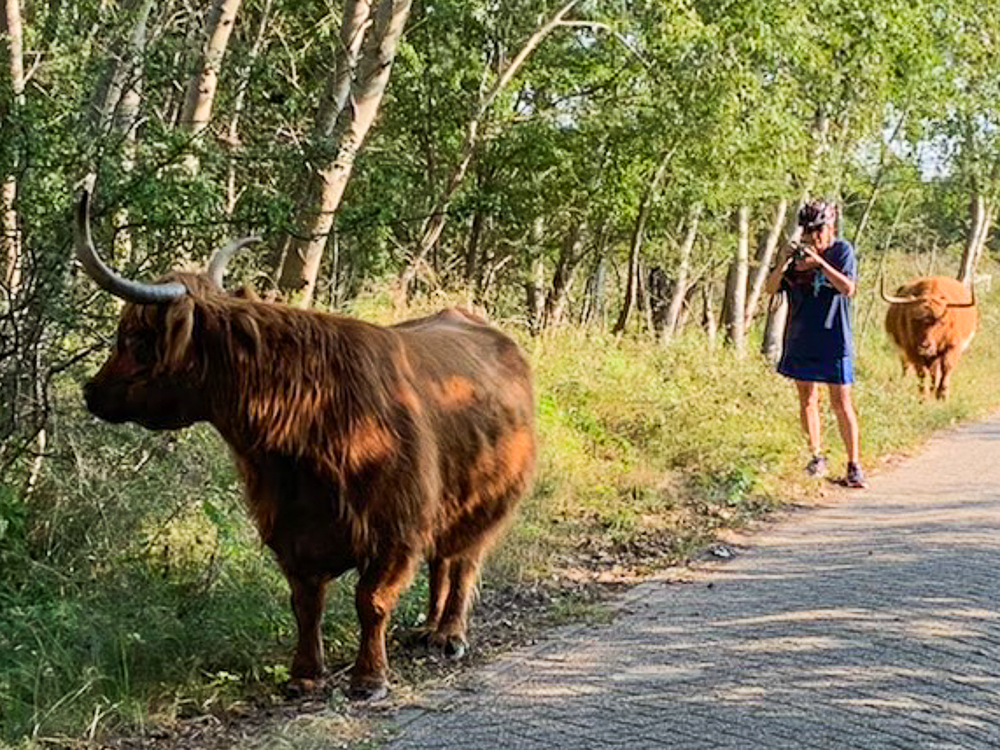
This was by far my favorite day of cycling!  Riding on dikes and seeing windmills have been wonderful.  Today, though, we rode through not only dikes but also dunes, beaches, and forests.  The riding was variable, which added more excitement to the day.  And, we saw Highland Cattle!!!

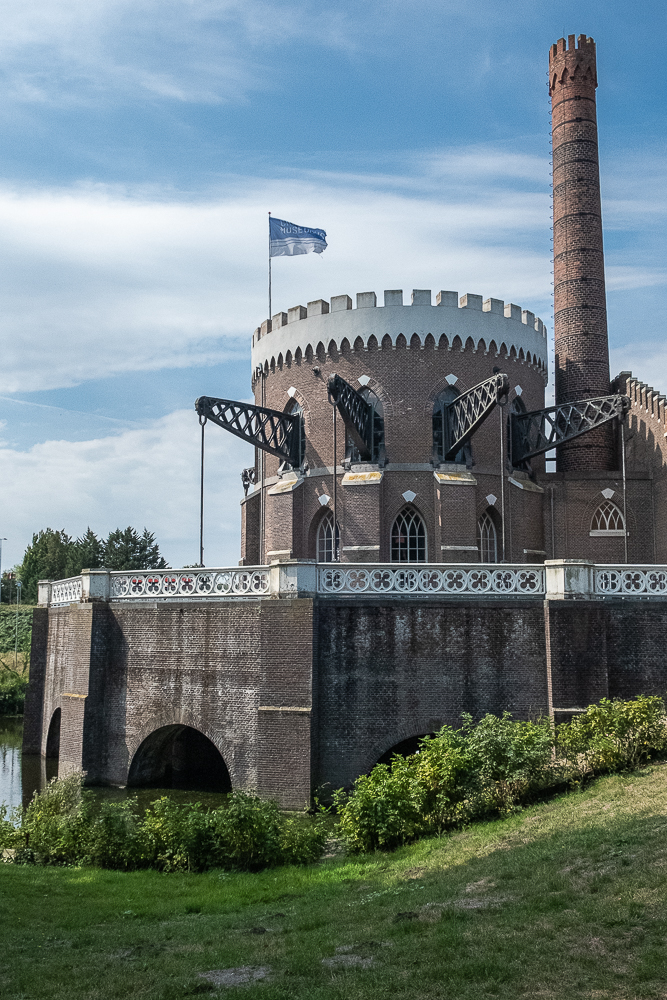
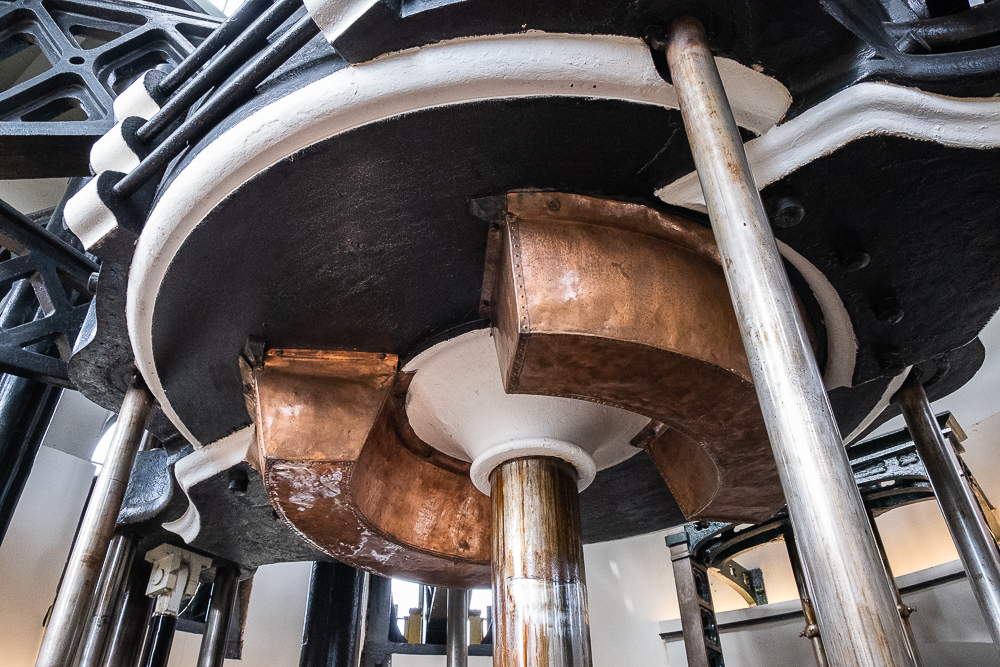
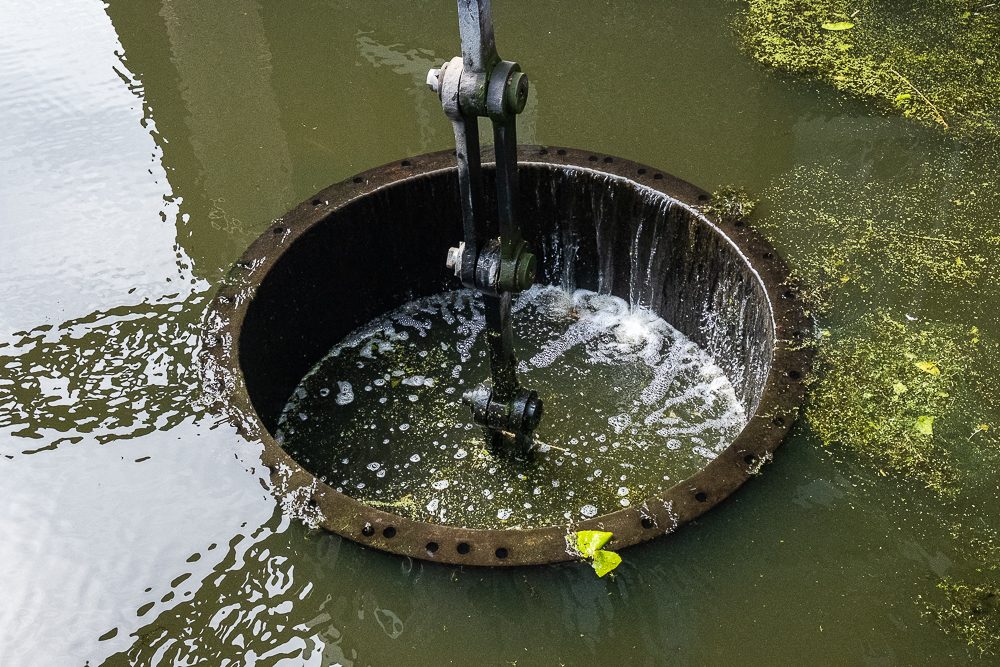
Where did we go? We started cycling through the beautiful Kennemer dunes, a national park where we spotted the Scottish Highland cows. Then we hung out at the beach in Zandvoort, going into the North Sea.  We saw the largest steam engine of the world, the Cruquius pumping station, which helped to drain the lake into canals, before riding through forests and the center of Haarlem back to the ship.

We had to visit Holland to see Scottish Highlander cows!


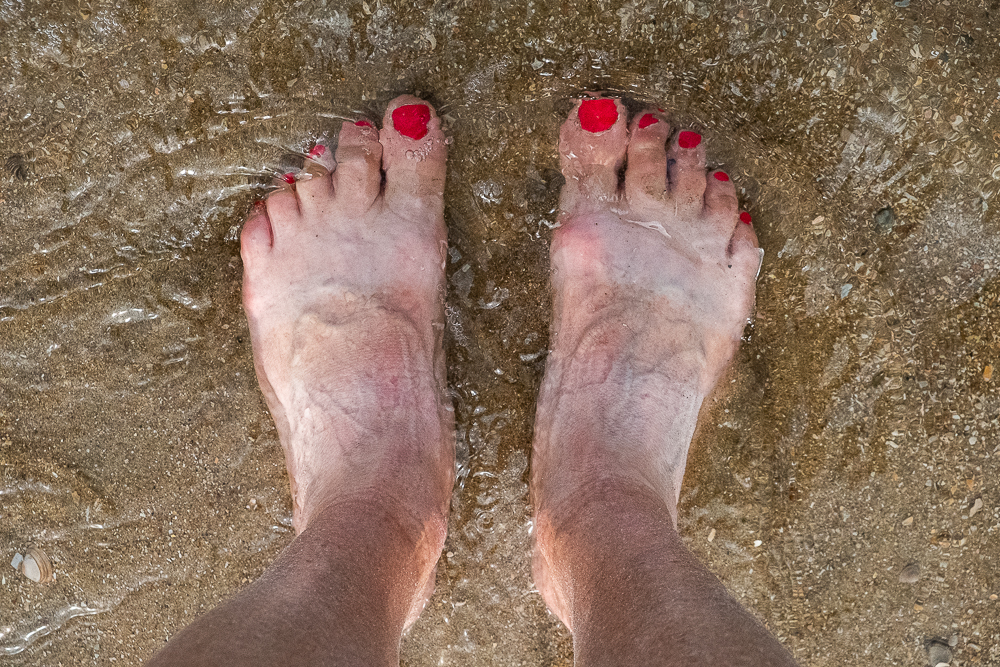
Got my feet wet in the North Sea.


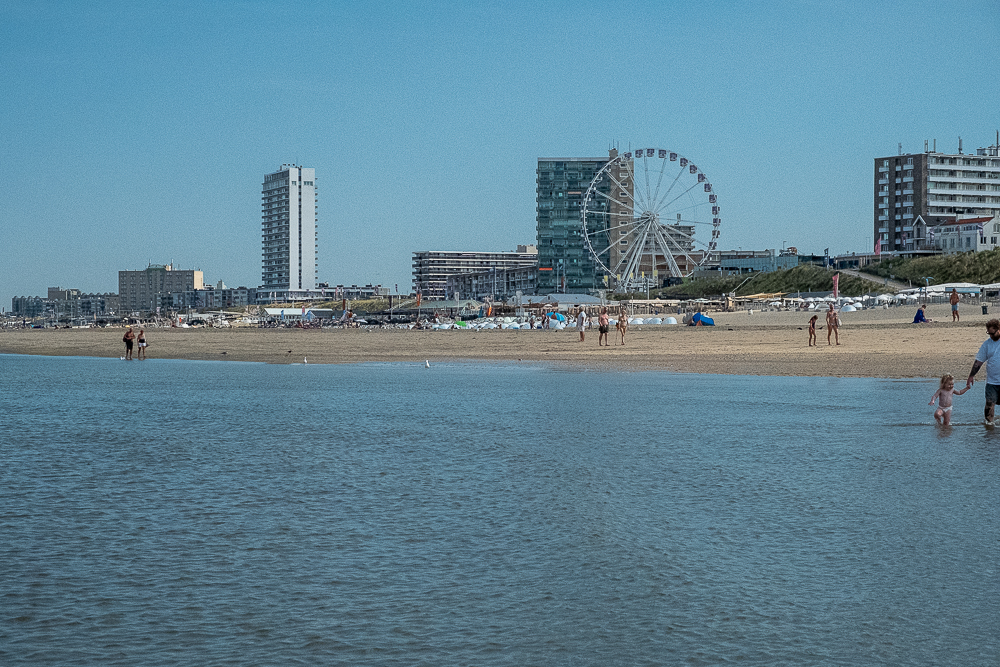
Reminded me of Myrtle Beach.


Cruquius from the outside…


…and from the inside.


One of eight buckets which helped to drain the lake.


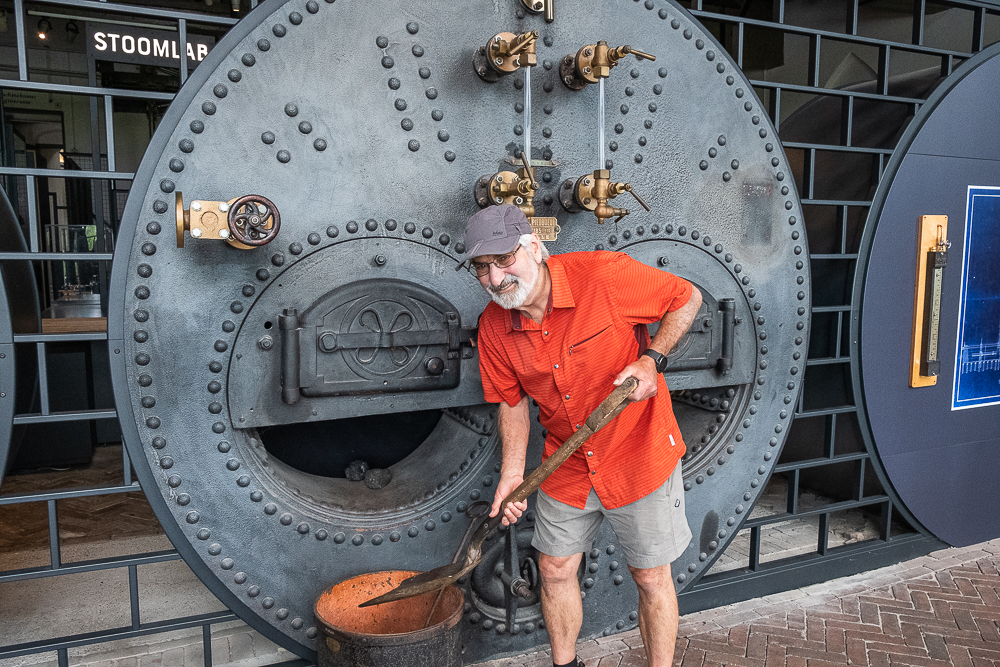
Joel helping with the steam engine.


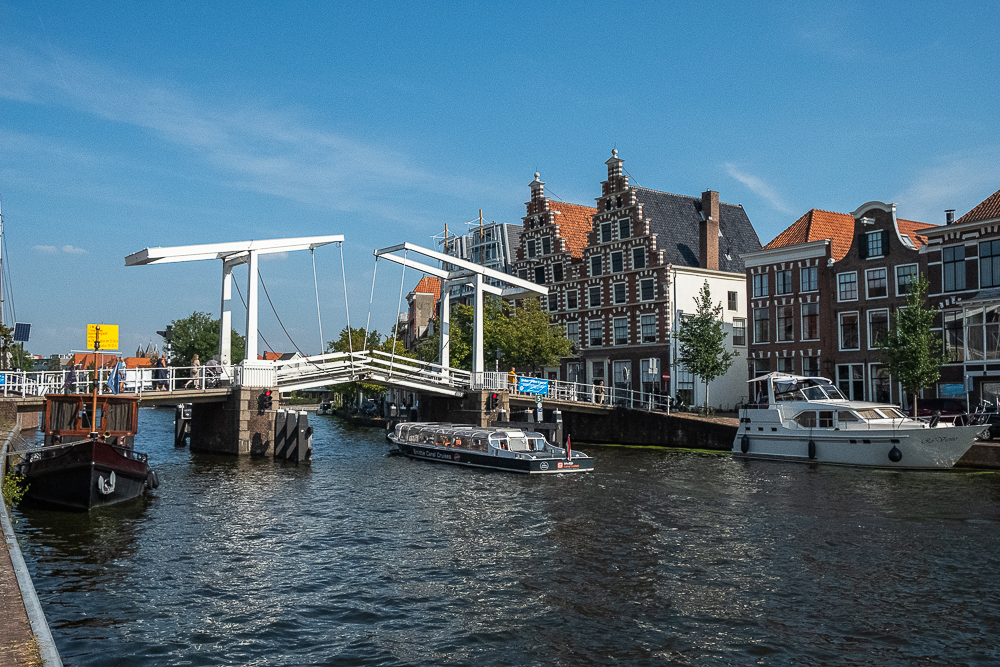
A canal in Haarlem.


After dinner, Joel and I walked around the small town of Haarlem, which is where I snapped these two photos.


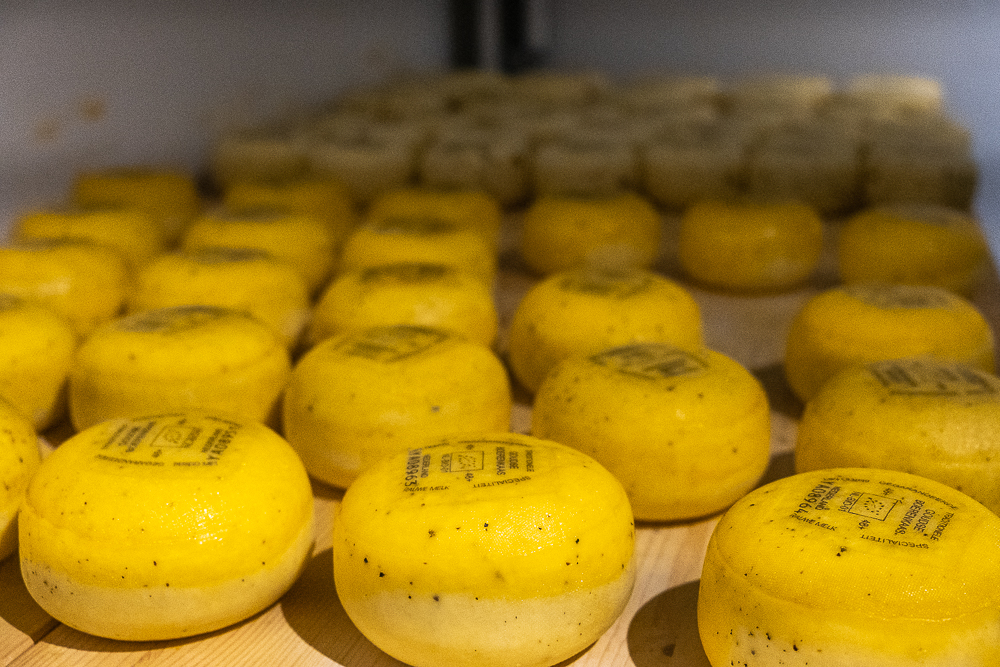
On our fourth day of cycling, we traveled from Schoonhoven through the beautiful “Green Heart” of Holland via Oudewater (visited the Witches Weigh House) to Utrecht. Near Oudewater visited a traditional organic cheese farm where we learned the cheese-making process.

I found the story about weighing witches compelling, as it is similar to witch hunting in Salem, MA.  How (mainly) women can be murdered because someone accuses them of witchcraft when there’s illness, poor crops, and other unexplained phenomena reminds me of how we blame others for covid, inflation, and supply chain issues rather than looking at the facts.

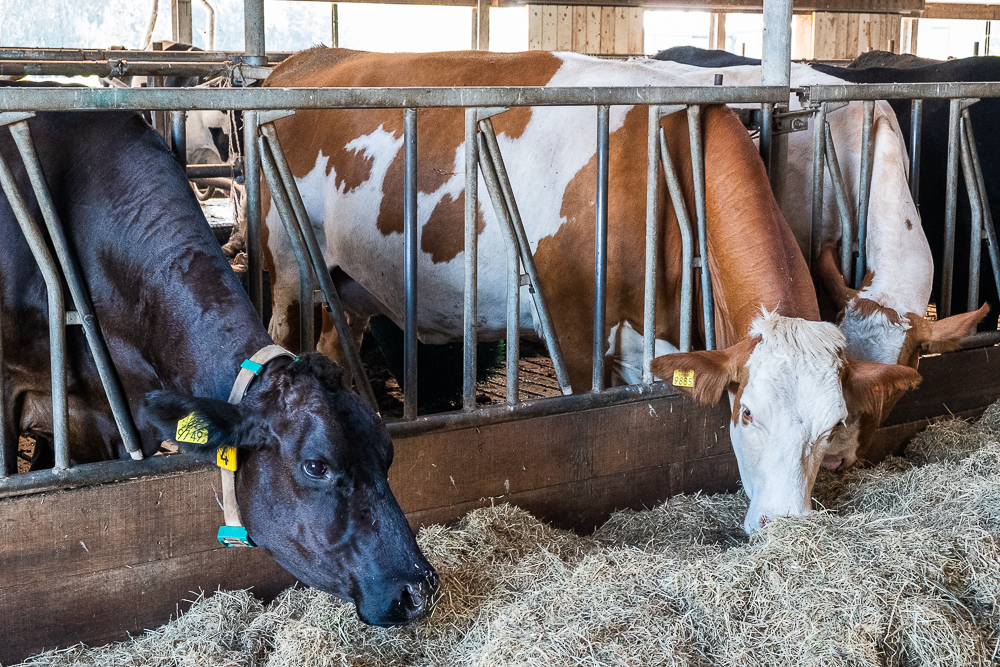
The cheese-making demonstration, presented by a twenty-something fifth generation farmer, showcased organic methods.  We also visited the cows – and their babies – all named by the farmers.

Cheese-making farm.


I’m not a witch!


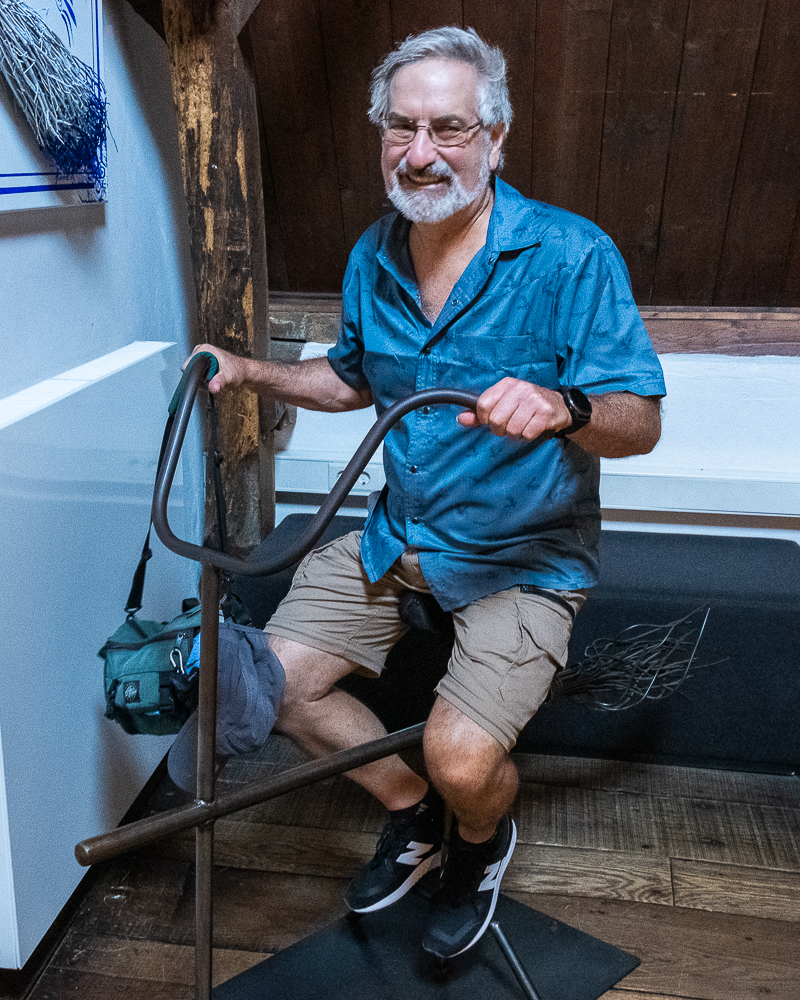
Joel riding a broom.


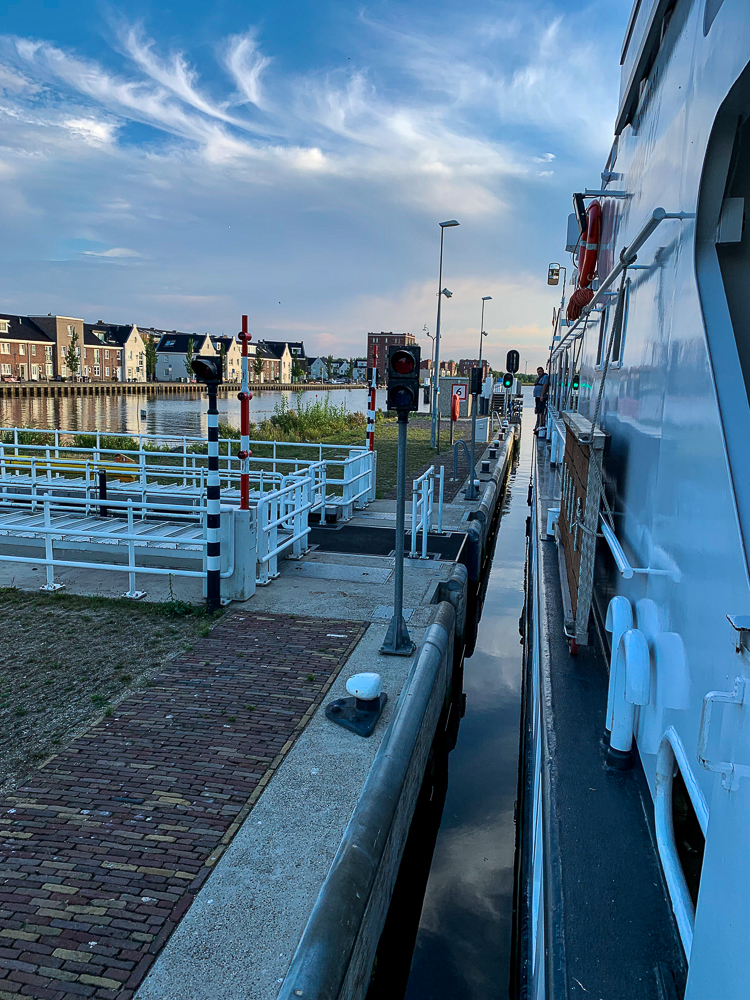
Going through a sluice.


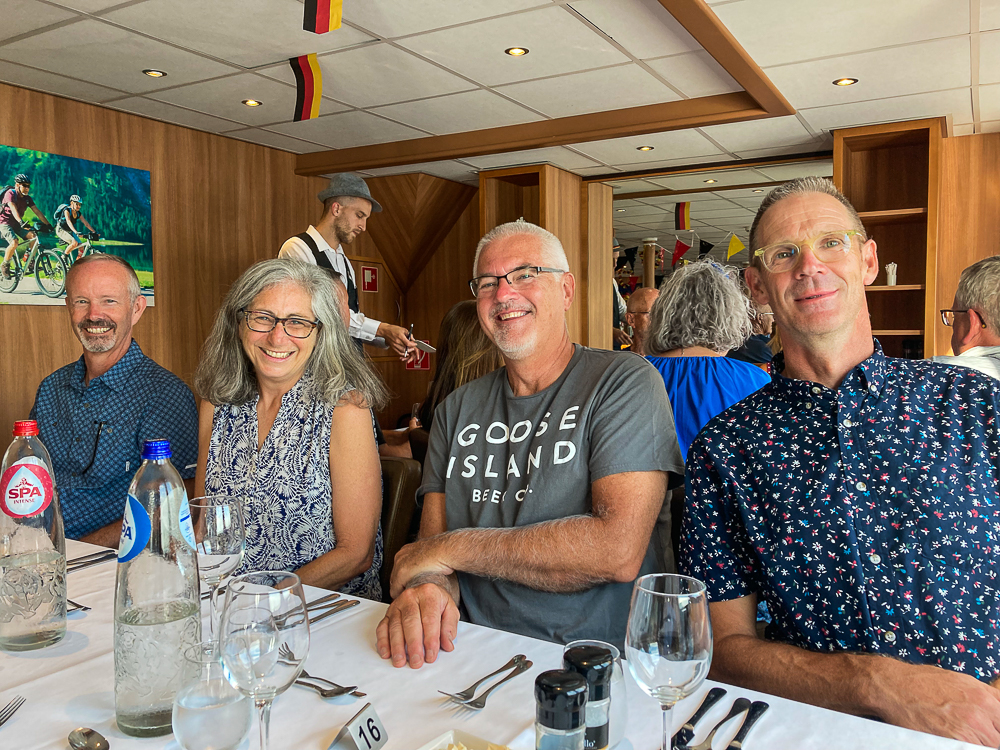
Dining room table 16!


There were several options today – short, medium, longer, longest rides.  We chose the longest ride (duh!) of 36 miles.  This took us out of Rotterdam, through the 19 windmills of UNESCO World Heritage site Kinderdijk, into the town of Gouda, and to our boat moored in Schoonhoven.

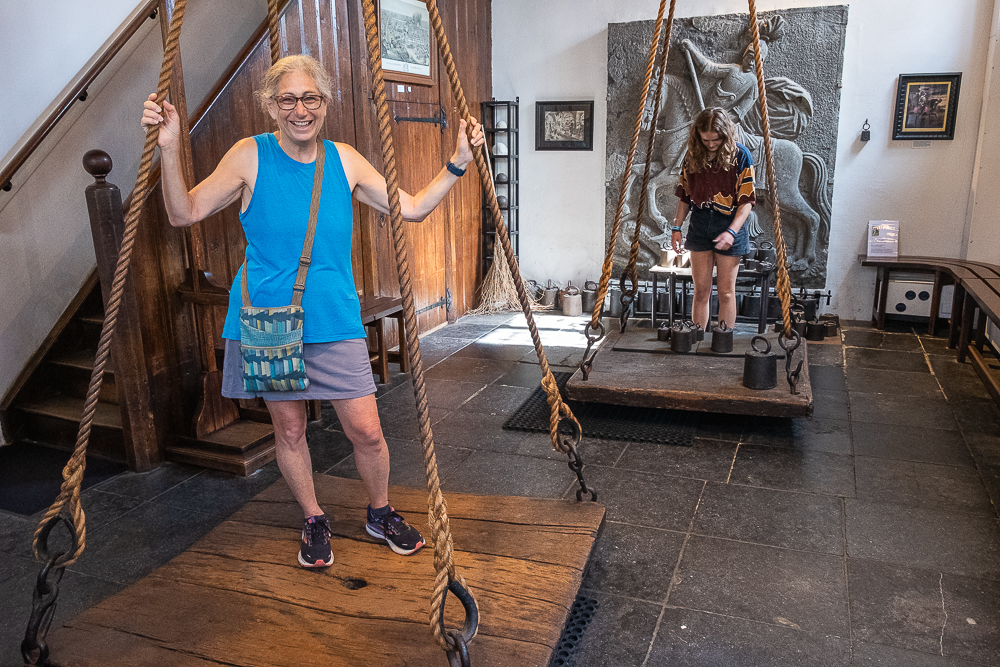
The windmills of Kinderdijk amazed me!  In the mini-museum on site, we could see how they helped move water to clear the land for planting and living. Later this week, we will be able to tour the inside of a windmill.

Gouda was cool – the cheese weighing shop, the old city hall, the Church of St. John with its many UNESCO World Heritage site stained glass windows.

The big excitement?  While riding on a dike with canals on both sides of us, a big van came toward us.  Joel and I moved to the side.  However, Joel moved further off the “road” and fell into the canal.  The guys in the van and the two vehicles following it pulled the bike off of Joel and helped him out of the water.  Joel was not injured, and his bike and phone didn’t get wet.  Ultimately, all good!

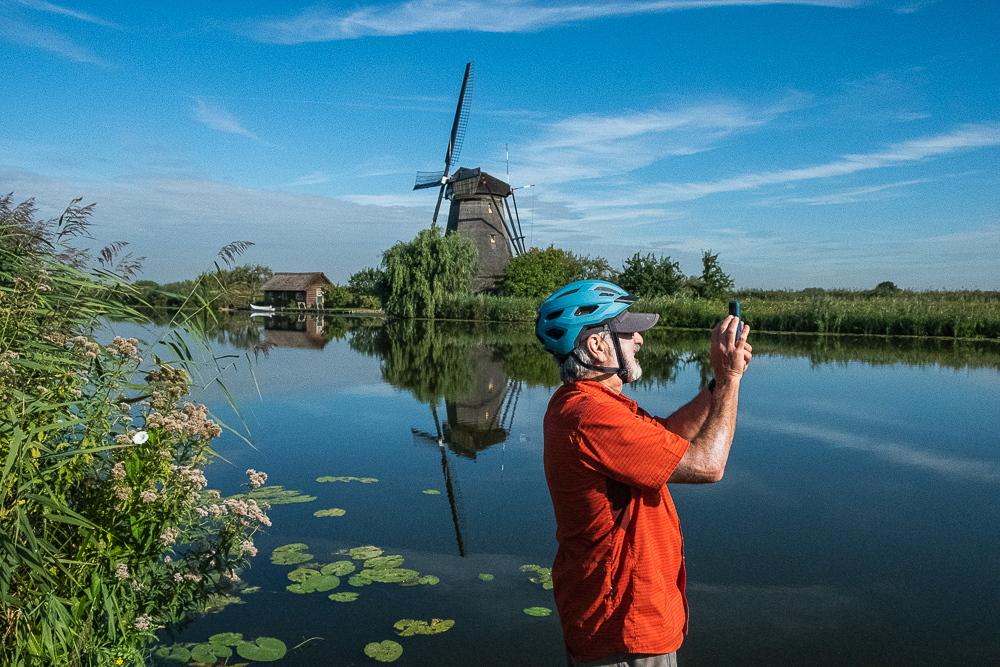
Kinderdijk – 19 windmills.  Some were moved here so they could be restored and saved.


Kinderdijk.


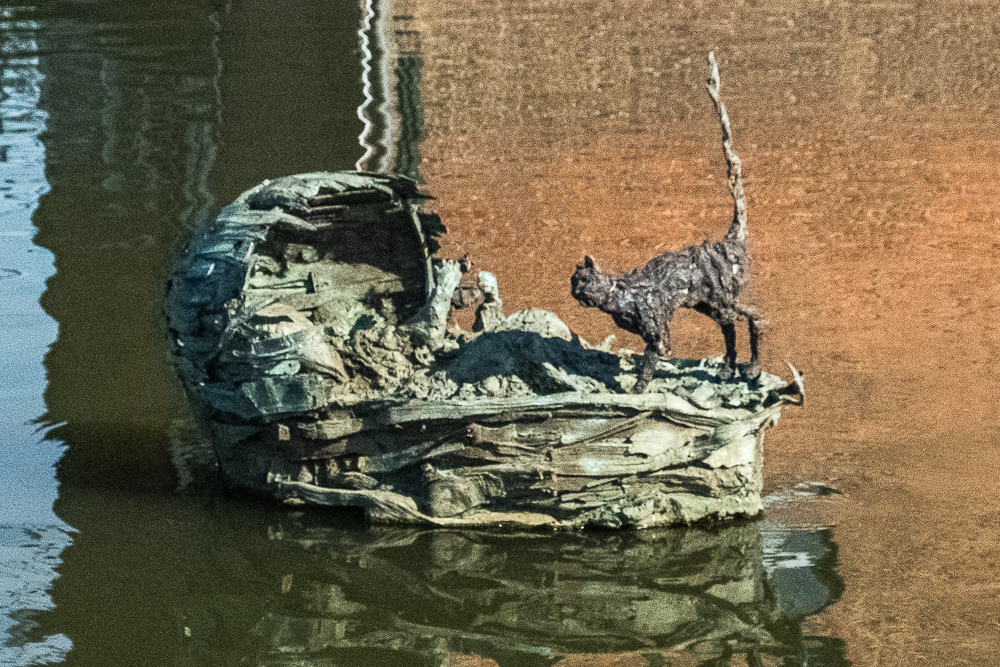
Statue of the black cat:  There is a folk tale about the child in a crib that was said to have washed ashore at the dike in what is now known as Kinderdijk during the Saint-Elizabeth Flood. After the flood, when the survivors dared to go outside again, they saw a cradle floating along the dike, from which the cry of a child could be heard. The bobbing crib was balanced by a cat, which jumped back and forth to keep the basket from sinking and thus kept the baby alive. (https://www.kinderdijk.com/latest-news/news/beatrices-cradle)


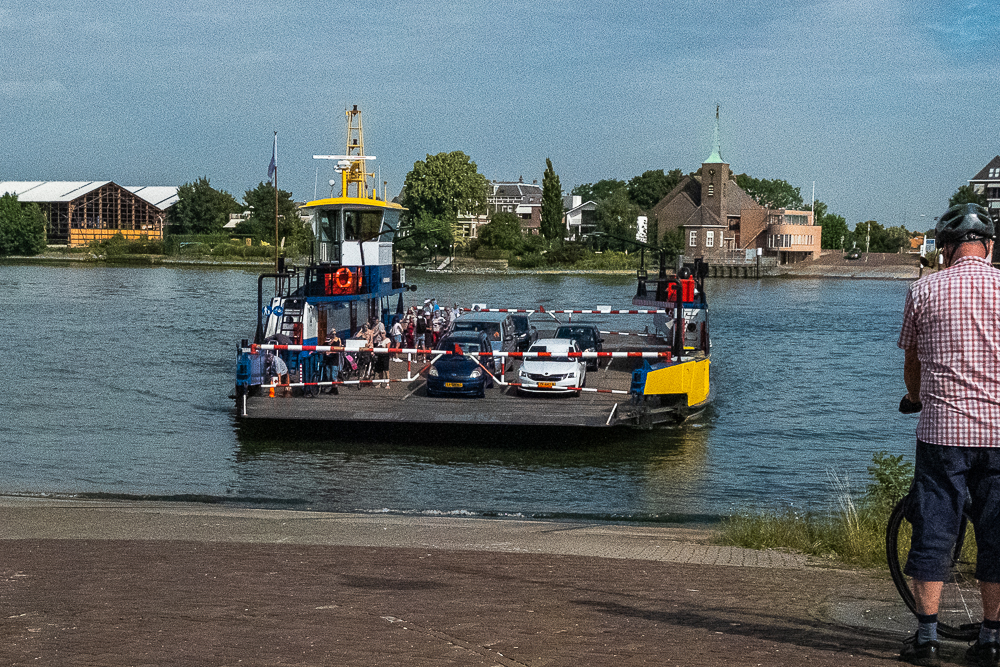
The ferry we used to cross into and out of Kinderdijk.


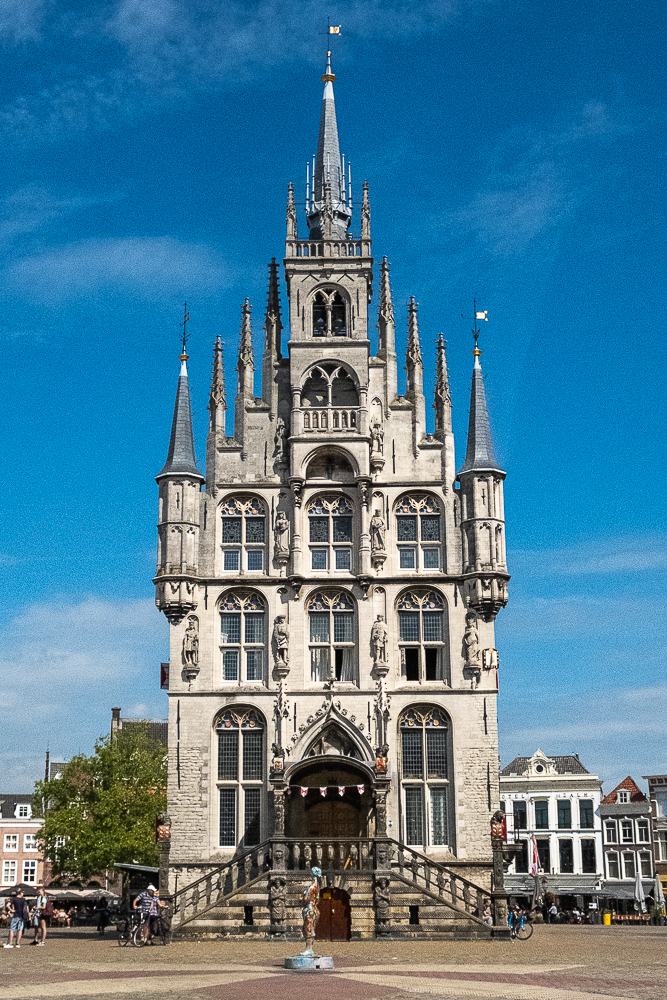
Gouda City Hall – formerly a church, also now a wedding venue.


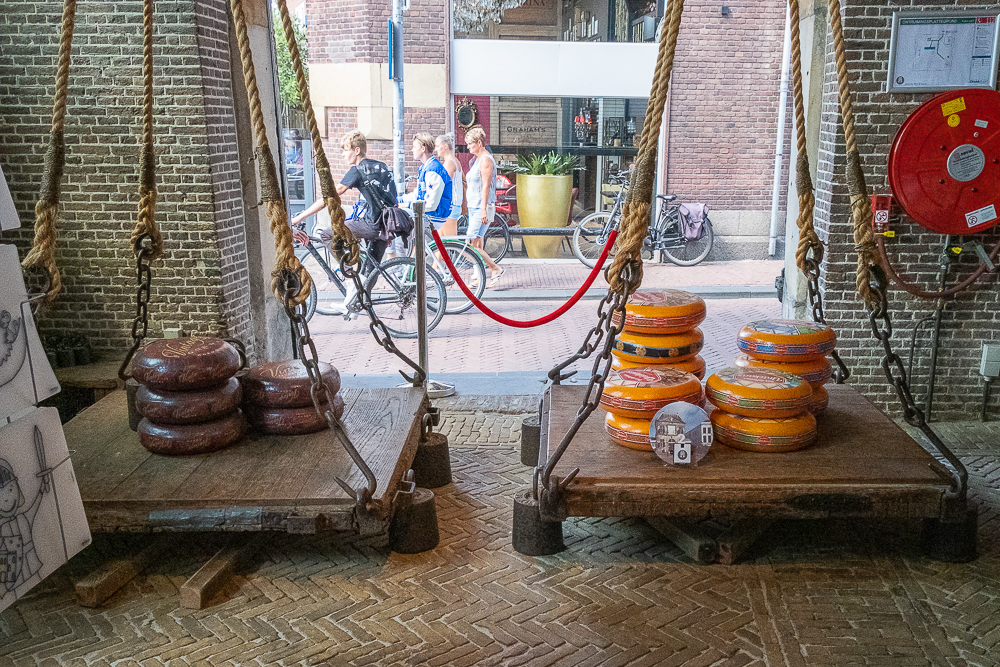
Cheese weighing in Gouda.


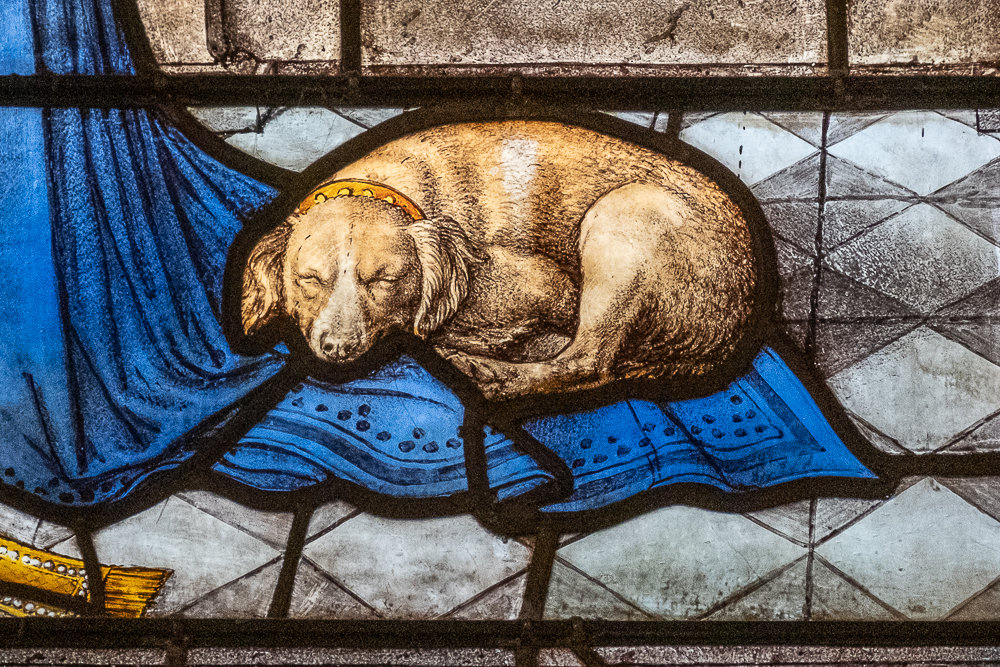
From a stained glass window in St. John’s Church, Gouda,


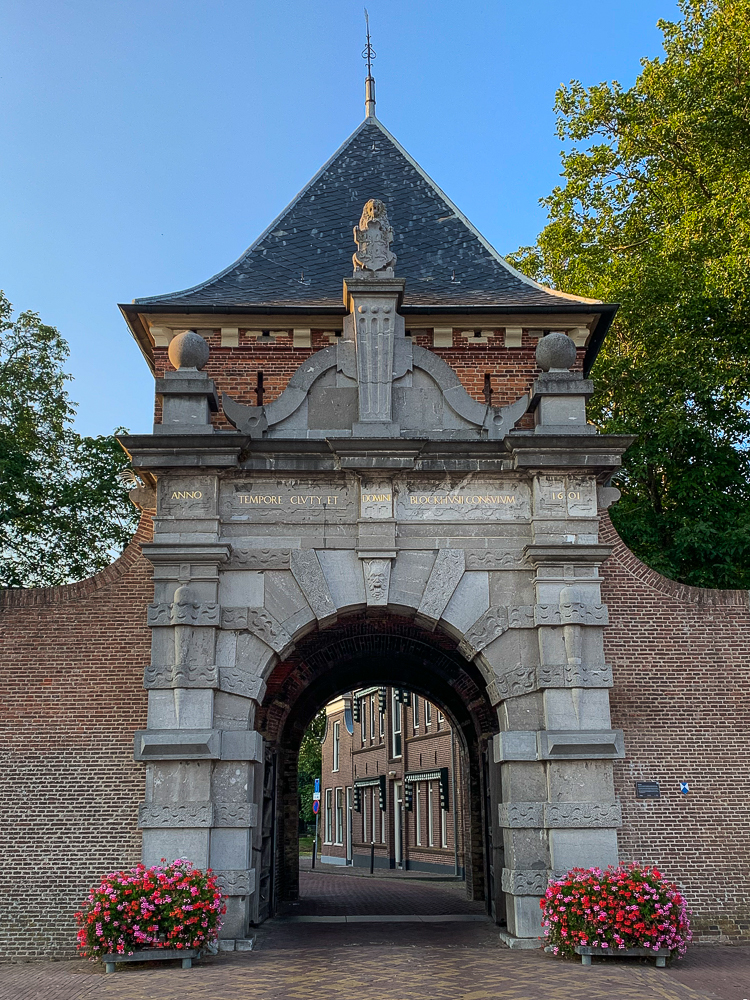
Gate to Schoonhoven,


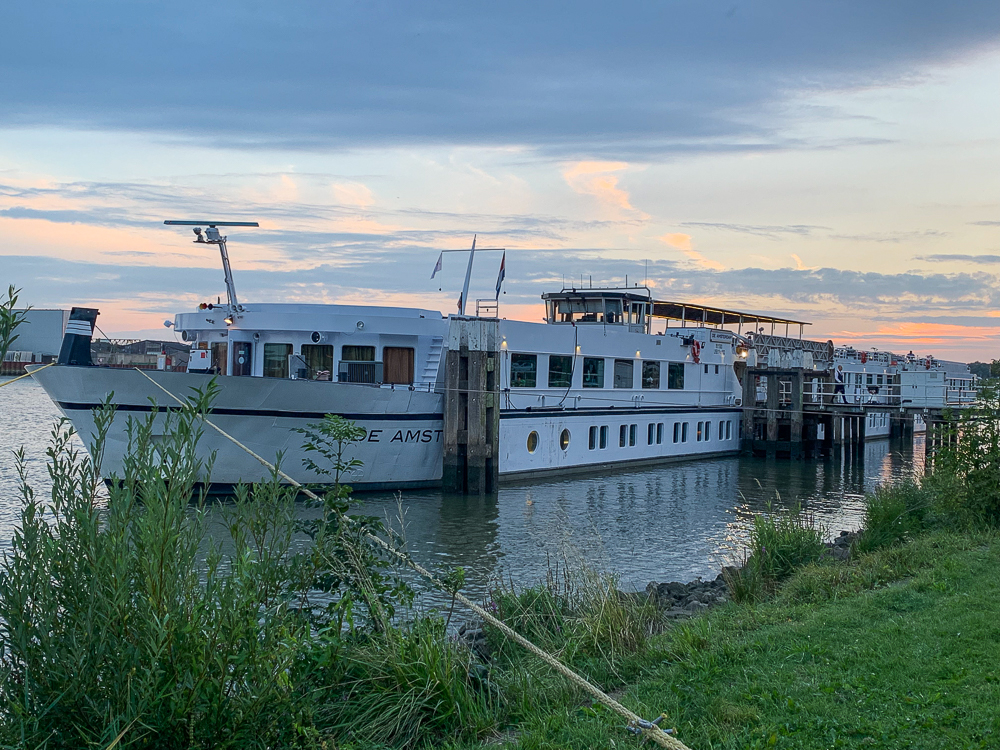
Our barge – the De Amsterdan – moored at sunset in Schoonhoven.

A few comments regarding this trip…

First, I’m riding an e-bike and Joel has a regular bike.  He, of course, is a very experienced cyclist, and I AM NOT.  On the e-bike, I can cycle and enjoy the scenery without stressing about keeping up.  Although I keep it on the lowest assistance level and the trails are mostly flat, the electronic motor helps me keep up without stressing.

Second, as a semi-guided tour, Marianne, our guide, and Wilma, her assistant, provide a briefing the evening before each ride.  The trails here are AMAZING!  Each trail is numbered, so we have written instructions showing us which number to travel on.  There is a continuous network of cycle paths, clearly signposted, well maintained and well lit, with road/cycle path junctions that often give priority to cyclists. This makes cycling itself convenient, pleasant, and safe.  Also, the instructions for each day’s ride are included in the app “Ride with GPS.” Joel, by the way, is our navigator.  🙂

Also, the tour company provides many additional tours (some included and some require a small additional fee).  Every day, there’s something new and special!

On this, our second cycling day, we cycled via the “jenever” city of Schiedam (jenever is a traditional Dutch gin) and through the Delfland area to Delft which is famous, of course, for its blue earthenware. We visited the beautiful city center with its small canals, picturesque streets, bridges, and alleys. The daytime special tour (for €5) was of the Royal Delft Museum.  It was somewhat interesting, if not a bit underwhelming…

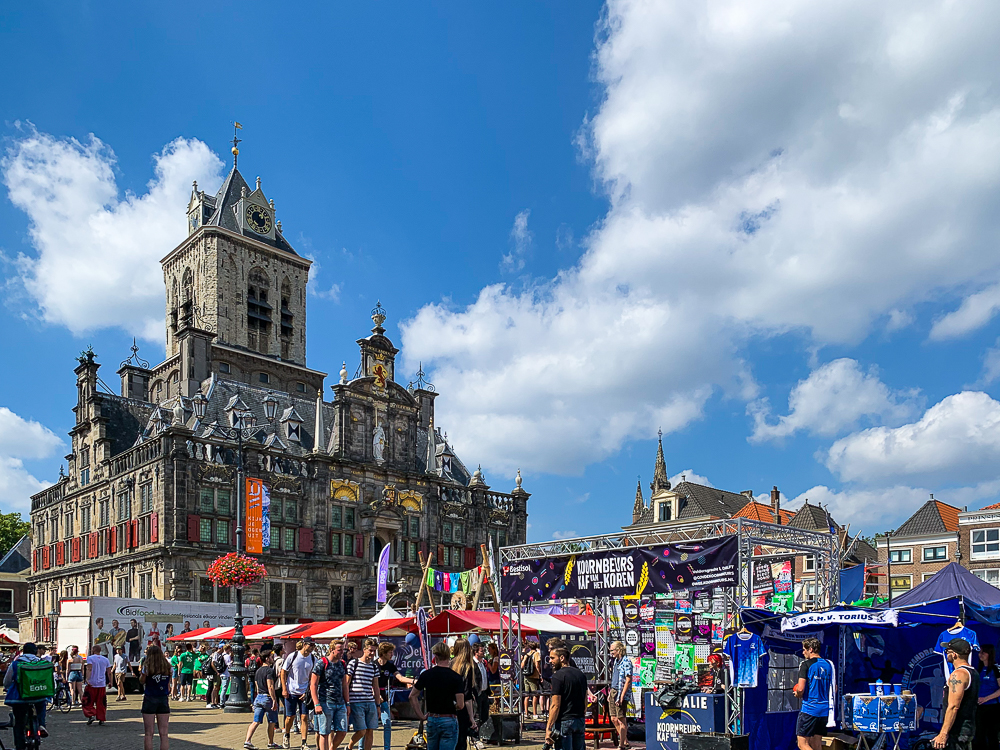
The city itself was overrun with STUDENTS!  It was “WOW Club Showcase” in Delft.  Oh, so many students all over the place!

That evening after dinner, we had a two-hour tour of Rotterdam.  The guide was knowledgeable and interesting – and a bit soft-spoken.  It helped to stand right by him to hear his many intriguing stories and insights.

A surprise along our cycling route.
 

WOW Club Showcase in Delft!
 

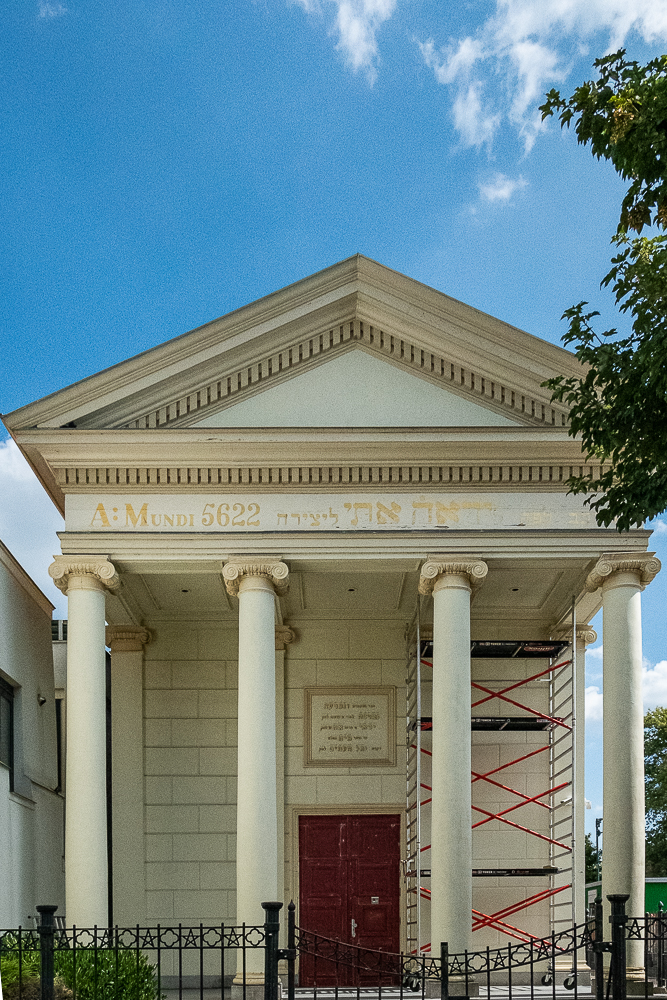
While walking around Delft, Joel and I found the synagogue.
 

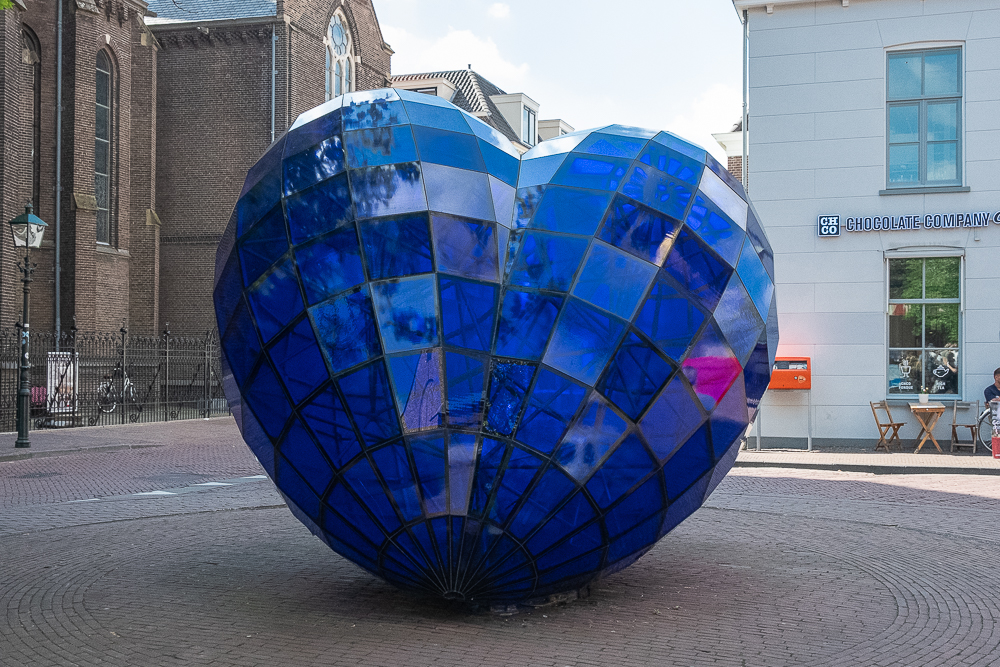
Our meeting place for our group ride to the Royal Delft Museum:  The Blue Heart statue,
 

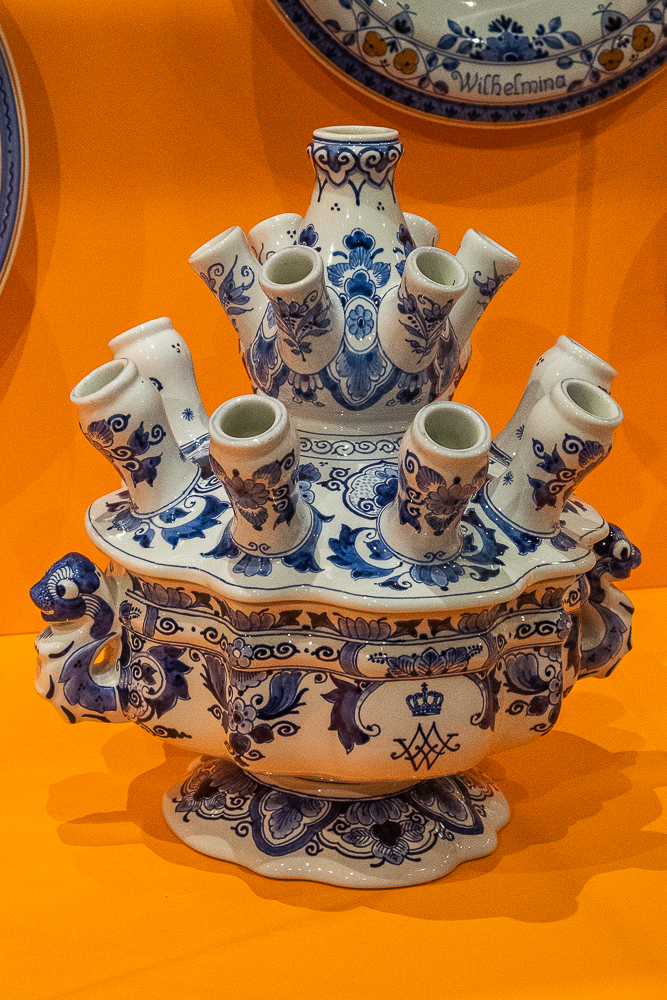
Royal Delft pottery (a tulip vase).
 

A door at the museum into a gallery.
 
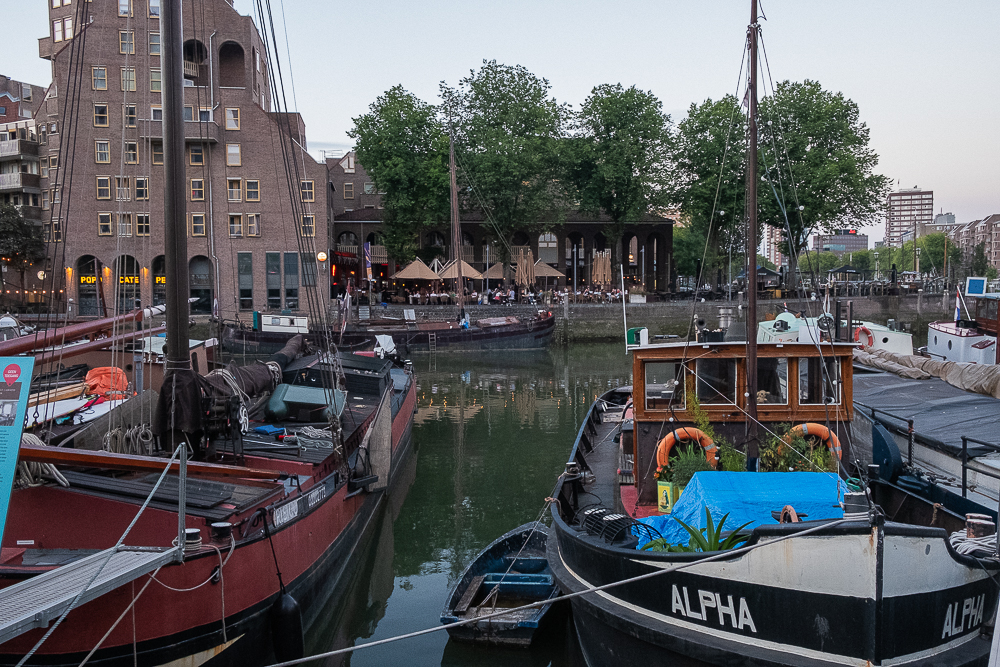
Canal in Rotterdam with houseboats, most never move and many don’t have engines.
 

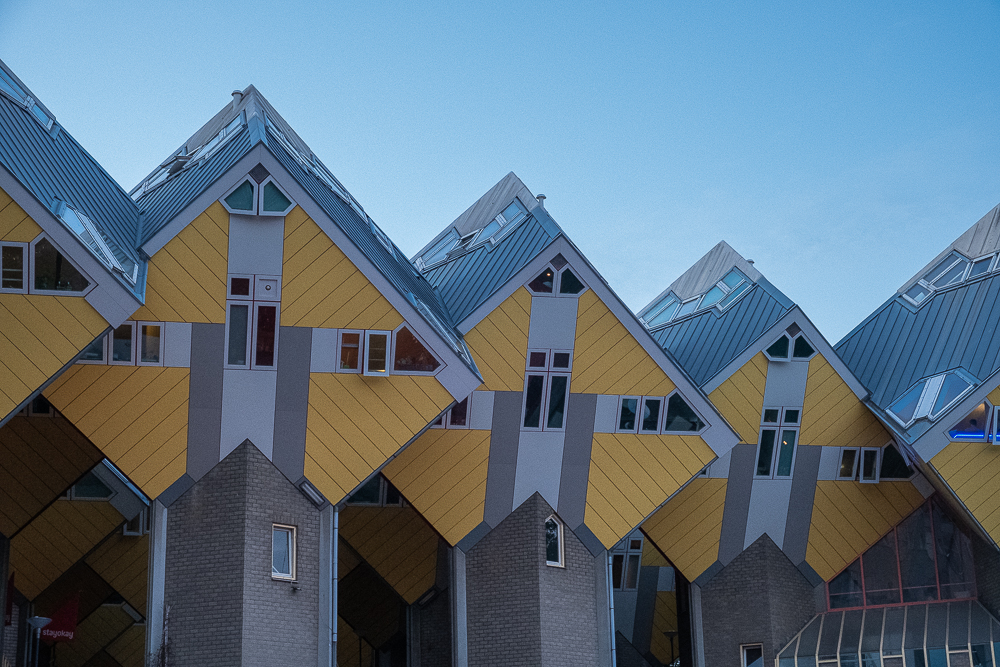
Block Forest, Rotterdam

Cube houses (Dutch: kubuswoningen) are a set of innovative houses built in Helmond and Rotterdam in the Netherlands, designed by architect Piet Blom and based on the concept of “living as an urban roof”: high density housing with sufficient space on the ground level, since its main purpose is to optimise the space inside. Blom tilted the cube of a conventional house corner upwards, and rested it upon a hexagon-shaped pylon. His design represents a village within a city, where each house represents a tree, and all the houses together, a forest. The central idea of the cube houses around the world is mainly optimizing the space, as a house, to a better distribution of the rooms inside. (https://en.wikipedia.org/wiki/Cube_house)
 

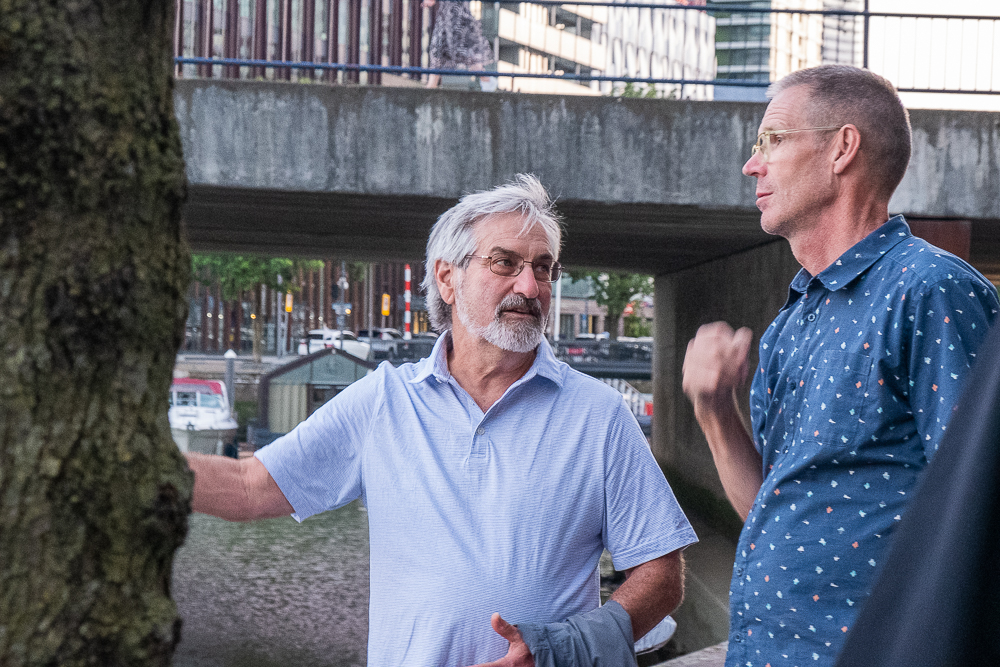
On our Rotterdam tour, Joel chatting with Paul, one of our dining room table companions.  Paul, his wife, her two sisters, and their husbands join us for breakfast and dinner.  They’re a wonderful family from Michigan; we enjoy spending time with them.
 

Rotterdam sunset.